

 Track Order

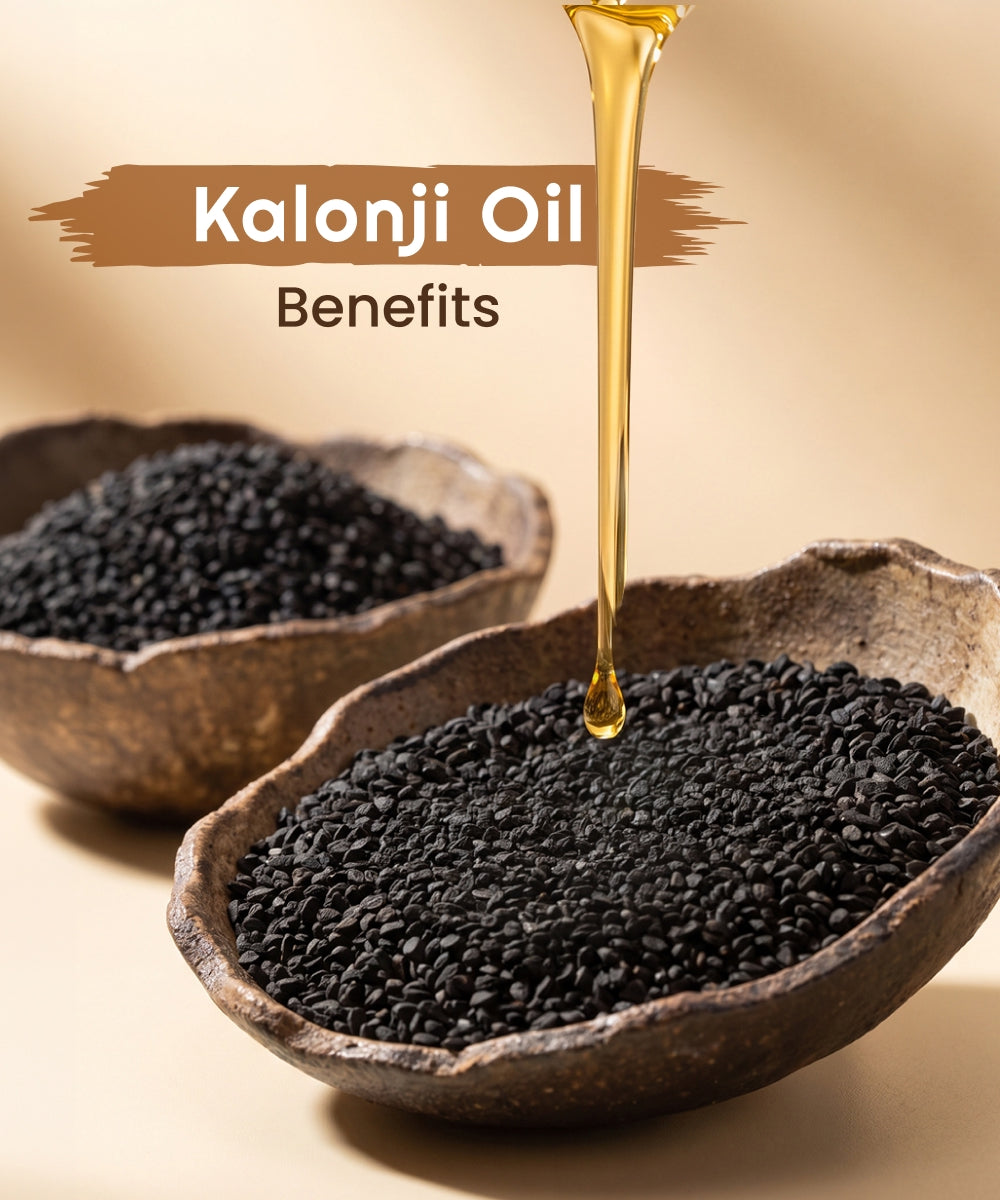
What if one small black seed could bring a little extra goodness to your hair and skincare routine? Known as kalonji or black seed, Nigella sativa has been used in traditional wellness and beauty practices for generations. Its oil is valued for its rich composition of naturally occurring compounds, including thymoquinone, which has antioxidant and anti-inflammatory properties.
From nourishing the scalp to conditioning dry hair and supporting softer-looking skin, the kalonji oil benefits have made it a popular ingredient in modern haircare and skincare formulations. But what does the research actually say? Is kalonji oil for hair effective, and can kalonji oil for skin be equally beneficial?
In this guide, we’ll explore the benefits of kalonji oil, how it may support your hair and skin, practical ways to use it, and what to keep in mind before adding it to your routine. We’ll also look at how products like Vilvah Hair Regrowth Oil, Anti-Frizz Hair Serum and Vilvah Foot Cream incorporate the goodness of black seed oil into everyday care.
What Is Kalonji Oil?
Kalonji oil is extracted from the seeds of Nigella sativa, a flowering plant commonly known as black seed, black cumin or black caraway. These small, dark seeds have a long history of use in traditional food, wellness and personal-care practices.
The oil contains several naturally occurring compounds, including:
- Thymoquinone: A prominent bioactive compound studied for its antioxidant and anti-inflammatory properties.
- Fatty acids: Help condition and soften hair and skin when used in suitable topical formulations.
- Other plant compounds: Include antioxidants and naturally occurring constituents that contribute to the oil’s properties.
Kalonji oil is often used in hair oils, scalp treatments, moisturising products and skin formulations. Its popularity comes from its potential to support conditioning and skin comfort, although the amount of scientific evidence varies depending on the intended benefit.
Kalonji Oil Benefits for Hair: Why Is It Used in Haircare?
The use of kalonji oil for hair is rooted in traditional haircare practices. Today, it is included in many hair oils and serums because of its conditioning properties and the potential benefits of its naturally occurring compounds.
Here are some of the commonly discussed kalonji benefits for hair.
1. Helps Nourish the Scalp
A healthy-looking head of hair starts with a scalp that receives appropriate care. Kalonji oil contains fatty acids and other plant compounds that can help condition the scalp when included in a suitable hair oil.
Massaging a nourishing hair oil into the scalp can also make your haircare routine feel more relaxing. However, kalonji oil should not be considered a treatment for scalp conditions such as dermatitis or persistent dandruff.
2. Supports Stronger, Healthier-Looking Hair
Hair can become weak and prone to breakage due to dryness, friction, heat styling and environmental stress.
Oils containing kalonji can help condition the hair and improve its feel, making strands easier to manage. This may help reduce breakage associated with dryness and rough handling.
It is important to distinguish between reducing hair breakage and stimulating new hair growth. While kalonji is being studied for its biological properties, strong clinical evidence that topical kalonji oil independently promotes hair growth in humans is still limited.
3. Helps Improve Hair Texture and Manageability
Dry, rough hair often needs extra conditioning to feel smoother and softer. The fatty acids in plant oils can help coat the hair fibre, reduce friction and improve the feel of the strands.
When used as part of a hair oil blend, kalonji oil can contribute to softer, more manageable hair.
4. Provides Antioxidant Support
Kalonji oil contains thymoquinone, a compound studied for its antioxidant activity. Antioxidants help counter oxidative stress in laboratory and biological settings.
This makes kalonji an interesting ingredient in haircare formulations designed to support overall scalp and hair conditioning. However, antioxidant activity alone does not establish that an ingredient prevents hair loss or reverses premature greying.
5. Complements a Nourishing Haircare Routine
Kalonji oil can be incorporated into a pre-wash haircare routine to condition the scalp and hair lengths. It works particularly well as part of a blend with other nourishing botanical oils.
For example, Vilvah Hair Regrowth Oil combines kalonji oil with ingredients such as pumpkin seed oil, castor oil, curry leaves, fenugreek and rosemary. The blend is designed to nourish the scalp, strengthen roots and support healthier-looking hair with consistent use.
Rather than relying on one ingredient alone, a thoughtfully formulated hair oil brings together different oils and botanical extracts to support multiple aspects of haircare.
Kalonji Oil Benefits for Skin: Can It Support Healthy-Looking Skin?
The benefits of kalonji oil are not limited to haircare. It is also used in topical skincare formulations because of its fatty acid content and bioactive plant compounds.
Research into Nigella sativa has explored its potential role in several skin conditions. A 2022 systematic review examined clinical studies involving black seed oil and extracts for conditions such as eczema, acne and psoriasis. The researchers noted promising findings but also highlighted the need for more high-quality research before drawing firm conclusions.
Here are some potential kalonji benefits for skin.
1. Helps Condition Dry Skin
Kalonji oil contains fatty acids that can help soften and condition the skin. When incorporated into a moisturising formulation, it can contribute to a smoother, more comfortable skin feel.
It is particularly relevant in products designed for dry areas that need additional conditioning.
2. Offers Antioxidant Properties
Thymoquinone, a naturally occurring compound in kalonji oil, has been studied for its antioxidant properties. Antioxidants help protect against oxidative stress, which is associated with environmental factors such as pollution and UV exposure.
While these properties make kalonji an interesting skincare ingredient, they do not mean that applying the oil can replace sunscreen or prevent all forms of environmental skin damage.
3. Has Potential Anti-Inflammatory Properties
Research has explored the anti-inflammatory activity of compounds found in Nigella sativa. Some clinical studies have investigated topical preparations containing black seed oil for inflammatory skin concerns.
However, the evidence is still developing. Kalonji oil should not be used as a substitute for prescribed treatment for eczema, psoriasis, acne or other persistent skin conditions.
4. Helps Soften Rough Skin
Dryness can leave certain areas of the body feeling rough and uncomfortable. Oils and butters in moisturising formulations help condition the skin and reduce moisture loss.
Kalonji oil can complement richer ingredients such as shea butter, avocado butter and mango butter in products designed for rough, dry areas.
Vilvah Foot Cream, for instance, includes kalonji oil alongside shea, avocado and mango butters, as well as argan and peppermint oils. This combination is designed to moisturise dry feet, soften rough skin and care for cracked heels.
How to Use Kalonji Oil for Hair
If you want to include kalonji oil in your haircare routine, the best approach is to use it in a way that suits your scalp and hair type.
1. Use It as a Pre-Wash Hair Oil
A hair oil containing kalonji can be used as a pre-wash treatment.
- Take an appropriate amount of hair oil.
- Apply it gently to your scalp and hair lengths.
- Massage using your fingertips without scratching or rubbing aggressively.
- Leave it on for the duration recommended by the product instructions.
- Wash thoroughly with a suitable shampoo.
Vilvah Hair Regrowth Oil can be used as a pre-wash treatment. The brand recommends applying it to the scalp, massaging gently and leaving it on for around an hour or overnight before washing.
2. Use a Hair Serum for Frizz Control
Hair oil and hair serum serve different purposes. While a nourishing oil is often used before shampooing, a leave-in serum helps manage the hair lengths after washing.
Vilvah Anti-Frizz Hair Serum features black seed oil alongside curry leaf oil, hibiscus, arnica, aloe vera and other conditioning ingredients. Its lightweight formula is designed to tame frizz and flyaways, improve manageability and enhance shine.
Apply a small amount to damp or dry hair, focusing on the mid-lengths and ends. Follow the product directions and avoid applying a hair-length serum directly to the scalp unless the instructions specifically recommend it.
How to Use Kalonji Oil for Skin
Kalonji oil is best introduced into skincare carefully, particularly if you have reactive or sensitive skin.
1. Choose a Suitable Formulation
Instead of applying concentrated or undiluted black seed oil directly to your face, consider a formulated moisturiser or body-care product that contains it alongside other conditioning ingredients.
A well-formulated product can help balance the ingredient blend and make application more convenient.
2. Use It on Dry Areas of the Body
Kalonji oil can be part of a moisturising routine for dry areas such as elbows, knees, heels and feet.
Vilvah Foot Cream combines kalonji oil with nourishing butters and botanical oils to help soften rough, dry skin. Apply it to clean feet, paying attention to dry areas and heels. Consistent use can help maintain softer-feeling skin.
3. Follow a Consistent Moisturising Routine
A moisturiser works best when used consistently. Apply your chosen product after bathing or washing, when the skin is clean. Pay extra attention to areas that tend to become dry or rough.
If you have deep cracks, bleeding, persistent irritation or a skin condition affecting your feet, seek appropriate medical advice rather than relying on a cosmetic cream alone.
Kalonji Oil vs Other Hair Oils: What Makes It Different?
Kalonji oil is one of several botanical oils used in haircare. Each oil has a different composition and may contribute a different benefit to a haircare formulation.
|
Ingredient |
Common haircare role |
|
Kalonji oil (black seed oil) |
Helps condition hair and is valued for its plant compounds |
|
Coconut oil |
Helps reduce protein loss from hair in certain conditions and conditions strands |
|
Provides a rich, conditioning feel |
|
|
Pumpkin seed oil |
Used in nourishing haircare formulations |
|
Almond oil |
Helps soften and improve hair manageability |
The best oil for your hair depends on your hair texture, scalp condition and specific concerns. You do not necessarily need to use every oil individually. A well-formulated blend can combine several ingredients in one product.
Are There Any Side Effects of Kalonji Oil?
Natural ingredients can still cause irritation or allergic reactions. Kalonji oil is no exception.
A small number of reported cases have documented significant contact dermatitis following topical use of Nigella sativa oil. The composition of commercial oils can also vary, so individual reactions are possible.
Keep these precautions in mind:
- Patch test first: Apply a small amount of the product to a limited area of skin and observe for a reaction before wider use.
- Avoid irritated or broken skin: Do not apply the oil to open wounds or inflamed areas without medical guidance.
- Do not assume more is better: Use the product as directed rather than applying excessive quantities.
- Stop if irritation occurs: Discontinue use if you notice itching, redness, burning, swelling or a rash.
- Choose suitable formulations: Use products intended for topical cosmetic application and follow their instructions.
If you have sensitive skin, a history of contact allergies or an existing skin condition, consult a dermatologist before introducing a new product.
Frequently Asked Questions About Kalonji Oil
What are the main kalonji oil benefits?
Kalonji oil is valued for its fatty acids and naturally occurring plant compounds, including thymoquinone. In topical haircare and skincare formulations, it can help condition hair and skin. Its antioxidant and anti-inflammatory properties are also being studied, although more research is needed to confirm many of its proposed benefits.
Is kalonji oil good for hair growth?
Kalonji oil is traditionally used in haircare and may help condition the scalp and hair. However, there is not enough strong human clinical evidence to establish that kalonji oil alone stimulates hair growth. It is best considered a conditioning ingredient within a broader haircare routine.
How often should I use kalonji oil for hair?
The frequency depends on the formulation and your scalp's needs. If you are using a blended hair oil such as Vilvah Hair Regrowth Oil, you may use it 2 to 3 times a week.
Can I apply kalonji oil directly to my scalp?
It is best to use a product formulated for scalp application and follow its instructions. If you are using pure kalonji oil, check whether it is suitable for topical use and consider patch testing first. Avoid applying it to irritated or broken skin.
Is kalonji oil good for dry skin?
Kalonji oil contains fatty acids that can help condition and soften skin when used in a suitable formulation. It can be incorporated into moisturising products designed for dry areas, but it is not a guaranteed treatment for chronic dryness or skin conditions.
Can kalonji oil help with acne?
Some clinical research has explored topical Nigella sativa preparations for acne and other skin concerns. However, the available evidence is limited and does not establish that pure kalonji oil is an effective acne treatment for everyone. If you experience persistent acne, consult a dermatologist.
Can kalonji oil be used on the face?
Some formulated skincare products contain kalonji oil, but pure oil may not suit every skin type. If you want to try it on your face, choose a suitable cosmetic formulation, patch test first and discontinue use if irritation develops.
Is kalonji oil the same as black seed oil?
Yes. Kalonji oil and black seed oil are common names for oil extracted from Nigella sativa seeds. It is also sometimes called black cumin oil, although naming can vary by region.
Conclusion: Make Kalonji a Part of Your Everyday Care
From traditional haircare rituals to modern moisturising formulations, kalonji oil has earned its place as a valued botanical ingredient. Its fatty acids can help condition hair and skin, while compounds such as thymoquinone continue to be studied for their antioxidant and anti-inflammatory properties.
Whether you are exploring kalonji oil for hair, looking for ways to care for dry skin or simply curious about its benefits, remember that the best results come from choosing suitable formulations and maintaining a consistent routine.
Vilvah brings the goodness of black seed oil into everyday care through Hair Regrowth Oil, Anti-Frizz Hair Serum and Foot Cream, each designed for a different purpose, from scalp nourishment and frizz control to moisturising dry feet.
A little botanical goodness, used thoughtfully, can make everyday haircare and skincare feel that much better.
Related Stories
-

Papain: What the Papaya Enzyme Does in a Face Wash and Who It Suits
-

Is Gen Z Losing Hair Faster Than Millennials? Here's What Science Says
-

How to Do a Pedicure at Home: Step by Step, from Soak to Foot Cream
-

Under-Eye Patches: Do They Work, and Can They Replace Eye Cream?
-

Prickly Heat: What Causes Heat Rash and How Aloe Vera Gel Calms It
-

Freckles on Face: Why They Appear and Whether You Can Fade Them
-

Bakuchiol vs Retinol: What It Is and Why It Suits Under-Eye Skin
-

Best Face Wash and Serum for Glowing Skin: Choosing a Pair
-

Is Aloe Vera Really Good for Hair Growth and Scalp Health?


Leave a comment
All comments are moderated before being published.
This site is protected by hCaptcha and the hCaptcha Privacy Policy and Terms of Service apply.