

 Track Order

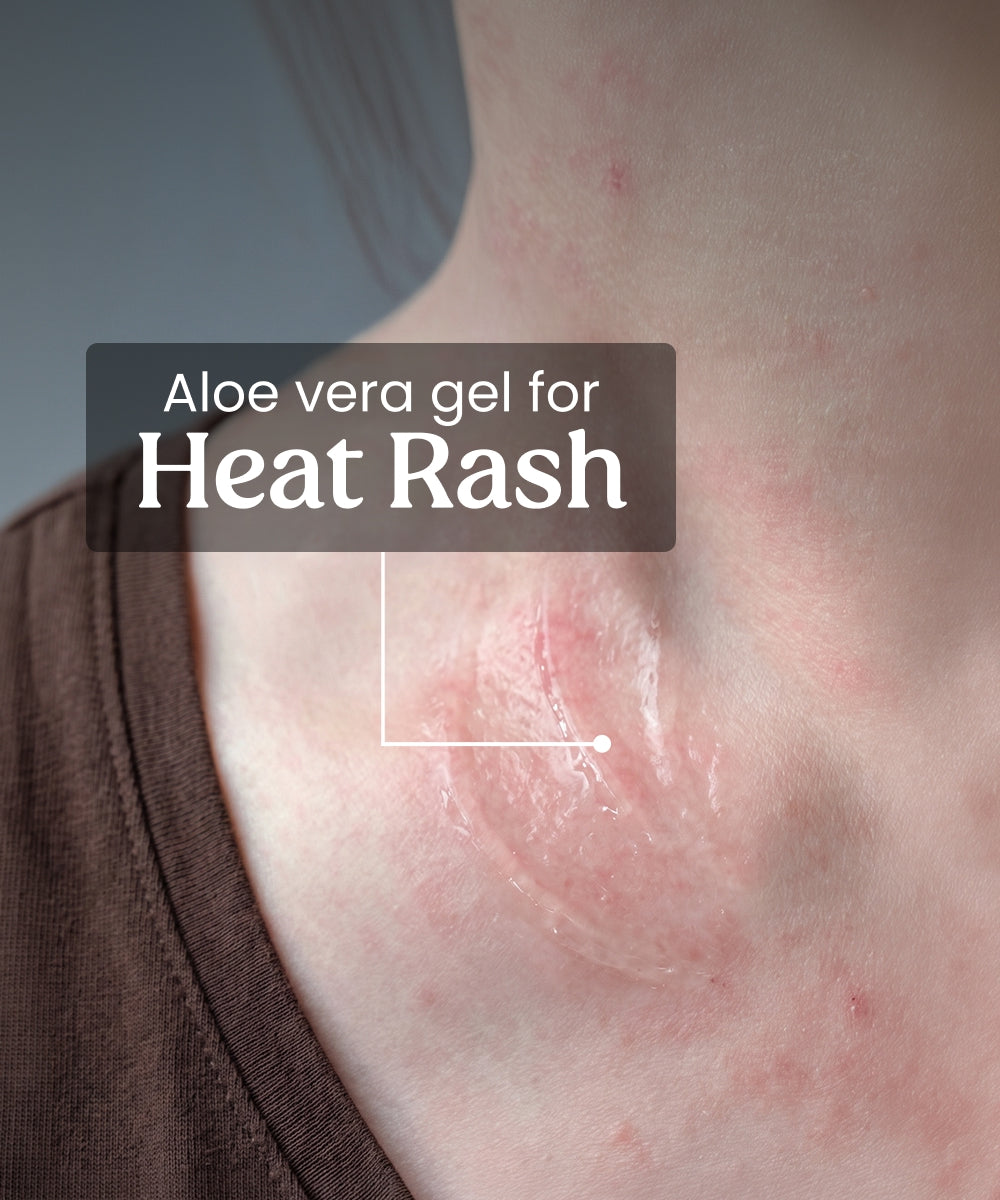
Prickly heat is an itchy rash of tiny bumps that forms when blocked sweat ducts trap sweat under the skin, and humid air makes it more likely because sweat cannot evaporate. According to Encyclopaedia Britannica, relative humidity in India's coastal districts rises above 70 percent as the monsoon sets in, and the monsoon burst brings humidities of more than 80 percent. Aloe vera gel calms prickly heat by cooling the skin under a light, water-based layer that does not seal it the way thick creams do. The practical routine is to cool the skin, dry it fully, apply a thin layer of fragrance-free aloe gel, and wear loose cotton until the rash fades.
Prickly heat is sweat trapped under the skin by blocked ducts
Definition: Prickly heat: an itchy rash of small red or clear bumps that appears when sweat ducts become blocked and sweat leaks into the surrounding skin instead of reaching the surface.
Miliaria is the medical name for prickly heat, and doctors grade it by how deep the blockage sits. The shallowest form shows as clear, fragile blisters that look like beads of sweat that never broke. The red form, miliaria rubra, brings the prickling, stinging itch that gives the condition its everyday name. A deeper form is rarer and tends to follow repeated episodes.
The rash collects wherever sweat cannot escape: the neck, chest, upper back, armpits, waistband and, in babies, the folds of skin. Tight synthetic clothing, heavy creams, long hours lying down or sitting in a car seat, and fever all raise the odds, because each keeps sweat pressed against the skin. Prickly heat is neither an allergy nor an infection, which is why it usually fades once the skin stays cool and dry.
Why does the Indian monsoon bring a wave of heat rash?
Humidity decides whether sweat does its job. Sweat cools the body only when it evaporates, and air already loaded with water vapour slows that evaporation, so sweat sits on the skin, the duct openings swell, and some of them close. Relative humidity is the amount of water vapour in the air, expressed as a percentage of the most the air could hold at that temperature.
Statistic: According to Encyclopaedia Britannica, relative humidity in India's coastal districts rises above 70 percent as the monsoon sets in, and the monsoon burst brings humidities of more than 80 percent.
Those numbers describe the air, and the skin feels the consequence. At that level, a commute in a polyester shirt or an afternoon in a backpack is enough to keep a patch of skin wet for hours. Heat alone can trigger prickly heat inland too, but the monsoon combines heat with air that refuses to take sweat away, and that pairing is what makes the rash so common in the wet months.
Aloe vera gel cools the rash without sealing the skin
Aloe vera gel is the clear inner pulp of the aloe leaf, processed into a spreadable gel that is mostly water. That texture is exactly why it suits prickly heat. A thin layer feels cold going on, takes the edge off the itch, and dries down without leaving a film behind.
An occlusive product is one that forms a film over the skin and slows water loss through it. Petroleum jelly, thick body butters and heavy oils all work this way, and on prickly heat they hold sweat against ducts that are already blocked. Aloe gel applied thinly does the opposite: it soothes while letting the skin breathe.
Aloe vera gel soothes prickly heat; it does not unblock the ducts. The rash clears because the skin cools and stays dry, and aloe makes the wait more comfortable while that happens. A useful test from practice: if a product still leaves your skin feeling coated an hour later, it is the wrong product for heat rash.
What should you look for on an aloe gel label?
- Aloe near the top of the list. Look for aloe vera juice or gel listed first or second among the ingredients. A gel where aloe appears halfway down is mostly a thickened water base with a botanical name on the front.
- No added fragrance. Fragrance and essential oils can sting skin that is already inflamed. On an active rash, the plainest formula is the safest one.
- Little or no denatured alcohol. Alcohol high on the list gives a quick cooling hit but can leave irritated skin tight and sore. A water-and-aloe base cools without that trade-off.
- A gel, not a cream. Some products sold as aloe are lotions or creams with a little aloe added. For prickly heat, choose the clear or translucent gel format over anything creamy.
How does the same humid air turn hair frizzy?
Monsoon air that traps sweat also changes how hair behaves, which is why heat rash and frizz arrive in the same weeks. Clinikally explains that hair is hygroscopic, meaning it readily absorbs moisture from the air and swells when humidity is high. Hygroscopic describes any material that pulls water vapour out of the surrounding air.
As a strand swells, the cuticle (the layer of overlapping outer scales) lifts unevenly, and the hydrogen bonds that hold the hair's shape rearrange as water forms new ones. The result is the halo of raised, flyaway strands that a blow-dry cannot hold. Texture matters: the same Clinikally guidance notes that curly and wavy hair tends to have a less even cuticle, which can make it more prone to humidity frizz.
Controlling frizzy hair in humid Indian weather comes down to smoothing the cuticle before the air reaches it. A lightweight oil worked through damp hair after washing helps, while heavy oiling just before stepping outdoors does not. Silicone serums take a different route, coating the surface of the strand rather than soaking in, and both approaches have a place in a monsoon routine. Split ends add to the look of frizz, so Clinikally's hair-care guidance recommends a trim every 6 to 8 weeks.
A five-step routine for calming prickly heat with aloe
-
- Cool the skin first. Take a cool shower or hold a damp cloth on the rash for several minutes to bring the skin temperature down and rinse off the salt that sweat leaves behind. Pat dry afterwards, because rubbing a towel across the bumps aggravates the itch.
- Let the skin dry completely. Sit under a fan with the area uncovered until no dampness remains, including in folds and creases. Gel spread over wet skin slides around and leaves those folds damp, which is the condition you are trying to end.
- Apply a thin layer of aloe vera gel. Spread an even, sheer layer over the rash and let it absorb before you dress. Gel kept in the fridge adds extra cooling, and a gel that is new to you is worth testing on a small patch of unaffected skin first.
- Dress for evaporation. Loose cotton or linen lets sweat leave the skin, while tight waistbands, synthetic fabrics and layered clothing hold it in. At night, a fan and a light cotton sheet do more than any product.
- Reapply instead of layering, and stop scratching. Rinse and reapply aloe gel a few times a day rather than piling fresh gel on top of old. Keep nails short, because scratched skin over a rash can become infected and turn a nuisance into a problem.
Which soothing options suit prickly heat?
|
Option |
How it works on the skin |
Suits prickly heat? |
Watch out for |
|---|---|---|---|
|
Aloe vera gel |
Light, water-based layer that cools as it dries |
Yes, applied thinly |
Added fragrance or alcohol that stings inflamed skin |
|
Cool shower or damp cloth |
Lowers skin temperature and rinses off sweat salt |
Yes, as the first step |
Leaving skin damp afterwards |
|
Calamine lotion |
Dries and soothes the surface |
Yes, for short-term itch relief |
Chalky residue and dryness with heavy use |
|
Petroleum jelly or thick cream |
Forms an occlusive film that holds moisture in |
No, it traps sweat |
Making the blockage worse |
When is a heat rash a reason to see a doctor?
Prickly heat that keeps spreading, or that has not settled after several days of keeping the skin cool, needs a doctor's look. The same applies to bumps that fill with pus, skin that grows more painful, swollen or warm, or a rash that arrives with fever. Each of these points to infection or to a different condition that only resembles heat rash.
Babies deserve a lower threshold. A baby with a rash and a fever should see a paediatrician promptly, and any product, aloe gel included, is worth clearing with the paediatrician before it goes on infant skin.
Common questions about prickly heat and aloe vera
What causes prickly heat?
Prickly heat is caused by blocked sweat ducts that trap sweat under the skin instead of letting it reach the surface. Heat, humidity, tight synthetic clothing and heavy creams all raise the risk, because each keeps sweat against the skin. Prickly heat is neither an allergy nor an infection, and it usually fades once the skin stays cool and dry.
Does aloe vera gel help prickly heat?
Aloe vera gel helps prickly heat by soothing the itch and cooling the skin, though it does not unblock the sweat ducts themselves. The rash clears as the skin cools and dries, and a thin layer of fragrance-free aloe vera gel makes that period more comfortable without sealing the skin the way thick creams do.
Can I put aloe vera gel on my baby's prickly heat?
Aloe vera gel on a baby's prickly heat is best cleared with a paediatrician first, since infant skin reacts more easily than adult skin. Cooling the baby, dressing them in loose cotton and keeping skin folds dry are the first steps. A baby with a rash and a fever needs prompt medical attention rather than home care.
Why is prickly heat worse during the monsoon?
Prickly heat gets worse in the monsoon because humid air slows the evaporation of sweat, leaving it on the skin long enough to block ducts. According to Encyclopaedia Britannica, coastal relative humidity in India rises above 70 percent at monsoon onset and above 80 percent at the burst.
Should I use coconut oil or a heavy cream on heat rash?
Coconut oil and heavy creams are a poor choice for heat rash because they form a film that holds sweat against blocked ducts. Prickly heat improves when skin can breathe and stay dry. A thin, water-based aloe vera gel or calamine lotion soothes the itch without adding the occlusive layer that keeps the rash going.
How long does prickly heat last?
Prickly heat usually settles within a few days once the skin is kept cool, dry and loosely covered. The rash returns if the conditions that caused it return, so clothing and airflow matter as much as any product. Prickly heat that spreads, fills with pus or comes with fever needs a doctor's assessment.
Put the routine in place before the monsoon burst
Stock a plain, fragrance-free aloe vera gel before the humid months begin, and keep it in the fridge so it is cold when the first rash appears. Check any gel from Vilvah, or anywhere else, against the label criteria above: aloe near the top of the list, no added fragrance, and a clear gel rather than a cream.
Related Stories
-

Freckles on Face: Why They Appear and Whether You Can Fade Them
-

Bakuchiol vs Retinol: What It Is and Why It Suits Under-Eye Skin
-

Best Face Wash and Serum for Glowing Skin: Choosing a Pair
-

Is Aloe Vera Really Good for Hair Growth and Scalp Health?
-

Sunken Eyes: Why Under-Eyes Look Hollow and What Eye Cream Can Fix
-

Melasma on Indian Skin: Causes and What Helps It Fade
-

Double Cleansing: What Is It, How to Do It & Its Benefits for Healthy-Looking Skin
-

Hair Growth Tips for Men: Effective Tips Every Man Should Know
-

Goat Milk vs Cow Milk for Skin: Which One Your Skin Responds To


Leave a comment
All comments are moderated before being published.
This site is protected by hCaptcha and the hCaptcha Privacy Policy and Terms of Service apply.