

 Track Order

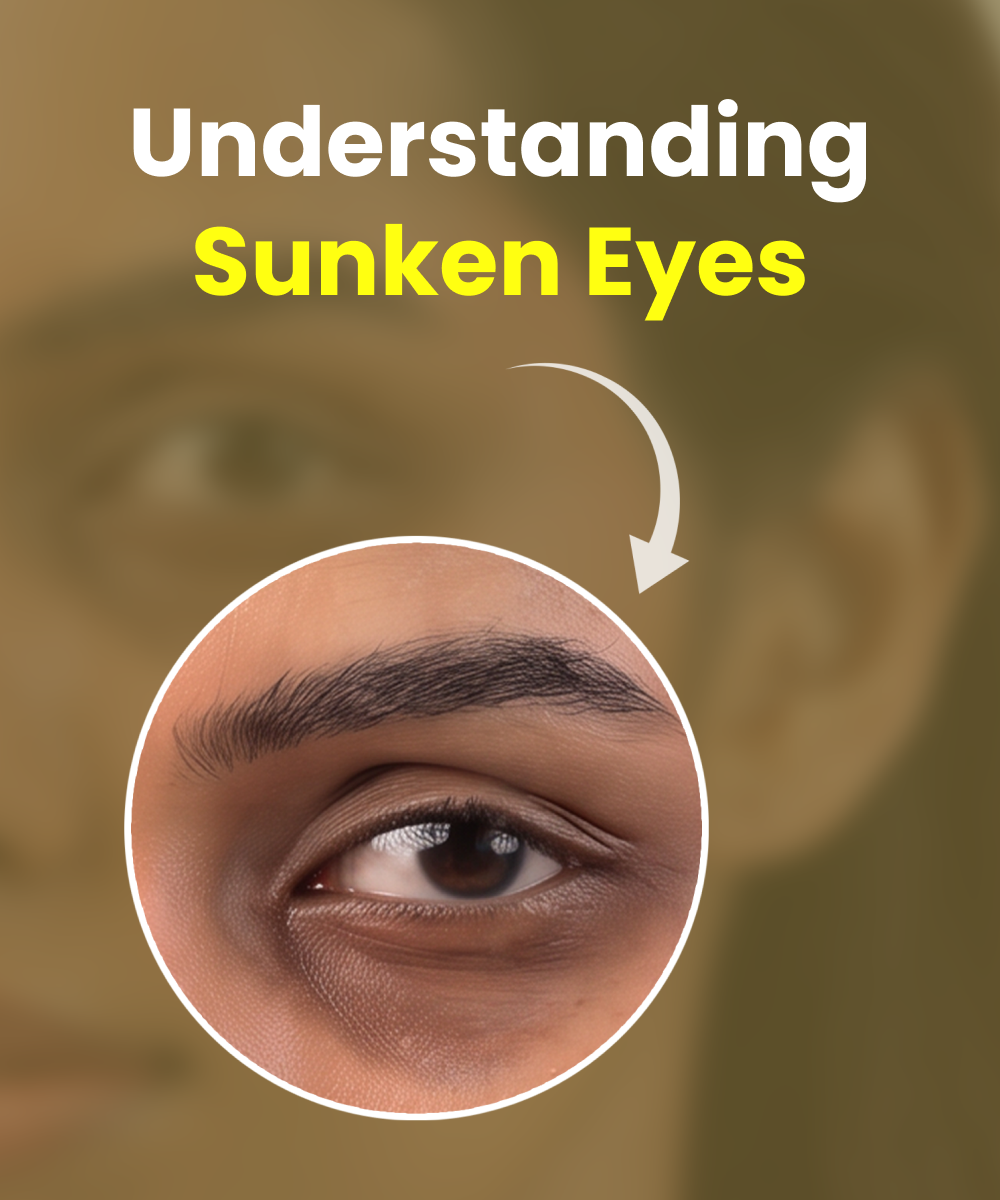
Sunken eyes look hollow because the tissue under the eye sits lower than the cheek and brow around it, and no eye cream restores lost fat volume. Hydrating ingredients such as hyaluronic acid, ceramides and squalane can make thin under-eye skin look smoother and more cushioned, which softens how a hollow reads without filling it. Puffy eyes are the opposite problem: fluid collecting in thin tissue, which cold, less salt, enough sleep and a raised pillow help to clear. When the hollow itself needs correcting, under-eye filler (usually hyaluronic acid) lasts six to 12 months, according to Johns Hopkins Medicine.
Sunken eyes are a volume problem, and puffy eyes are a fluid problem
Definition: Sunken eyes: an under-eye area that looks hollow or shadowed because the tissue between the lower lid and the cheek sits lower than the face around it.
Sunken eyes, also called under-eye hollows, are a dip rather than a swelling. Light catches the cheek and the brow bone, and the hollow between them reads as shadow, which is why sunken eyes are so often mistaken for dark circles. Puffy eyes run the other way: Cleveland Clinic explains that puffiness happens when fluid builds up in the thin layers of tissue surrounding the eyes and eyelids.
That difference decides what will work. Fluid moves, collecting overnight, draining through the day and responding to cold, gravity and salt. Volume stays put, so a hollow visible at noon will still be there tomorrow morning whatever you apply tonight.
What makes the under-eye area look hollow?
Structure sets the starting point. For some people, Cleveland Clinic notes, under-eye changes are genetic, driven by fat pad prominence, bone structure or skin laxity, and are difficult to fully correct without medical treatment. That is why two people of the same age can look so different under the eye.
Ageing and habits deepen what structure begins. Johns Hopkins facial plastic surgeon Dr Kofi Boahene names natural ageing as the most common cause of under-eye bags. Smoking adds to the problem, because smoking can cause collagen loss that thins the skin around the eyes. Thinner skin hides less of what lies beneath it, so every shadow shows.
What can an eye cream actually do for thin under-eye skin?
An eye cream works on the skin surface, and on the under-eye that is a real but narrow job. Dry, slightly creased skin catches light unevenly and sharpens the edge of a hollow. When the same skin is hydrated and supple, it reflects light more evenly and the hollow looks softer. The cream changes the texture of the skin, not what sits beneath it.
Caffeine and retinol are the ingredients with clinical commentary behind them, and that commentary is careful. Cleveland Clinic notes that eye creams with caffeine or retinol can sometimes improve how eye bags look. That is a cosmetic effect on puffiness, not a cure, and it does nothing for lost volume.
For thin, dry skin, three hydrating ingredients do most of the work in an eye cream:
- Hyaluronic acid is a humectant, an ingredient that draws water into the upper layers of the skin. On the under-eye, that water makes the surface look plumper and fine lines look softer for as long as the skin stays hydrated. Topical hyaluronic acid and injected hyaluronic acid filler share a name but not a job: one sits on the skin, and a doctor places the other beneath it.
- Ceramides are lipids that make up part of the skin barrier, the outer layer that keeps water from escaping. Thin under-eye skin benefits from a barrier that holds on to the moisture hyaluronic acid draws in. The visible result is skin that looks less crepe-like between morning and evening.
- Squalane is a light emollient that smooths the skin surface and slows water loss. Squalane suits the eye area because it spreads thinly and sits comfortably under concealer.
Our research found no independent trial measuring how much these three ingredients change the look of under-eye hollows, so treat them as surface care rather than a correction. Every product used on the eye area is also a possible irritant, eye creams included. Cleveland Clinic warns that fragrances, dyes and preservatives in eye products can irritate the surrounding skin, and suggests stopping a suspect product for at least a couple of weeks to see whether symptoms improve.
No eye cream restores lost fat volume, so hollows need a different fix
Lost fat volume under the eye cannot be rebuilt by any cream, serum, mask or patch. Topical products act on the skin, and a hollow is a gap beneath it. Johns Hopkins Medicine makes the same point about bags: home remedies and over-the-counter products can only do so much, and medical treatment is often necessary for bags that are prominent and permanent.
The table sets each under-eye concern beside what topical care can and cannot reach.
|
Concern |
What is happening |
What an eye cream can do |
What actually changes it |
|---|---|---|---|
|
Morning puffiness |
Fluid collects in thin tissue overnight |
Caffeine can sometimes make puffiness look smaller |
Cold, less salt, enough sleep, a raised pillow |
|
Genetic eye bags |
Fat pad prominence, bone structure or loose skin |
Little beyond surface hydration |
Fillers, laser, peels or a lower eyelid lift |
|
Sunken eyes (hollows) |
Tissue sits lower than the cheek and brow |
Hydration softens how the hollow reads |
Filler placed by a doctor |
|
Thin, crepe-like skin |
Dryness, ageing, collagen loss from smoking |
Hyaluronic acid, ceramides and squalane improve texture |
Consistent care and discontinuing smoking |
Which in-clinic options add or remove volume?
Under-eye filler is the direct answer to a hollow, because filler adds the volume a cream cannot. A doctor injects it under local anaesthetic, and a six-to-12-month lifespan makes filler a maintenance commitment rather than a one-time fix. Laser resurfacing and chemical peels work on skin quality, while a lower eyelid lift (blepharoplasty) treats bags, and Johns Hopkins says a lower eyelid lift usually removes them for life.
Surgery carries known costs. Mayo Clinic lists dry or watery eyes, pain, swelling, bruising and blurred vision as side effects of eyelid surgery, with rare complications including vision loss, infection and a drooping eyelid. Because the eye area is delicate, Johns Hopkins stresses choosing a highly experienced surgeon who specialises in eyelids. Treatments done purely for appearance are often not covered by medical insurance, so check your policy before booking.
Brown skin changes the risk of laser treatment
For Indian readers, one warning outweighs the rest. Mayo Clinic warns that for people with brown or Black skin, laser resurfacing carries a risk of permanent changes in skin colour, leaving patches darker or lighter. Before agreeing to treatment, ask any clinic which technique it uses on brown skin and how it reduces that risk.
India-specific figures, on how common under-eye hollows are or how often these procedures cause complications on Indian skin, did not appear in any clinical source we reviewed. The guidance in this piece comes from US academic medical centres and describes general physiology, which applies across skin types, but the risk numbers for an Indian population are missing.
How to get rid of puffy eyes in seven steps
Puffy eyes respond to home care because the cause is mostly fluid, and fluid can be moved. Morning puffiness is usually fluid that collected overnight and tends to settle within hours. The steps below speed that up and make a repeat less likely.
-
- Cool the area for a few minutes. Mayo Clinic suggests pressing a cool, damp washcloth gently under and around the eyes for a few minutes while sitting up. Chilled cucumber slices, cold spoons or refrigerated tea bags work the same way, by narrowing blood vessels. Johns Hopkins also mentions ice packs and frozen vegetables over closed eyes, so wrap anything frozen in a cloth and keep exposure short, because bare eyelid skin should never touch ice directly.
- Cut salt and late-evening drinks. Salt makes the body hold on to water, and some of that water shows up around the eyes. Mayo Clinic advises drinking less before bed and limiting salt to reduce the fluid retention behind eye bags. A salty dinner followed by a large glass of water at midnight sets up a puffy morning.
- Sleep seven to nine hours with your head slightly raised. Cleveland Clinic recommends seven to nine hours of sleep and an extra pillow to help stop fluid pooling around the eyes overnight. Raising the head of the bed a few inches does the same job for anyone who finds two pillows uncomfortable.
- Treat allergies if they are the trigger. Antihistamine eye drops help only when allergies are behind the puffiness, and steroid drops should be used only on prescription. Mayo Clinic lists cosmetics, soaps and hair dyes among the allergens that can cause under-eye reactions, so suspect any new product when puffiness starts suddenly.
- Take eye makeup off before bed. Removing mascara and liner before sleep helps avoid the irritation that can leave lids swollen by morning. Press a gentle remover against the lashes rather than rubbing.
- Massage outward, very lightly. Some guides suggest feather-light strokes from the inner corner of the eye towards the temple and down to the ear, repeated five to 10 times a side, to help move fluid. Use no more pressure than you would to spread a cream.
- Use a caffeine eye cream in the morning. Caffeine narrows blood vessels, which is why Johns Hopkins notes it appears in many depuffing eye creams. Apply it after the cold step, tapping it along the orbital bone rather than onto the lid.
All seven steps give temporary relief. Cleveland Clinic says home remedies provide short-term relief, while lifestyle changes may have a more lasting effect on swelling and puffiness. Stopping smoking belongs on that list, since Mayo Clinic notes smoking can make under-eye bags worse.
When do puffy or hollow eyes need a doctor?
Most under-eye changes are cosmetic. Mayo Clinic says under-eye bags are usually a cosmetic concern and don’t need medical treatment, and Johns Hopkins adds that they don’t usually affect vision or health. Some patterns break that rule, and they call for a professional rather than a better cream.
Swelling that does not settle is the first signal. Cleveland Clinic ophthalmologist Dr Annapurna Singh advises seeing an eye care professional if swelling lasts longer than 24 to 48 hours, because occasionally the cause is serious. Puffiness that is persistent, painful, red or affects vision also needs checking, since chronic swelling can point to allergies, sinus problems or thyroid disease.
Frequently asked questions about sunken and puffy eyes
Can an eye cream fix sunken eyes?
An eye cream cannot fix sunken eyes, because sunken eyes come from missing volume under the skin, and no cream restores lost fat volume. A hydrating eye cream with hyaluronic acid, ceramides or squalane can make thin under-eye skin look smoother, which softens how the hollow appears without filling the hollow.
What is the difference between sunken eyes and puffy eyes?
Sunken eyes are a hollow where under-eye tissue sits lower than the cheek and brow, while puffy eyes are swelling from fluid in the thin tissue around the eyes. Puffy eyes usually change through the day and respond to cold, less salt and sleep. Sunken eyes look the same morning and night.
Why do I have eye bags even though I sleep well?
Eye bags that persist despite good sleep are often age-related or genetic. Johns Hopkins surgeon Dr Kofi Boahene says natural ageing is the most common cause of under-eye bags, and fat pad prominence, bone structure and loose skin can run in families. Eye bags like these are difficult to correct fully with creams alone.
How do I get rid of puffy eyes quickly in the morning?
To get rid of puffy eyes in the morning, press a cool, damp washcloth or chilled spoons under the eyes for a few minutes, then apply a caffeine eye cream. Morning puffy eyes are mostly fluid that collected overnight, so cooling and a gentle outward massage help that fluid settle sooner.
Does hyaluronic acid eye cream fill under-eye hollows?
Hyaluronic acid eye cream does not fill under-eye hollows. Topical hyaluronic acid draws water into the upper skin layers, making under-eye skin look plumper and smoother for a while. Injected hyaluronic acid filler is a separate medical treatment that adds volume, and only a doctor should place filler under the eye.
Is it safe to use hemorrhoid cream for puffy eyes?
Hemorrhoid cream is not a safe choice for puffy eyes. Cleveland Clinic dermatology resident Dr Angela Wei advises against using hemorrhoid cream around the eyes, because long-term hydrocortisone can thin and discolour under-eye skin and worsen dark circles. Johns Hopkins adds that hemorrhoid creams can irritate this sensitive area.
Is laser treatment safe for Indian skin under the eyes?
Laser treatment under the eyes carries an extra risk for Indian skin. Mayo Clinic warns that laser resurfacing can permanently darken or lighten brown or Black skin. Anyone with Indian skin considering laser treatment under the eyes should ask the clinic which technique it uses on brown skin and how it reduces that risk.
How long does under-eye filler last?
Under-eye filler, usually hyaluronic acid, lasts six to 12 months, according to Johns Hopkins Medicine. A doctor injects under-eye filler under local anaesthetic, so keeping the result means repeat appointments. Choose a doctor with extensive experience treating the eyelid area, because Johns Hopkins stresses that the eye area is delicate.
Related Stories
-

Prickly Heat: What Causes Heat Rash and How Aloe Vera Gel Calms It
-

Freckles on Face: Why They Appear and Whether You Can Fade Them
-

Bakuchiol vs Retinol: What It Is and Why It Suits Under-Eye Skin
-

Best Face Wash and Serum for Glowing Skin: Choosing a Pair
-

Is Aloe Vera Really Good for Hair Growth and Scalp Health?
-

Melasma on Indian Skin: Causes and What Helps It Fade
-

Double Cleansing: What Is It, How to Do It & Its Benefits for Healthy-Looking Skin
-

Hair Growth Tips for Men: Effective Tips Every Man Should Know
-

Goat Milk vs Cow Milk for Skin: Which One Your Skin Responds To


Leave a comment
All comments are moderated before being published.
This site is protected by hCaptcha and the hCaptcha Privacy Policy and Terms of Service apply.