

 Track Order

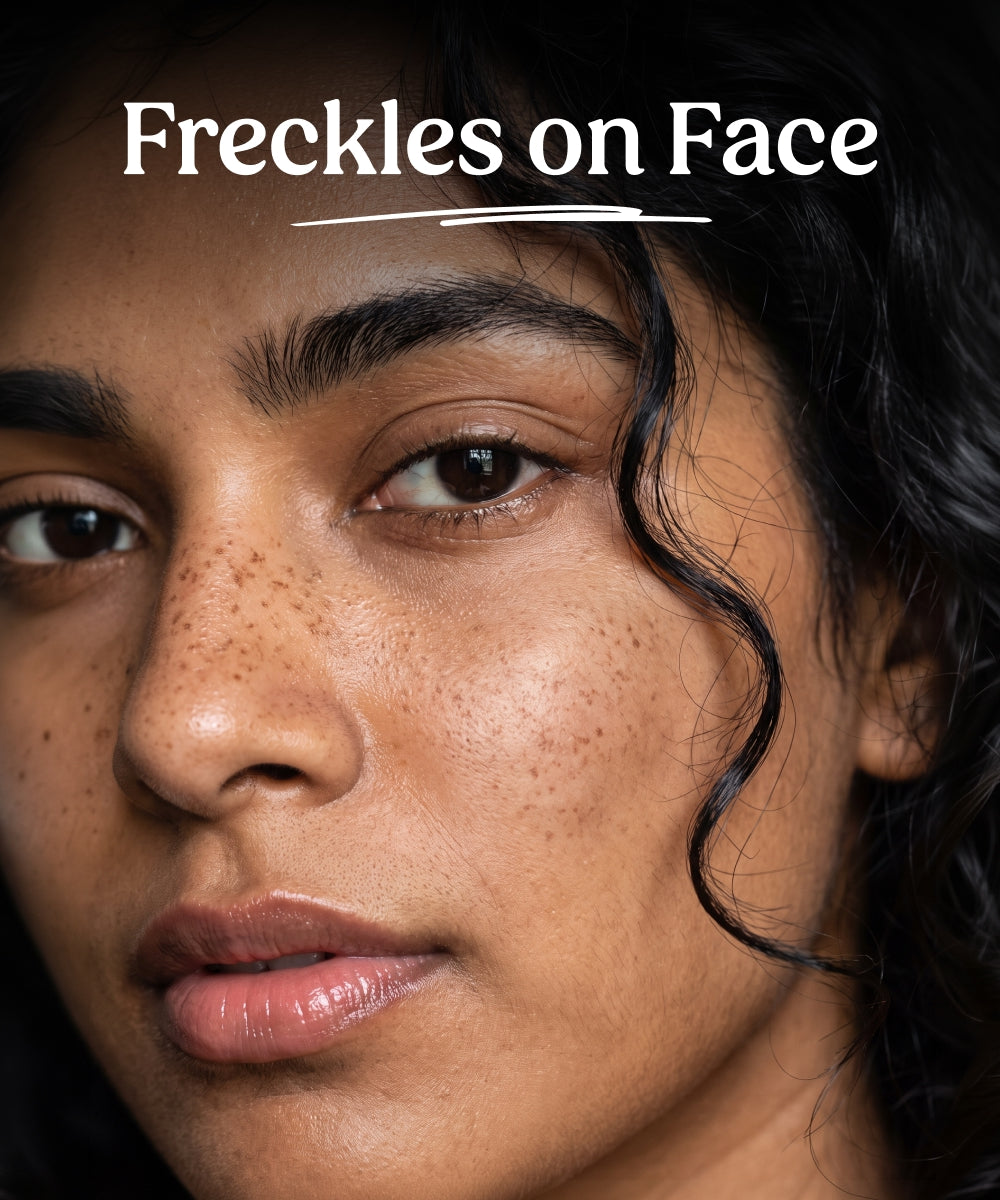
Freckles on the face are mostly inherited, and sunlight darkens them, so no cream or serum will make them disappear for good. You can soften them: a daily broad-spectrum sunscreen stops them from deepening, and a brightening serum with alpha arbutin can lighten their look over several weeks. Rice milk serum guides from brands such as Newlix advise pairing any brightening serum with a broad-spectrum SPF 50+ every morning, because sun exposure undoes the results. Freckles that fade a little in winter and return each summer are behaving normally, and that pattern does not mean a routine has failed.
Freckles are mostly genetic, and sunlight decides how dark they get
Freckles are small, flat, light-brown spots that appear on sun-exposed skin, most often across the nose and cheeks. The tendency to freckle runs in families, and sun exposure is what switches it on. That is why freckles usually show up in childhood, darken in summer and lighten in the cooler months.
Definition: Freckles (ephelides): small, flat brown spots caused by extra pigment in the top layer of skin, which appear after sun exposure in people with an inherited tendency to freckle.
Freckles are an inherited trait, so the realistic goal is to make them lighter, not to make them vanish. A spot that fades when you avoid the sun belongs to your skin's normal cycle. Any spot that stays dark all year, grows or changes shape needs a dermatologist rather than a serum.
How do freckles differ from sunspots and melasma?
People often call any brown mark on the face a freckle. Three different kinds of pigment are involved, though, and each responds to care differently.
|
Mark |
What it looks like |
When it usually appears |
How it responds to sun care |
|---|---|---|---|
|
Freckles |
Small, flat, light-brown dots, often in clusters |
From childhood, in people with an inherited tendency |
Lighten when sun exposure drops, then darken again with sun |
|
Sunspots (solar lentigines) |
Larger, darker flat patches that do not fade with the seasons |
Adulthood, after years of sun exposure |
Stay put without treatment, though sunscreen helps prevent new ones |
|
Blotchy brown or grey-brown patches on the cheeks, forehead or upper lip |
Adulthood, often linked to hormones as well as sun |
Returns easily and is best managed with a dermatologist's plan |
Why can't any serum make freckles disappear for good?
No serum changes the genes that produce freckles. A brightening ingredient can reduce how much pigment sits in an existing freckle. The next stretch of strong sun prompts the same skin cells to make that pigment again, so results last only as long as your sun protection does.
Home remedies run into the same limit. Rice water has a long folk history in Asian skincare, built on stories about women who worked in rice paddies, and EMstore, the retailer that repeats it, labels it folklore. That makes it a tradition, not evidence.
Homemade versions carry a practical problem as well. Fooder Ghor notes that rice water or rice milk made at home contains no commercial preservatives and can spoil quickly at room temperature, so a fresh batch is inconsistent and a stale one is a poor thing to leave on skin. Lemon juice and other harsh kitchen fixes add the risk of irritation, and irritated skin can end up darker than it started.
Lasting improvement in freckles comes from a gentle routine repeated every day, not from one strong product.
Daily sunscreen does more for freckles than any brightening serum
Sunscreen is the single step that decides whether freckles stay faint. UV light is the trigger for freckle pigment, so one unprotected weekend at the beach can cancel weeks of serum use. Rice milk serum guides make the same point: Newlix calls sun protection non-negotiable because brightening serums can increase UV sensitivity, and says UV exposure undermines treatment and triggers more pigmentation.
Broad-spectrum matters because freckle-prone skin reacts to both UVA and UVB. In Indian summers, a light gel or fluid texture is easier to wear over oily or sweaty skin, and the best sunscreen is the one you will actually reapply. Reapply after long stretches outdoors, after sweating heavily, and after washing your face.
Sun care also covers more than the bottle. A wide-brimmed hat, shade during the strongest midday sun and sunglasses all reduce the exposure that wakes freckles up each year.
Alpha arbutin can soften freckles, but only alongside sunscreen
Alpha arbutin is a brightening ingredient, a form of arbutin (a compound found naturally in plants such as bearberry), that serums use to reduce the look of excess pigment. Formulators favour it for daily face serums because it is generally gentler than harsher lightening treatments. For freckle-prone skin, that gentleness matters: you need something you can use every day for weeks.
What alpha arbutin cannot do is outrun the sun. A freckle softened by a serum darkens again with unprotected exposure, so apply the serum at night, or in the morning under sunscreen, and never as a replacement for it.
Give an alpha arbutin serum weeks, not days. Pigment sits in skin cells that take time to shed, so judging a serum after the first week tells you nothing. If the serum stings, reddens or flakes your skin, stop using it, because irritation can leave darker marks than the freckles you started with.
How can rice milk serum help you achieve bright and glowing skin?
Rice milk serum is marketed as a gentle tone-evener, and the published evidence that it brightens skin on its own is thin. Brand guides such as the one Newlix publishes cite no trial, sample size or measured outcome behind their brightening claims. Treat what follows as how these products are positioned, not as proven results.
Definition: Rice milk serum: a leave-on serum built around rice extract or rice water, usually combined with other active ingredients.
Newlix, a brand that sells one, says rice milk does not bleach the skin and instead evens out tone. That distinction is useful for anyone with freckles: a product promising to bleach skin is one to avoid, while one promising to even tone makes a softer, more realistic promise. Where a rice milk serum does lighten pigment measurably, the effect usually depends on the other actives in the formula. Brands do not even agree on the mechanism, with one crediting added actives, another unspecified "enzymes", and none citing research.
Rice does bring nutrients to a formula. EMstore points out that rice contains B and E vitamins and minerals such as manganese and selenium, which explains why it appears in skincare at all. Those are facts about rice as a food, and how much of that benefit reaches skin through a serum is less well documented.
On timing, Newlix tells users to expect visible results in 4-8 weeks of consistent use, and elsewhere on the same page asks for at least 6-8 weeks before judging. That is a brand guideline, not a clinical finding. For freckle-prone skin, the realistic role of a rice milk serum is a gentle daily step that sits alongside sunscreen and, if you want a targeted brightener, an alpha arbutin serum.
A five-step routine to soften freckles without irritating skin
-
- Patch test anything new. Newlix advises a patch test on your inner wrist before any new serum joins your routine. Fooder Ghor adds that rice milk is generally well tolerated, but people with grain allergies or sensitive skin should patch test before applying it to larger areas. Watch for redness or itching before you go further.
- Cleanse gently, morning and night. A mild cleanser removes sweat, oil and sunscreen without stripping the skin barrier. Harsh scrubs and frequent exfoliation inflame skin, and inflamed skin is more likely to darken.
- Apply one brightening serum as the label directs. Follow the instructions on the Vilvah product label first. As general guidance, brand guides recommend leave-on rice milk serums twice a day, while homemade rice milk masks are suggested about three times a week; the advice differs mainly because one is a serum and the other a DIY mask. Use one brightening serum at a time so you can tell what is working.
- Moisturise to keep the barrier calm. Dry, tight skin tolerates actives poorly and is quicker to react with redness. A light moisturiser after your serum keeps the routine comfortable enough to stick with for months.
- Finish every morning with sunscreen and reapply. Use a broad-spectrum SPF 50+ as the last step before you step outside. Reapply through the day if you are outdoors, because this step protects every result the first four steps produce.
Frequently asked questions about freckles on the face
Can freckles on my face go away completely?
Freckles rarely disappear completely, because the tendency to freckle is inherited and sunlight keeps re-triggering it. Freckles often lighten in winter or with strict sun protection, and a brightening serum can soften them further. Expect freckles to return in sunnier months, and see a dermatologist about any spot that changes shape or keeps darkening.
Is rice milk serum good for freckles?
Rice milk serum is marketed as a gentle way to even skin tone, and Fooder Ghor describes rice milk as a gentle brightener rather than a skin-whitening agent. Published clinical evidence that rice milk alone fades freckles is thin. A rice milk serum works best as a gentle daily step paired with sunscreen.
Why do I get more freckles in summer?
Freckles darken and multiply in summer because UV light prompts the skin cells behind freckles to produce more pigment. Freckles that faded over winter come back with the first long stretch of strong sun. Daily broad-spectrum sunscreen, a hat and shade during midday sun keep that seasonal darkening to a minimum.
Does alpha arbutin work on freckles?
Alpha arbutin can soften the look of freckles when used daily for several weeks alongside sunscreen. Alpha arbutin lightens existing pigment rather than removing freckles, so freckles darken again after unprotected sun. Patch test first, and stop if the serum stings, reddens or peels your skin, since irritation can cause darker marks.
How long does it take for freckles to fade with a serum?
Freckle fading takes weeks, not days. Newlix, a brand selling rice milk serum, advises expecting visible change after about 4-8 weeks of consistent use, which is a brand guideline rather than a clinical finding. Freckles lighten fastest when a brightening serum is combined with daily sunscreen, because sun exposure undoes progress quickly.
Is homemade rice water safe to use on my face?
Homemade rice water is generally gentle, but Fooder Ghor notes that homemade rice milk has no preservatives and can spoil quickly at room temperature. Rice water's reputation for skin rests largely on Asian folklore rather than clinical evidence. A formulated serum is more stable, and a patch test is sensible either way.
When should I see a dermatologist about freckles?
A dermatologist is worth seeing if a brown spot appears suddenly in adulthood, grows, changes colour or shape, bleeds or itches, because those changes are not typical of freckles. A dermatologist can also tell freckles apart from melasma or sunspots, which need different treatment, and discuss in-clinic options when home routines are not enough.
Build a freckle routine around sunscreen with Vilvah
Start with a daily broad-spectrum sunscreen, then add one brightening serum from Vilvah and follow its label for how often to apply it. Patch test first, give the routine several weeks of daily use before judging it, and expect your freckles to soften rather than vanish.
Related Stories
-

Prickly Heat: What Causes Heat Rash and How Aloe Vera Gel Calms It
-

Bakuchiol vs Retinol: What It Is and Why It Suits Under-Eye Skin
-

Best Face Wash and Serum for Glowing Skin: Choosing a Pair
-

Is Aloe Vera Really Good for Hair Growth and Scalp Health?
-

Sunken Eyes: Why Under-Eyes Look Hollow and What Eye Cream Can Fix
-

Melasma on Indian Skin: Causes and What Helps It Fade
-

Double Cleansing: What Is It, How to Do It & Its Benefits for Healthy-Looking Skin
-

Hair Growth Tips for Men: Effective Tips Every Man Should Know
-

Goat Milk vs Cow Milk for Skin: Which One Your Skin Responds To


Leave a comment
All comments are moderated before being published.
This site is protected by hCaptcha and the hCaptcha Privacy Policy and Terms of Service apply.