

 Track Order

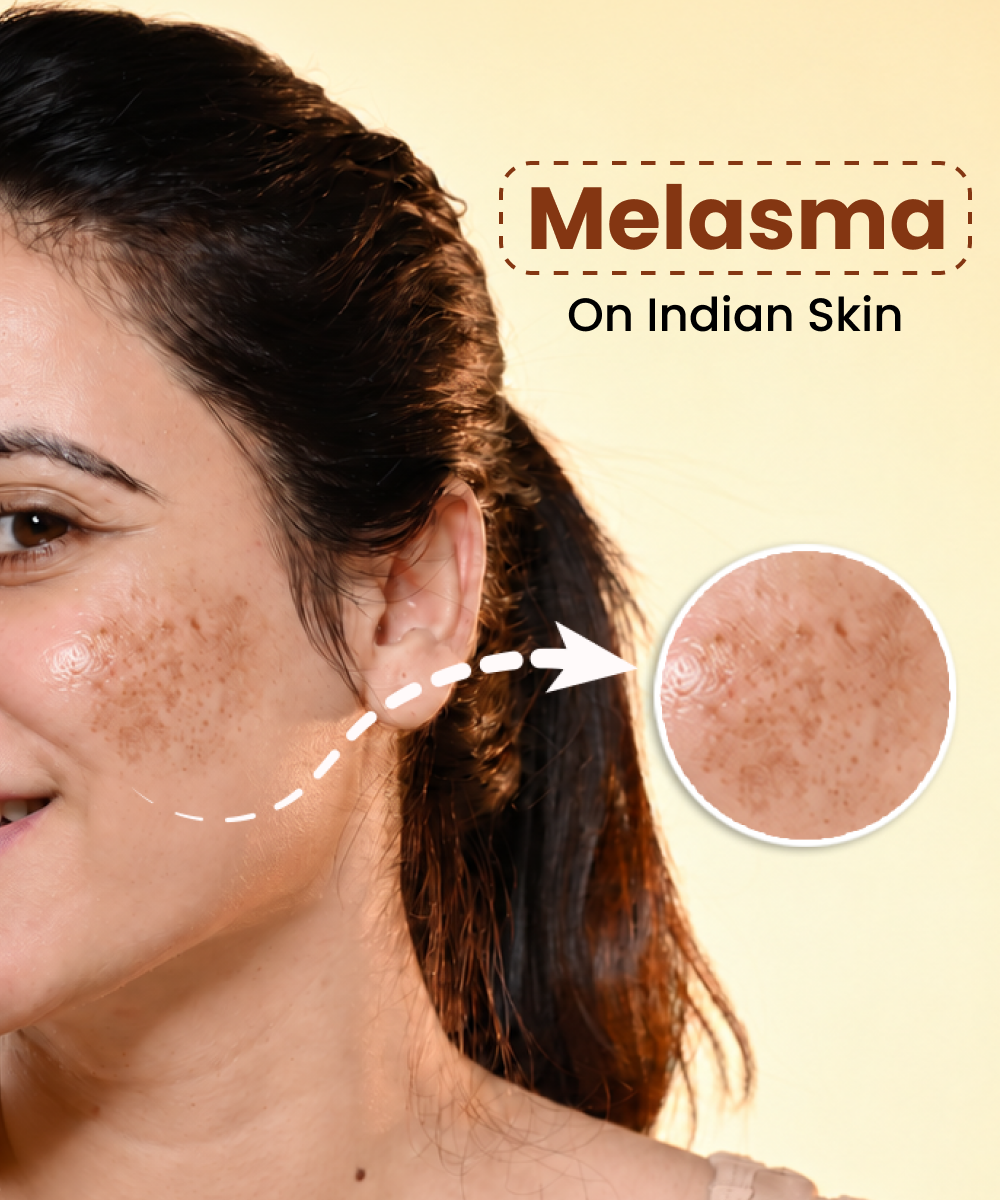
Melasma is a chronic form of facial pigmentation. Sunlight, visible light, heat and hormones keep pushing excess melanin into brown patches that usually appear on both sides of the face. Indian skin produces melanin readily, so these triggers tend to leave darker and longer-lasting patches than they do on fair skin. Daily sunscreen is the first step, because a brightening product cannot keep up with skin that is still being triggered. Brightening ingredients such as alpha arbutin, which Vilvah uses in its Milk Drops Brightening Serum, work alongside sun protection to support a more even-looking tone. Melasma that spreads, or does not improve after months of care, needs a dermatologist. Vilvah’s site lists six brightening products led by its Milk range, and none of them is sold as a melasma cure.
Melasma is chronic, trigger-driven pigmentation, and it does not fade like a tan
The most common mistake with melasma is waiting for it to fade the way a tan does. A tan follows one stretch of sun exposure and lightens as the skin renews itself over the next few weeks. Melasma stays because the pigment-producing cells in the affected patches remain overactive and release extra melanin every time a trigger reaches them.
Definition: Melasma: a chronic pigmentation condition that causes brown or grey-brown patches, usually symmetrical, on the cheeks, forehead, bridge of the nose, upper lip or jawline.
Post-inflammatory hyperpigmentation behaves differently. These are the dark marks left by acne, a burn or a scratch. They sit exactly where the injury was and usually lighten over months once it has healed. By contrast, melasma patches have soft, blotchy edges, tend to mirror each other on both sides of the face, and darken again with sun, heat or hormonal change.
Hyperpigmentation is the umbrella term for any area of skin darker than the skin around it, and melasma is one of its most persistent forms. Brands use the broader word for their ranges too. What the Vilvah brightening range offers led by its Milk range, including the Milk Drops Brightening Serum and the Milk Mud Mask.
Why does Indian skin develop melasma more readily?
Most Indian skin falls in the medium to deep range, and the pigment cells in these skin tones react quickly and strongly to stimulation. That helps protect against sunburn. It also means any trigger turns into visible pigment, so melasma on Indian skin often looks darker and takes longer to settle than it does on fair skin. Several triggers add to that baseline:
- Strong sun for most of the year. Ultraviolet light is the trigger most closely tied to melasma getting darker, and much of India gets strong sun outside the monsoon. Short, unplanned exposure adds up: a daily commute, a school run or time on a balcony can matter more than one beach holiday.
- Visible light and heat. Ultraviolet light is not the only trigger. Visible light from ordinary daylight and heat from cooking or hot weather can both deepen patches. This is why some people see their melasma worsen indoors, near a window or a stove.
- Hormonal change. Melasma is strongly linked to pregnancy and hormonal contraception, and women get it far more often than men. Patches tied to hormones can last after the hormonal trigger has passed.
- Family history. Melasma often runs in families. If a parent or sibling has melasma, start strict sun protection before any patches appear rather than waiting for them.
- Irritated skin. Harsh scrubs, strong home peels and products that sting all inflame the skin. On a melanin-rich face, inflammation usually adds pigment rather than removing it.
Sunscreen comes first because brightening cannot outrun active triggers
Every melasma routine starts with daily sun protection, on cloudy days as well as sunny ones. A brightening serum works on pigment that is already in the skin, while sunscreen limits the new pigment that keeps replacing it. If you skip the sunscreen, the serum keeps working on pigment that grows back every afternoon.
For Indian conditions, a sun-protection routine that holds up looks like this:
- Use a broad-spectrum sunscreen every morning. Broad-spectrum labelling means the formula protects against both UVA and UVB, and UVA passes through clouds and window glass. Make it the last step of your morning routine, including on days you spend mostly indoors.
- Choose a tinted formula if you can. Tinted sunscreens contain pigments that block part of visible light, which untinted formulas filter less well. For melasma, that extra coverage matters more than a higher number on the label.
- Apply more than feels natural. Most people use far less sunscreen than the label assumes, so they get less protection than the label promises. Cover the cheeks, forehead, upper lip and jawline evenly, because melasma usually sits there.
- Reapply, and add shade. Sweat, humidity and touching your face wear sunscreen away during the day, so reapply before you go out again in the afternoon. A wide-brimmed hat and avoiding the harshest midday sun block exposure that sunscreen cannot fully stop, and the routine needs to continue through the monsoon and winter.
Where do brightening ingredients like alpha arbutin fit?
A brightening ingredient is a topical active meant to reduce the look of uneven pigment. Most work by slowing melanin production or by helping pigmented cells shed. They are the second layer of a melasma routine: start them once sun protection is in place, and give them months rather than weeks before you judge the result.
Alpha arbutin is one of these ingredients, and it is the one Vilvah puts in its Milk Drops Brightening Serum. Vilvah positions the serum as support for a brighter, more even-looking tone. The brand does not market Milk Drops as a melasma treatment, and none of the Vilvah listings we reviewed claims to clear pigmentation.
On Vilvah’s own site, the serum has a 4.8 rating across more than 2,000 reviews for each of its two sizes, which makes it the most-reviewed product in the brightening range. These are customer reviews on the brand’s own site, not clinical results. They show how much people like using the serum, not whether it fades melasma.
Introduce one new active at a time. Patch-test it on the jawline for a few days, and stop if it stings or turns the skin red. Irritation can darken melasma, so a gentle product used consistently is better than a strong one that inflames the skin.
How do the main options for fading melasma compare?
Melasma care works in layers, and each layer does a different job. The table shows what each option does and where it falls short.
|
Option |
What it does |
Who provides it |
Main limitation |
|---|---|---|---|
|
Daily broad-spectrum sunscreen |
Limits new pigment from UV and, if tinted, from part of visible light |
Over the counter |
Works only with generous daily use and reapplication |
|
Shade, hats and timing |
Cuts exposure that sunscreen cannot fully block |
Your own habits |
Does nothing about heat from cooking or hot weather |
|
Brightening serums with ingredients such as alpha arbutin |
Support a more even-looking tone over months |
Over the counter, for example Vilvah’s Milk Drops |
Cannot keep up with unprotected skin; results vary |
|
Gentle cleansing and barrier care |
Reduces irritation that can add pigment |
Over the counter |
Supportive only; does not lighten patches by itself |
|
Prescription topicals |
Stronger pigment-reducing treatment chosen for your skin |
Dermatologist |
Needs supervision; some actives irritate deeper skin tones |
|
In-clinic procedures such as peels and lasers |
Target stubborn pigment under controlled conditions |
Dermatologist |
Can worsen pigment on melanin-rich skin if poorly matched |
The pattern in the table is the practical point. Over-the-counter options protect and support the skin, and a dermatologist provides the actual treatment. People with mild melasma usually start with the first four rows, and anyone whose patches keep spreading needs the last two.
What the Vilvah brightening range offers, and what it does not claim
Vilvah’s answer to hyperpigmentation is a brightening range, not a melasma treatment. The brightening range on the Vilvah site includes a serum, a mask, a cleanser and a kit in two sizes, all labelled for brightening.
- Milk Drops Brightening Serum. This is the leave-on step and the product that contains alpha arbutin. It comes in two sizes, and each is rated 4.8 on Vilvah’s site.
- Milk Mud Mask (Immediate Brightness). This mask is for occasional use, not every day, and Vilvah lists it with a 4.6 rating from 587 reviews. If your skin is prone to melasma, use the mask gently and stop if your face feels red or tight afterwards.
- Milk Powder Face Wash. The cleanser starts the routine, before serum and sunscreen. Vilvah lists the Milk Powder Face Wash at 4.5 from 1,673 reviews.
- Face Brightening Combo. Vilvah sells the kit in a standard size and a large size. Each size is rated 4.5 on Vilvah’s site, with more than 1,660 reviews each.
None of these listings promises to clear melasma, and that restraint is accurate. These products belong in a routine built on sunscreen and do not replace it.
See a dermatologist when melasma spreads, changes or ignores months of care
See a dermatologist whenever you are unsure of the diagnosis or home care has stopped helping. In these situations, book a consultation instead of buying another product:
- The patches are spreading or darkening despite daily sunscreen. Several months of consistent sun protection should at least stop melasma from getting worse. If it has not, your skin needs a treatment plan that over-the-counter products cannot provide.
- You are not sure it is melasma. Some other conditions look similar, and some of them need medical attention. A dermatologist can examine your skin and confirm what you are dealing with before you spend months on the wrong approach.
- One spot looks different from the rest. Melasma is flat and does not usually bleed or itch. A spot that bleeds, itches, grows quickly or has an irregular border needs prompt medical assessment.
- You are pregnant, breastfeeding or planning a pregnancy. Ask your doctor before starting or continuing any active ingredient. This article makes no claim that any product is suitable during pregnancy.
- Products keep irritating your skin. On Indian skin, stinging and redness can deepen melasma. If irritation keeps happening, ask a dermatologist to design a routine around your skin.
A dermatologist can prescribe stronger topicals or recommend in-clinic procedures suited to deeper skin tones, and that is usually where stubborn melasma ends up. Vilvah’s pigmentation range works alongside that care, not in place of it.
Melasma questions people ask about Indian skin
Can melasma go away completely?
Melasma can lighten a great deal, but it often comes back when its triggers return, so most people manage melasma rather than cure it for good. Daily sunscreen, shade and steady brightening care keep patches lighter. A dermatologist can add stronger treatment when melasma stays stubborn despite consistent home care.
Why does my melasma get worse in summer?
Melasma darkens with more light and more heat, and an Indian summer brings both. Ultraviolet and visible light push pigment cells harder, and heat adds a separate trigger. Using sunscreen, preferably tinted, and staying in the shade all year rather than only in summer reduces that seasonal swing in melasma.
Does Vilvah’s Milk Drops serum treat melasma?
Vilvah positions its Milk Drops Brightening Serum, which contains alpha arbutin, as support for a more even-looking tone, not as a melasma treatment. Milk Drops works best as one layer in a routine built on daily sunscreen. If melasma keeps spreading, see a dermatologist, whatever serum the routine includes.
Is sunscreen enough on its own for melasma?
Sunscreen is the foundation of melasma care and can stop patches getting darker, but sunscreen alone does little to lighten pigment that is already there. Most routines add a brightening serum, and stubborn melasma usually needs prescription treatment from a dermatologist. Without daily sunscreen, none of those extra steps can keep up.
Can I use alpha arbutin during pregnancy?
Ask your doctor before using alpha arbutin or any other active ingredient while pregnant or breastfeeding. This article makes no safety claim about alpha arbutin in pregnancy. A doctor who knows your history is best placed to assess pregnancy-related melasma, and sun protection is a good topic to raise at the same appointment.
How long does melasma take to lighten?
No single timeline applies, and we did not find a verified figure to quote. In practice, judge melasma care over months rather than weeks, and only if you have used sunscreen every day throughout. If patches keep spreading despite consistent care, see a dermatologist instead of waiting longer.
Related Stories
-

Prickly Heat: What Causes Heat Rash and How Aloe Vera Gel Calms It
-

Freckles on Face: Why They Appear and Whether You Can Fade Them
-

Bakuchiol vs Retinol: What It Is and Why It Suits Under-Eye Skin
-

Best Face Wash and Serum for Glowing Skin: Choosing a Pair
-

Is Aloe Vera Really Good for Hair Growth and Scalp Health?
-

Sunken Eyes: Why Under-Eyes Look Hollow and What Eye Cream Can Fix
-

Double Cleansing: What Is It, How to Do It & Its Benefits for Healthy-Looking Skin
-

Hair Growth Tips for Men: Effective Tips Every Man Should Know
-

Goat Milk vs Cow Milk for Skin: Which One Your Skin Responds To


Leave a comment
All comments are moderated before being published.
This site is protected by hCaptcha and the hCaptcha Privacy Policy and Terms of Service apply.