

 Track Order

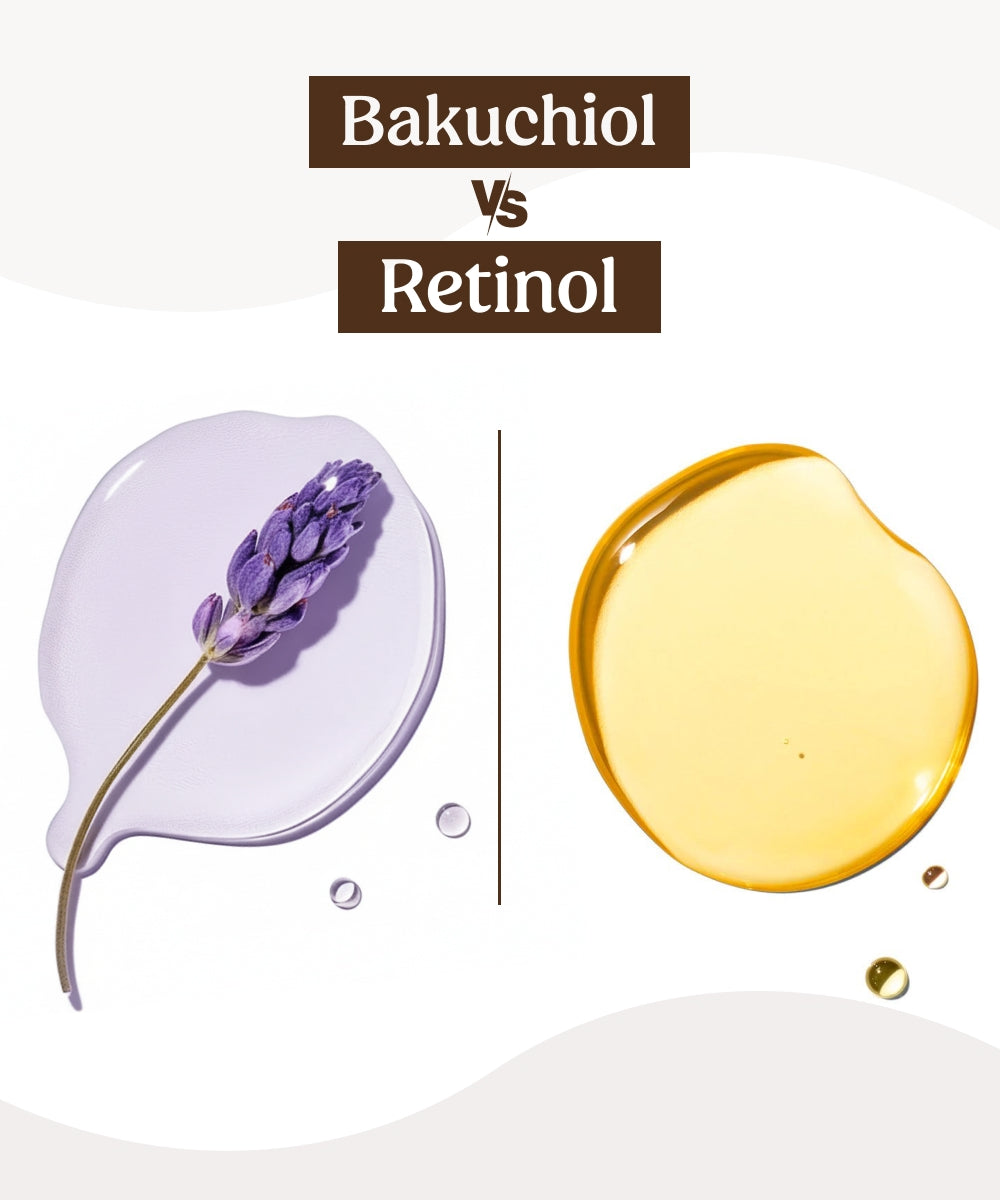
Bakuchiol is a plant-derived skincare active, extracted from the seeds of the babchi plant, and is often used as a gentler alternative to retinol. It goes after the same concerns, like texture, fine lines and uneven tone, without retinol's reputation for dryness and irritation. That gentleness matters most on the thin skin around the eyes. It also suits Indian skin, which dermatologist Dr. Sonali Kohli, as reported by Team Luke, says does better with simple, balanced routines than with heavy layering. In practice, one well-chosen active in a light cream will do more for Indian under-eye skin than a stack of imported products built for another climate.
Bakuchiol is a plant active that brands use where retinol is too harsh
Definition: Bakuchiol: a compound extracted from the seeds of the babchi plant (Psoralea corylifolia), used in skincare for the same goals as retinol but with a gentler feel on the skin.
Babchi has a long history in Ayurveda, and bakuchiol is the single compound that cosmetic chemists isolate from those seeds. Bakuchiol is not a retinoid. Chemically it belongs to a different family from vitamin A. Brands call it a "retinol alternative" because people reach for it with the same aims: smoother texture, softer fine lines and a more even tone.
Vilvah uses bakuchiol as a hero active in its eye cream, and the reasoning is practical. Under-eye skin is where people most often give up on retinol, and bakuchiol lets a cream work on those concerns without the adjustment period that retinol tends to demand. This page is the reference that every Vilvah article mentioning bakuchiol points back to, so it sticks to what bakuchiol is and where it fits, and leaves out promises the evidence cannot keep.
Bakuchiol also fits the way skincare habits are moving. Some brands describe a shift away from long routines toward shorter "skinimalist" routines (CBGärdN, 2026). A single multi-purpose active in one product suits that kind of routine far better than a separate serum for every concern.
How does bakuchiol compare with retinol for everyday use?
Retinol is a vitamin A derivative and the best-known anti-ageing active in Western skincare. People rely on it because it works on texture and fine lines. Many users also find it drying, flaky or stinging while their skin adjusts, so retinol is usually introduced slowly, a few nights a week, and kept to the evening.
Bakuchiol is used for the same goals but behaves differently in a routine. Most users find it easier to tolerate from the first application, so it can go into a daily product instead of a cautious once-or-twice-a-week ritual. That is the main practical difference: retinol has to be managed, and bakuchiol can simply be used.
Clinical evidence comparing the two head-to-head is limited and comes from small studies. We have found no published study of bakuchiol on Indian skin specifically. A buyer comparing creams should treat claims of "the same results as retinol" with care and ask the brand what testing supports them.
|
Attribute |
Bakuchiol |
Retinol |
|---|---|---|
|
Origin |
Plant compound from babchi seeds |
Vitamin A derivative |
|
Chemical class |
Not a retinoid |
Retinoid |
|
How users describe tolerance |
Generally gentle from the start |
Often drying or irritating at first |
|
How it is usually introduced |
Daily, as part of a regular product |
Slowly, a few nights a week |
|
Fit for the eye area |
Suited to thin, reactive skin |
Often too strong for under-eye use |
|
Evidence on Indian skin |
No India-specific study found |
Outside the scope of this page |
Why the skin around the eyes needs a gentler active
The skin under the eyes is thinner than the skin on the cheeks or forehead. It has fewer oil glands, so it dries out faster and reacts sooner to strong actives. An active that a cheek handles comfortably can leave the under-eye area tight, red or flaky, and that irritation is easy to see because the skin there is so fine.
That is why Vilvah puts bakuchiol in an eye cream rather than a retinoid. The aim around the eyes is steady improvement without a flare-up, and a gentler active gives a cream room to be used every day. Daily use matters because an eye cream's results build over weeks, and a product that stings gets abandoned before that point.
Pigmentation is the other reason Indian under-eye skin needs care. Higher melanin gives Indian skin some protection against UV damage, but it does not prevent sun damage, and pigmentation and dark spots remain common concerns, according to Team Luke's summary of research on skin of colour. Irritated skin can darken as it heals. On melanin-rich skin, avoiding irritation is part of avoiding dark marks, not just a matter of comfort.
Korean and Western skincare were built for different skin and climates than India's
Most of the advice Indian buyers read about eye care comes from two traditions: Korean and Western. Neither was designed with Indian skin or an Indian summer in mind. That does not make either one wrong, but it does mean both need adapting before they reach a Mumbai bathroom shelf.
K-beauty has become popular in India, helped by growing skincare awareness and social media influencers, according to Team Luke. No reliable published figure for the size of that following in India could be verified, so this page gives none.
Korean routines centre on prevention and layering
K-beauty is commonly described as prevention- and hydration-led, built around protecting skin before problems appear. The routine is multi-step and often described as a 10-step regimen, although published counts vary from source to source. K-beauty is also widely credited with popularising formats such as BB creams and sheet masks, which are now everyday products well beyond Korea.
The open question for Indian buyers is whether the routine transfers. Dermatologist Dr. Sonali Kohli has said that Indians who follow Korean routines "blindly" may be doing "more harm than good", because those routines were designed for Korean skin and climate. Her point is about adaptation, not rejection.
Western routines centre on targeted correction
Western skincare is usually described as targeted and correction-led: identify a concern, then apply a strong active to fix it. Retinol is the clearest example. That approach can work well, but it assumes skin can tolerate potent actives, and it says little about how those actives behave on melanin-rich skin in heat and humidity. There is no solid evidence on how Western routines suit Indian skin specifically, and buyers should be wary of anyone who claims otherwise.
|
Approach |
Core philosophy |
Typical structure |
What an Indian buyer should adapt |
|---|---|---|---|
|
Korean (K-beauty) |
Prevention and hydration |
Many layered steps |
Fewer layers, lighter textures in humid months |
|
Western |
Targeted correction |
Fewer steps, stronger actives |
Gentler actives where irritation risks dark marks |
|
Indian-adapted |
Simplicity and balance |
A handful of core steps |
One multi-purpose active per area, daily sunscreen |
Bakuchiol sits between the two traditions. It works on the concerns Western skincare targets, at a gentleness closer to K-beauty's preventive approach, which is why it fits a pared-back Indian routine.
What melanin-rich skin in a humid climate needs from an eye cream
Climate is the part of the Korean comparison that matters most in daily use. Korean products are typically made to trap moisture through cold, dry winters. Much of urban India, by contrast, is hot and humid, and thick, moisture-trapping layers can feel heavy or congesting in those conditions, according to Team Luke. India's climate varies a great deal by region and season, so this is a description of the conditions, not a clinical finding.
For the under-eye area, that leads to three practical criteria:
- A light texture that absorbs fully. A cream that sits on top of the skin in the heat tends to migrate into the eyes or feel greasy by midday. Look for a formula that soaks in within a minute or two and leaves no film.
- A gentle active rather than a strong one. Irritation on melanin-rich skin can leave darker marks behind, so an active that rarely stings is the safer daily choice. This is the main reason bakuchiol suits Indian under-eye skin better than retinol.
- One product doing several jobs. Layering three eye products multiplies texture, cost and the chance of a reaction. A single cream with a multi-purpose active fits the simpler routine that Indian skin tends to prefer.
- Daily sun protection on the surrounding face. Melanin offers some protection but does not stop pigmentation. Whatever eye cream you use, it works best alongside regular sunscreen on the rest of the face.
Where K-beauty ingredients still earn a place
Rejecting K-beauty outright would be a mistake, and the sources do not support a flat "no." Individual Korean ingredients can suit Indian skin even when the full routine does not. The problem lies with routines and textures, not ingredients.
Centella asiatica is the clearest example. According to Team Luke's summary of a systematic review of clinical trials, centella can support wound healing and skin repair through improved collagen synthesis and microcirculation, largely thanks to compounds such as asiaticoside and madecassoside. That review covers skin repair, not cosmetic results on Indian skin, so the honest takeaway is that centella has a research basis and the routine around it is what needs adapting.
Bakuchiol works the same way in reverse. It comes from a plant with Ayurvedic roots and is now used in formulas worldwide. The useful question for any active, whether Korean, Western or Indian in origin, is whether it suits your skin and climate in a texture you will actually keep using.
A simple way to add bakuchiol to an Indian routine
Introducing bakuchiol does not mean rebuilding a routine. The sequence below is the one we suggest to customers moving away from multi-step imported routines.
-
- Strip the routine back first. Keep a cleanser, a moisturiser and a sunscreen, and pause extra serums and eye products for a week or two. That gives you a clean baseline, so you can tell what the new cream is actually doing.
- Patch test the eye cream. Apply a small amount near the outer edge of the eye area for a few days before full use. Under-eye skin reacts sooner than the rest of the face, so this step catches a problem before it becomes visible.
- Apply a small amount with the ring finger. Pat a rice-grain-sized amount along the orbital bone, not on the lid or the lash line. The ring finger applies the least pressure, which matters on thin skin.
- Use the cream daily, morning or night. Bakuchiol does not need retinol's cautious build-up schedule, so consistency is the goal. Results from any eye cream build over weeks, not days.
- Pair it with daytime sun protection. Apply sunscreen to the face after the eye cream has absorbed. Since pigmentation is a common concern on melanin-rich skin, this is what protects the progress the cream makes.
Do not layer bakuchiol with a retinoid eye product at the start. Running two actives at once on the eye area increases the chance of irritation and makes it impossible to tell which product caused a reaction.
Frequently asked questions
1. Is bakuchiol the same as retinol?
No, bakuchiol is not the same as retinol. Bakuchiol is a plant compound from babchi seeds, while retinol is a vitamin A derivative. Bakuchiol is used for similar goals, such as texture, fine lines and uneven tone, but most users find bakuchiol gentler, especially on thin skin like the area under the eyes.
2. Can I use bakuchiol under my eyes every day?
Yes, most people can use a bakuchiol eye cream every day once a patch test has gone well. Bakuchiol is generally gentle enough that it does not need retinol's slow, few-nights-a-week introduction. Apply a small amount along the orbital bone and keep it away from the lash line.
3. Is bakuchiol good for Indian skin?
Bakuchiol suits Indian skin well because it is gentle, and avoiding irritation helps limit dark marks on melanin-rich skin. No published study has tested bakuchiol on Indian skin specifically, so Indian buyers should judge bakuchiol by how their own skin responds over several weeks of consistent use.
4. Does Korean skincare work for Indian skin?
Korean skincare ingredients can work for Indian skin, but the full routine often needs adapting. Dermatologist Dr. Sonali Kohli has said that Indians who follow Korean routines "blindly" may be doing "more harm than good", because those routines were built for Korean skin and climate.
5. Why do heavy eye creams feel wrong in Indian summers?
Heavy eye creams feel wrong in Indian summers because many rich formulas are designed to trap moisture through cold, dry winters. In hot, humid Indian cities, those thick layers can feel greasy or congesting. A lighter eye cream that absorbs fully suits humid months better.
6. Can I use bakuchiol and retinol together?
Bakuchiol and retinol can share a routine, but not at the start, and not both on the eye area. Introduce one active at a time so you can tell which product your skin is reacting to. For under-eye skin, a single gentle active such as bakuchiol is usually enough.
7. How long does a bakuchiol eye cream take to show results?
A bakuchiol eye cream shows results gradually, over weeks rather than days, like most eye creams. The cream needs consistent daily use, because skin changes such as texture and tone build slowly. Stopping after a few days is the most common reason people decide an eye cream does not work.
8. Do I still need sunscreen if I use a bakuchiol eye cream?
Yes, you still need sunscreen with a bakuchiol eye cream. Melanin gives Indian skin some protection against UV damage, but it does not prevent sun damage or pigmentation. Daily sunscreen on the face protects whatever progress the bakuchiol eye cream makes against dark spots and uneven tone.
Related Stories
-

Prickly Heat: What Causes Heat Rash and How Aloe Vera Gel Calms It
-

Freckles on Face: Why They Appear and Whether You Can Fade Them
-

Best Face Wash and Serum for Glowing Skin: Choosing a Pair
-

Is Aloe Vera Really Good for Hair Growth and Scalp Health?
-

Sunken Eyes: Why Under-Eyes Look Hollow and What Eye Cream Can Fix
-

Melasma on Indian Skin: Causes and What Helps It Fade
-

Double Cleansing: What Is It, How to Do It & Its Benefits for Healthy-Looking Skin
-

Hair Growth Tips for Men: Effective Tips Every Man Should Know
-

Goat Milk vs Cow Milk for Skin: Which One Your Skin Responds To


Leave a comment
All comments are moderated before being published.
This site is protected by hCaptcha and the hCaptcha Privacy Policy and Terms of Service apply.