

 Track Order

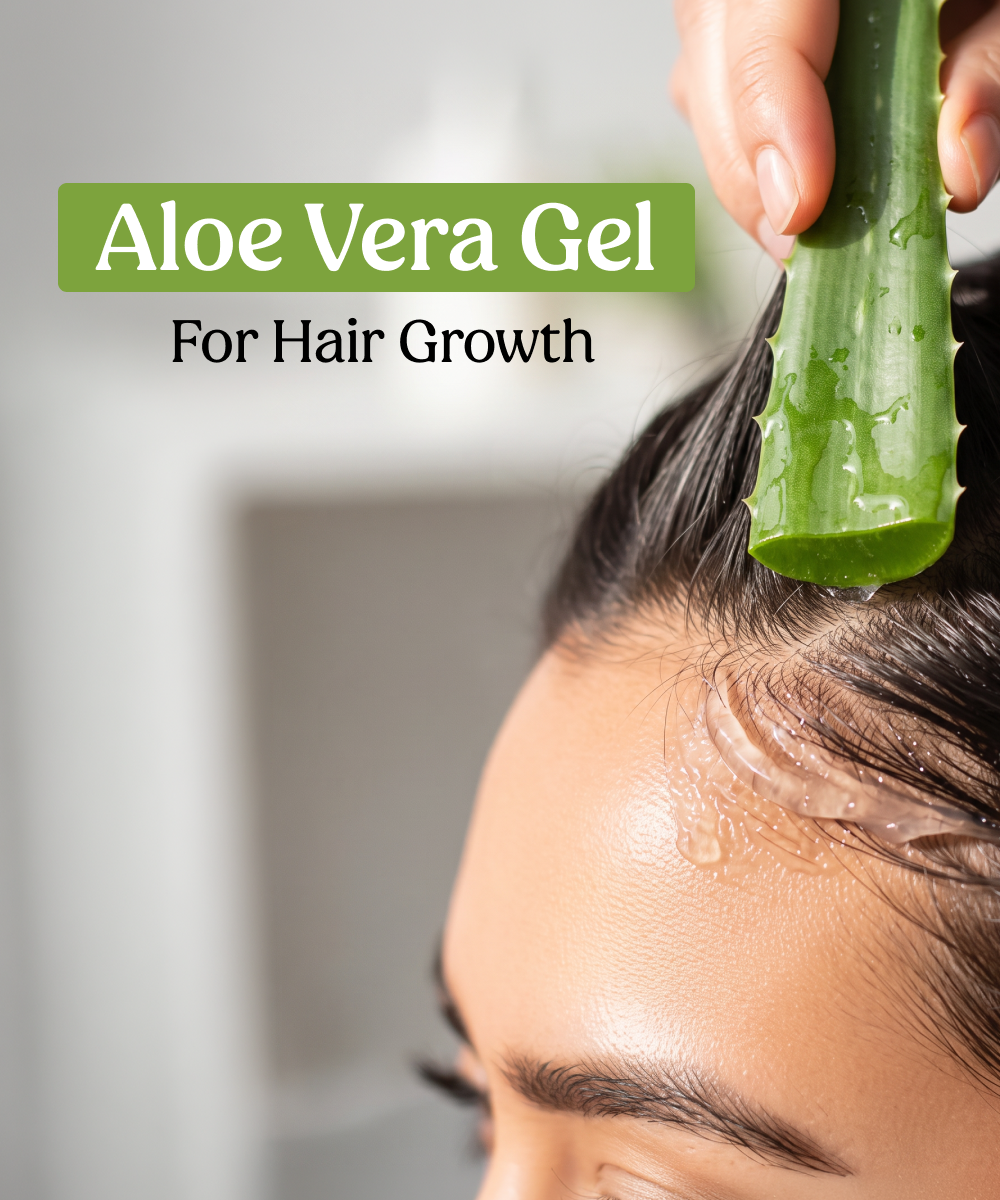
Aloe vera can soothe and condition the scalp, but WebMD’s medically reviewed guide says that while some people credit aloe vera with hair growth, there is no scientific proof that it works. Its best case is cosmetic: softer hair, a moisturised scalp and possibly less itching and flaking, supported by limited and dated research. A medicated dandruff shampoo or a treatment for a hair loss condition does more than aloe vera gel can, so the gel should not stand in for either. If your hair is falling out in patches, your part is widening or the flaking will not clear, see a dermatologist before you spend months on a home remedy.
The evidence for aloe vera and hair growth is thin and inconclusive
Aloe vera gel has a long reputation as a hair growth remedy, and the reputation has run well ahead of the research. Medical publishers describe the evidence as sparse rather than negative. Nobody has shown that aloe grows hair, and there have not been enough trials to show that it doesn’t. That difference matters, because “unproven” and “disproven” lead to different buying decisions.
Healthline’s medically reviewed article, last updated in April 2023, says there is little clinical evidence to prove or disprove claims that aloe vera speeds up hair growth. The same Healthline piece ends by saying more clinical evidence is needed before the benefits of aloe vera gel for hair can be considered proven. WebMD makes a similar point: few scientific studies have looked at aloe and hair specifically, and research on aloe’s benefits in general has been mixed.
There is one more gap for readers in India. No published figure in our research shows how many people in India use aloe vera on their hair. None of the sources tested aloe on Indian hair types or in a humid climate either. Every study they mention is cited second-hand, and only one, a 1998 dandruff study, has a date.
The most telling source is one with a commercial reason to say otherwise. Origenere sells scalp products that contain aloe, yet its undated, physician-reviewed article concludes there is not enough high-quality human clinical evidence to establish topical aloe vera as a treatment for hair loss or as a direct hair-growth stimulant. When a company that sells the ingredient agrees with two medical publishers, the finding is hard to wave away. Aloe vera’s hair growth benefit is unproven rather than disproven, and neither one is a reason to buy aloe vera gel to grow hair.
Why do people believe aloe vera grows hair?
Three ideas keep the hair growth claim going: the nutrients in the gel, a compound called aloenin, and laboratory results on inflammation. Each sounds convincing on its own, but none shows more hair growing on a human scalp. Much haircare marketing sits in the gap between a promising ingredient and a proven treatment.
Nutrients in the gel do not prove delivery to the follicle
According to WebMD, aloe contains fatty acids, amino acids and vitamins A, B12, C and E, which play a part in healthy hair follicles. Containing a nutrient is not the same as delivering it. Nobody has shown that a vitamin in a gel on the surface of the scalp reaches the follicle in useful amounts.
Aloenin is a hypothesis, not a finding
WebMD also reports that some researchers believe aloenin, a compound in the plant, is a main factor in promoting hair growth, based on observations in people with alopecia. In the same paragraph, WebMD says there is no scientific proof that aloe grows hair, which shows how far the aloenin idea is from an established result. None of our sources names the research behind the aloenin idea.
Lab results on inflammation stop at the lab
Origenere’s review makes a broader point: laboratory findings about inflammation, enzymes or antioxidants do not prove that aloe stimulates hair growth on a human scalp. An ingredient that calms cells in a dish has not been shown to grow hair on a head. The same caution applies to most botanical haircare ingredients, not only aloe.
Scalp comfort is where aloe vera gel makes its best case
The most credible use for aloe vera gel is soothing an itchy, flaky scalp and leaving hair feeling softer. The evidence is still limited and dated, but here at least it points in one direction.
Definition: Seborrheic dermatitis: a common inflammatory skin condition that causes greasy, flaky scaling and itching, most often on the scalp, where its mildest form is known as dandruff.
WebMD reports that researchers found aloe vera can significantly decrease the scaliness and itchiness of seborrheic dermatitis, but it does not name the study or give its size or design. Healthline cites a 1998 study that found aloe vera helped resolve the scalp inflammation caused by dandruff. That study is more than 25 years old and is reported second-hand, so it supports a modest claim at most.
Not every source accepts even that much. Origenere’s physician review says aloe is not a replacement for treating seborrheic dermatitis or scalp psoriasis. Put together, the three sources suggest that aloe vera gel may ease scaling and itching, but it does not replace a medicated antidandruff shampoo.
Oily and dry hair react to aloe in different ways
People often use aloe vera gel on oily scalps and like the light, clean feel it leaves. The usual explanation is that its enzymes break down excess sebum, but that has not been proven, so judge it by how your own scalp responds. Dry hair needs a different caution: some haircare brands warn that aloe’s mild cleansing compounds can leave hair dry or brittle, which is why aloe is often paired with an oil. The Tangle Teezer blog that makes this point is undated and cites no evidence.
WebMD also cites an unnamed study in which fresh aloe juice gave hair some protection from UV radiation, with the amount varying by hair type. One unnamed study does not justify skipping a hat in strong sun.
How do the common claims about aloe and hair compare with the evidence?
The table sets each common claim against what the sources we reviewed actually say. Check the third column first, since most product labels leave it out.
|
Claim |
What the reviewed sources say |
Strength of evidence |
Practical takeaway |
|---|---|---|---|
|
Makes hair grow faster |
WebMD finds no scientific proof; Healthline finds little clinical evidence either way |
Unproven |
Do not buy aloe vera gel for growth |
|
Prevents hair loss |
Healthline says no studies conclusively confirm a benefit |
Unproven |
Take hair fall to a dermatologist |
|
Eases dandruff itch and scaling |
WebMD reports less scaling and itching; Healthline cites a 1998 study |
Limited and dated |
A reasonable add-on, not a substitute |
|
Controls an oily scalp |
Commonly used for this; no proven mechanism |
Anecdotal |
Judge by how your scalp feels |
|
Conditions and softens hair |
Common cosmetic use; one brand warns |
User-reported |
Pair with an oil if hair runs dry |
|
Protects hair from UV |
One unnamed study, effect varied by hair type |
Very thin |
Not a reason to skip sun protection |
What risks come with putting aloe vera gel on the scalp?
Aloe vera gel is mild for most people, but check three things before using it on your scalp regularly: allergy, the yellow latex layer, and contamination in homemade gel. All three are easier to check on the wrist than to deal with on the scalp.
WebMD and Healthline both recommend a patch test: rub a small amount on the inside of your wrist and wait about 2 hours to see whether your skin reacts. Some people are allergic to aloe and develop a rash. Finding that out on your wrist is far easier than finding out across your whole scalp, where a reaction is harder to see and slower to settle.
Homemade gel is less predictable than people assume
Many people in India keep an aloe plant at home and scoop the gel straight from the leaf, which feels like the purest choice. Origenere’s review warns that fresh aloe introduces variability and contamination risk. It advises avoiding the yellow latex under the leaf skin, preparing the gel hygienically, and stopping if burning, rash or itching appears. Keep the source in mind: Origenere sells bottled scalp products and Vilvah sells formulated personal-care products, so both have a reason to favour a preserved formula. The hygiene advice holds whoever gives it.
A careful way to use aloe vera gel on hair and scalp
Use aloe vera gel as a simple, low-risk addition to a routine you already trust. These steps keep it that way.
- Patch-test before the first scalp application. Do the wrist test described above and wait the full 2 hours. If you get a rash or itch on the wrist, don’t go further.
- Choose the gel deliberately. A formulated aloe vera gel has a more consistent texture and shelf life than gel taken from a leaf. If you prefer fresh aloe, cut away the yellow latex layer, use clean tools, and make small batches that you use quickly.
- Check your medicines first. Take care if you use hydrocortisone or another steroid cream on your scalp. WebMD warns that aloe vera can increase the amount of cortisone absorbed by the skin. Ask the doctor who prescribed the cream before using both on the same area of skin.
- Apply to the scalp, then add oil if your hair runs dry. Part the hair, massage a thin layer of gel into the scalp, leave it on for as long as the product directions say, then rinse. If your hair already feels dry, it may need an oil or conditioner afterwards.
- Set frequency by your scalp, and judge it on comfort. Brand blogs suggest anywhere from once to three times a week, but there is no evidence-based schedule. Follow the product’s directions, cut back if your scalp feels tight or irritated, and judge aloe vera gel by itch and softness, not by new hair.
When should hair fall or scalp flaking go to a dermatologist?
See a dermatologist if hair fall or flaking comes on suddenly, appears in patches, hurts, or is still there after weeks of gentle care. In those cases aloe vera gel has no place as the main treatment. Origenere’s physician review states plainly that aloe is not a replacement for treatments for androgenetic alopecia, scalp psoriasis, seborrheic dermatitis or inflammatory hair loss.
- Round patches of sudden hair loss. Patches like these need a diagnosis, not a home remedy. A dermatologist can examine your scalp and find the cause.
- A widening part or thinning crown. Gradual thinning in a pattern is the typical sign of androgenetic alopecia, which Origenere’s review lists among the conditions aloe cannot replace treatment for. A dermatologist can confirm the cause and explain treatments that have been tested in people.
- Stubborn scaling or raised plaques. Scaling that keeps coming back despite a medicated shampoo needs a professional assessment. Seborrheic dermatitis and scalp psoriasis both respond better to targeted treatment than to aloe alone.
- A reaction after using aloe. If you get burning, a rash or itching after applying aloe vera gel, stop using it. If the reaction continues after you stop, see a doctor.
Aloe vera gel belongs in a haircare routine as a comfort product. It has not earned a place as a treatment.
Frequently asked questions about aloe vera for hair
1. Does aloe vera gel actually make hair grow faster?
No, aloe vera gel has not been shown to make hair grow faster. Healthline’s medically reviewed article finds little clinical evidence to prove or disprove claims that aloe vera speeds up hair growth, and WebMD says there is no scientific proof. It is better to treat aloe vera gel as a scalp conditioner than as a growth treatment.
2. Can aloe vera gel stop hair fall?
No published study shows that aloe vera gel stops hair fall. Healthline notes that no studies conclusively confirm aloe vera helps prevent hair loss. Hair fall that is sudden, patchy or steady over several months has many possible causes, and a dermatologist can find the cause and recommend a treatment with evidence behind it.
3. Is aloe vera gel good for dandruff?
Aloe vera gel may ease the itching and scaling of dandruff, but the evidence is limited and dated. WebMD reports that researchers found aloe reduced scaling and itching, and Healthline cites a 1998 study on scalp inflammation. Aloe vera gel is a reasonable add-on, but it does not replace a medicated antidandruff shampoo.
4. Is fresh aloe from the plant better than store-bought gel?
Fresh aloe from the plant is not automatically better than store-bought aloe vera gel. Origenere’s review warns that fresh aloe introduces variability and contamination risk, and leaf gel can carry the irritating yellow latex. Preserved gel is more predictable, although brands that sell formulated products, Vilvah included, benefit from saying so.
5. How often should I put aloe vera gel on my scalp?
There is no evidence-based schedule for applying aloe vera gel to the scalp. Suggestions of once, twice or three times a week come from brand blogs, not studies. Follow the directions on your aloe vera gel, start with less frequent use, and adjust based on how your scalp and hair respond over the following weeks.
6. Is aloe vera gel safe to use with steroid creams?
Yes, but take care when using aloe vera gel alongside steroid creams. WebMD warns that aloe can increase the amount of cortisone the skin absorbs from creams such as hydrocortisone. If you use a prescribed steroid on your scalp or face, ask your doctor before applying aloe vera gel to the same area.
7. Has aloe vera gel been studied on Indian hair?
None of the sources in our research tested aloe vera gel on Indian hair types or in Indian climates. Every source we reviewed is international, and none reports how many people in India use aloe vera on their hair. What those sources say about aloe vera gel applies to Indian users only in general terms.
Related Stories
-

Prickly Heat: What Causes Heat Rash and How Aloe Vera Gel Calms It
-

Freckles on Face: Why They Appear and Whether You Can Fade Them
-

Bakuchiol vs Retinol: What It Is and Why It Suits Under-Eye Skin
-

Best Face Wash and Serum for Glowing Skin: Choosing a Pair
-

Sunken Eyes: Why Under-Eyes Look Hollow and What Eye Cream Can Fix
-

Melasma on Indian Skin: Causes and What Helps It Fade
-

Double Cleansing: What Is It, How to Do It & Its Benefits for Healthy-Looking Skin
-

Hair Growth Tips for Men: Effective Tips Every Man Should Know
-

Goat Milk vs Cow Milk for Skin: Which One Your Skin Responds To


Leave a comment
All comments are moderated before being published.
This site is protected by hCaptcha and the hCaptcha Privacy Policy and Terms of Service apply.