

 Track Order

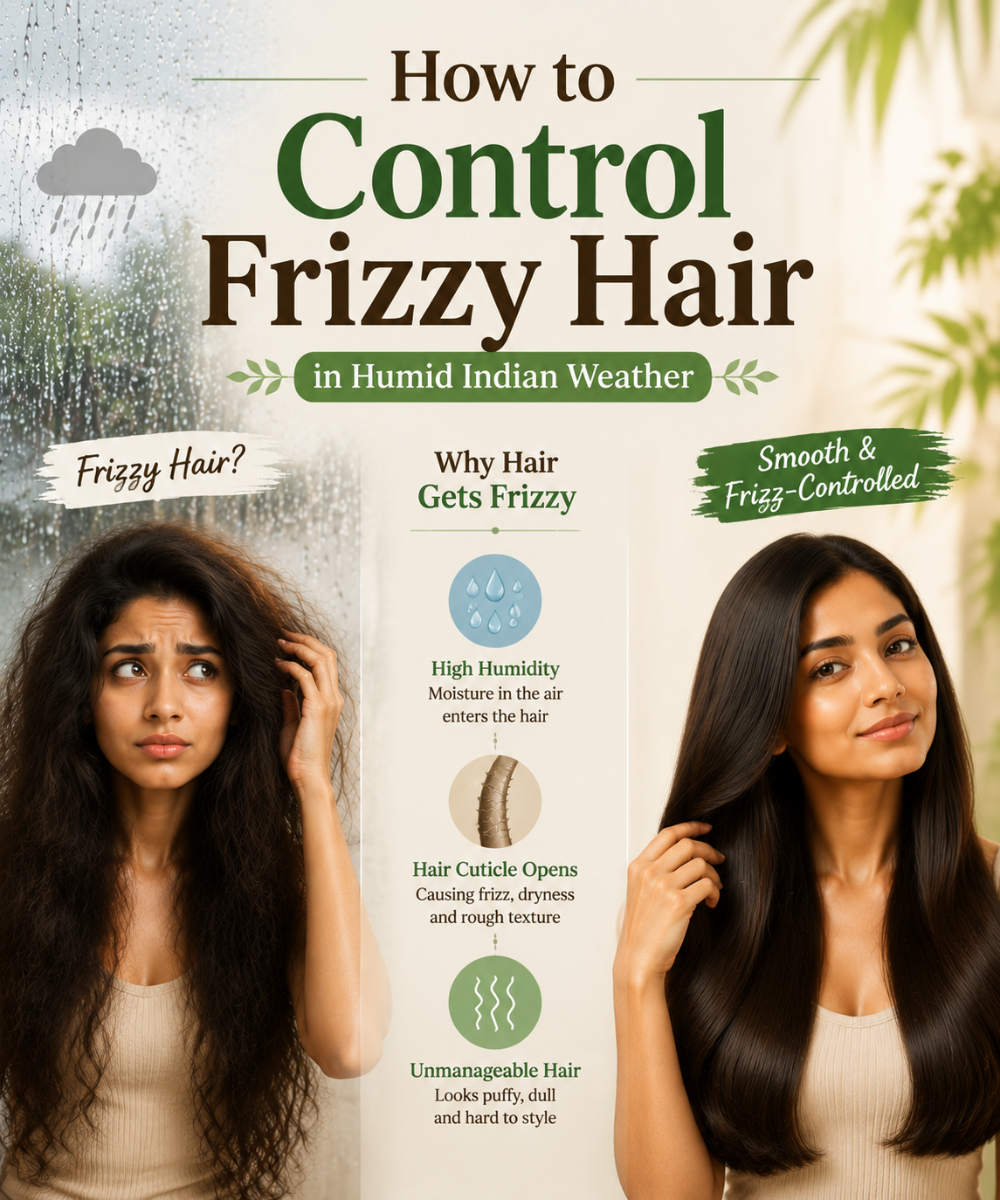
Frizzy hair in humid Indian weather is caused by your hair absorbing water from the air, which swells the strand and forces the outer cuticle to lift. When that cuticle stops lying flat, neighbouring strands fall out of alignment, and that disorder is what you see and feel as frizz. According to research on Indian-origin hair published in Cosmetics & Toiletries (2025), water disturbs the weak hydrogen bonds inside hair, and the more porous the hair, the faster this happens. The practical answer is to seal moisture in and slow moisture exchange, which is what an oil-based serum on damp hair does.
Why Does Humidity Make Your Hair Frizzy?
Humidity frizz is the loss of smooth alignment between hair strands when hair absorbs water from a humid environment. Each strand has an outer layer called the cuticle, which behaves like overlapping roof tiles and protects the inner cortex. Hair holds its shape through strong disulfide bonds and weaker hydrogen bonds, and only the hydrogen bonds react to water.
According to Scientific American (2023), when humidity is high or the cuticle is damaged, more water enters the hair, and too much water swells and cracks the cuticle. Inside the cortex, that water forms new hydrogen bonds between protein rows and pulls strands out of their set shape. A healthy, smooth cuticle keeps most of that water out, which is why sealing and smoothing the surface is the core of frizz control.
Why Is Frizz Worse During the Indian Monsoon?
The Indian monsoon is the worst season for frizz because relative humidity stays high for weeks at a stretch. According to Encyclopaedia Britannica (2026), relative humidity in India's coastal districts rises above 70 percent as the monsoon sets up, and the monsoon burst arrives on a humid wind carrying humidities of more than 80 percent. Cities like Mumbai, Chennai, Kochi, and Kolkata sit inside this band from June to September.
Hard water across many Indian cities makes the problem worse. Mineral deposits from hard water build up on the strand and roughen the cuticle, which raises porosity and lets even more humidity in. Washing with a harsh sulfate cleanser strips the hair's natural oils on top of that, leaving strands dry and primed to grab moisture from the air.
Why Does Some Hair Frizz More Than Others? The Role of Hair Porosity
Hair porosity is how easily hair absorbs and releases water, and high porosity is the strongest predictor of frizz. According to the Marico Ltd. study in Cosmetics & Toiletries (2025), hair with higher porosity absorbs and loses water faster, and that rapid water movement drives the hydrogen-bond rearrangement that pulls strands out of alignment.
Bleaching, colouring, heat styling, and hard water all raise porosity by stripping the hair's protective outer layer. The same research found that oils reduce frizz by penetrating the strand and filling the gaps that let water in. This is why low-porosity, well-conditioned hair stays smoother through a humid day than high-porosity, damaged hair does.
What Habits and Products Make Frizz Worse in Humid Weather?
Several everyday habits raise porosity or strip moisture, which makes humidity frizz worse. Cutting these out matters as much as adding the right products.
Rubbing hair dry with a rough towel: friction lifts the cuticle and creates flyaways. Blot gently with a soft cotton cloth instead, so the cuticle stays flat and the strand keeps its smooth surface.
Daily heat styling without protection: flat irons and dryers pull water out of the strand and damage the cuticle, which raises porosity over time. Lower the heat and protect the strand before styling.
Washing with harsh sulfate shampoos: sulfates strip the natural lipids that keep humidity out, leaving hair dry and quick to absorb moisture. A sulfate-free wash like the Vilvah Goat Milk Shampoo cleanses without stripping those lipids.
Skipping conditioner and leave-ins: bare, unsealed hair has nothing slowing water exchange, so it frizzes fastest. A leave-in oil serum closes that gap.
What Actually Controls Frizz in Humid Indian Weather?
The reliable way to control frizz is to seal moisture inside the strand and smooth the cuticle so less humidity gets in. The Vilvah Anti-Frizz Hair Serum is a silicone-free, oil-based leave-in that coats each strand with plant oils to lock in moisture and smooth the surface. As a hair serum for frizzy hair, it works by penetrating the strand rather than only sitting on top of it, which is what lets an oil-based serum hold up through a humid Indian day. Vilvah formulates it to add heat and UV protection for the days you reach for a dryer or straightener.
The table below breaks down the key oils in the Vilvah Anti-Frizz Hair Serum and how each one works against frizz.
|
Ingredient in Vilvah Anti-Frizz Hair Serum |
What it does |
How it controls frizz |
|---|---|---|
|
Black Seed Oil |
Rich in fatty acids that coat the strand |
Locks moisture inside and slows water exchange with humid air |
|
Curry Leaf Oil |
Conditions dry, rough strands |
Softens and smooths the cuticle so strands lie flat |
|
Hibiscus Oil |
Amino acids and natural mucilage add slip |
Smooths the surface and adds visible shine |
|
Arnica Oil |
Soothing plant oil |
Conditions the lengths and calms the scalp |
|
Amla Fruit Extract |
High in vitamin C |
Strengthens the strand and reduces the breakage that creates flyaways |
|
Aloe Barbadensis Leaf Extract |
Lightweight humectant base |
Delivers hydration without weighing hair down |
For the wash and treatment steps, goat milk does the heavy lifting. Goat milk proteins bond to the hair surface and smooth the cuticle, while its lactic acid and short-chain fatty acids restore moisture and condition the strand. The reformulated Vilvah Goat Milk Shampoo now pairs goat milk with ceramides and pea protein, which strengthen the hair barrier and help tame frizz, and the Vilvah Goat Milk Hair Mask adds plant-derived ceramides and marine algae to deeply condition dry, frizz-prone hair. For frizz specifically, the wash and serum work best together, which is why Vilvah pairs them in the Shampoo and Hair Serum Combo.
How to Build a Monsoon Anti-Frizz Hair Routine, Step by Step
This routine seals moisture in and lowers how much water porous hair absorbs, which keeps frizz down through a humid Indian day. To tailor it further, Vilvah's guide to a hair care routine for your hair type covers how to adjust wash and oiling frequency by season.
-
Cleanse gently with the Vilvah Goat Milk Shampoo. Goat milk proteins smooth the cuticle while the natural fatty acids restore lost moisture. This cleans without stripping the lipids that keep humidity out.
-
Deep-condition once or twice a week with the Vilvah Goat Milk Hair Mask. The mask floods porous hair with proteins and lipids, which lowers porosity and reduces how much water the hair grabs from the air. Vilvah's step-by-step hair mask guide shows how to apply it for the best result.
-
Blot, do not rub. Press water out with a soft cotton cloth so you do not lift the cuticle and create flyaways.
-
Apply the Vilvah Anti-Frizz Hair Serum to damp hair. Warm 2 to 3 pumps between your palms and smooth it through the lengths. Damp application traps water inside the strand and lets the oils seal it in.
-
Air-dry or diffuse on low heat. Less heat means less cuticle damage and less porosity over time.
Fine hair should start with a single pump to avoid weighing strands down. Curly and wavy hair benefits from scrunching the serum into damp lengths, and colour-treated hair stays smooth and protected. For the full routine in one set, the Frizz Free Hair Combo bundles the shampoo, conditioner, and serum together.
Frequently Asked Questions About Frizz Control in Humid Weather
Why does my hair get frizzy in humidity?
Your hair gets frizzy in humidity because it absorbs water from the air, which swells the strand and lifts the cuticle. According to Scientific American (2023), high humidity pushes extra water into the hair, where it forms hydrogen bonds between protein rows and pulls strands out of their smooth shape. The drier or more damaged your hair, the more water it absorbs and the more it frizzes. Sealing the surface with an oil serum slows this water exchange and keeps strands aligned.
How do I stop frizz during the Indian monsoon?
Stop monsoon frizz by sealing moisture into your hair before humidity gets in. Wash with a sulfate-free cleanser like the Vilvah Goat Milk Shampoo, deep-condition weekly with the Vilvah Goat Milk Hair Mask, and lock everything in with the Vilvah Anti-Frizz Hair Serum on damp hair. According to Encyclopaedia Britannica (2026), coastal humidity in India crosses 80 percent during the monsoon burst, so a sealing routine matters most from June to September. Avoid harsh shampoos and rough towel-drying, which raise porosity and worsen frizz.
Does hair serum work for frizz in humid weather?
Yes, hair serum is one of the most effective tools against humidity frizz because it slows how fast hair absorbs water. Silicone serums work by coating the surface, while oil-based serums work by penetrating the strand. According to the Marico Ltd. study in Cosmetics & Toiletries (2025), oils reduce frizz by penetrating the strand and filling the gaps that let water in. When choosing the best serum for frizzy hair, look for one that penetrates the strand rather than only coating it, and skip silicones if you want conditioning that lasts. The silicone-free Vilvah Anti-Frizz Hair Serum uses black seed, curry leaf, and hibiscus oils to do exactly that, so apply it to damp hair for the strongest result.
Is the Vilvah Anti-Frizz Hair Serum good for curly hair?
Yes, the Vilvah Anti-Frizz Hair Serum suits curly, wavy, and straight hair, and it is safe for colour-treated hair. For curls, scrunch 2 to 3 pumps into damp hair from mid-length to ends to define the pattern and cut flyaways. It is silicone-free, so it conditions with plant oils rather than coating curls in a synthetic film. Fine hair should start with a single pump to avoid weighing strands down.
Should I apply hair serum on wet or dry hair?
Apply the Vilvah Anti-Frizz Hair Serum to damp hair for the strongest frizz control. Damp application traps water inside the strand and lets the oils seal it in before the cuticle closes. Warm 2 to 3 pumps between your palms and smooth the serum through the lengths, not the scalp. You can add a small amount to dry hair later in the day to tame flyaways.
Can hard water make frizz worse?
Yes, hard water makes frizz worse because mineral deposits build up on the strand and roughen the cuticle. A rough, mineral-coated cuticle is more porous, so it absorbs humidity faster and frizzes more. Washing with a gentle, sulfate-free cleanser like the Vilvah Goat Milk Shampoo helps, because goat milk proteins smooth the cuticle and its fatty acids restore moisture stripped by hard water. A weekly Vilvah Goat Milk Hair Mask reinforces and conditions the strand and lowers how much water it absorbs.
Sources and References
Encyclopaedia Britannica, "Indian monsoon," updated 2026. https://www.britannica.com/science/Indian-monsoon
Chavan, S., Pawar, V., and Gode, V. (Marico Ltd., Mumbai), "Frizz Factors Revealed: A Novel Approach Linking Humidity, Moisture and Hair Porosity," Cosmetics & Toiletries, 2025. https://www.cosmeticsandtoiletries.com/testing/method-process/article/22949257/frizz-factors-revealed-a-novel-approach-linking-humidity-moisture-and-hair-porosity
Carpenter, T.S., "Why Hair Turns Curly and Frizzy in the Summer, according to Chemistry," Scientific American, 2023.
https://www.scientificamerican.com/article/why-hair-turns-curly-and-frizzy-in-the-summer-according-to-chemistry
Vilvah Anti-Frizz Hair Serum, product page.
https://www.vilvahstore.com/products/anti-frizz-hair-serum
Vilvah Goat Milk Shampoo, product page.
https://www.vilvahstore.com/products/goat-milk-shampoo-250ml
Vilvah Goat Milk Hair Mask, product page. https://www.vilvahstore.com/products/goatmilk-hairmask
Related Stories
-

Hair Serum Benefits: The Missing Step in Your Hair Care Routine
-

Premature Grey Hair: Why It Happens Young and How to Slow It Down
-

Rosemary for Hair Growth: What the Research Actually Shows
-

How to Choose a Hair Growth Serum in India That Actually Works
-

Redensyl vs Minoxidil: How Each One Works and Which One Suits You
-

Redensyl for Hair Growth: Benefits, Uses, Side Effects & How It Works
-

Sulfate-Free Shampoo in India: Is It Better and How to Choose the Right One
-

Brightening v/s Whitening: Why Healthy Skin Is the New Beauty Standard
-

Beginner Skincare Routine for Indian Skin: A Simple 4-Step Guide


Leave a comment
All comments are moderated before being published.
This site is protected by hCaptcha and the hCaptcha Privacy Policy and Terms of Service apply.