

 Track Order

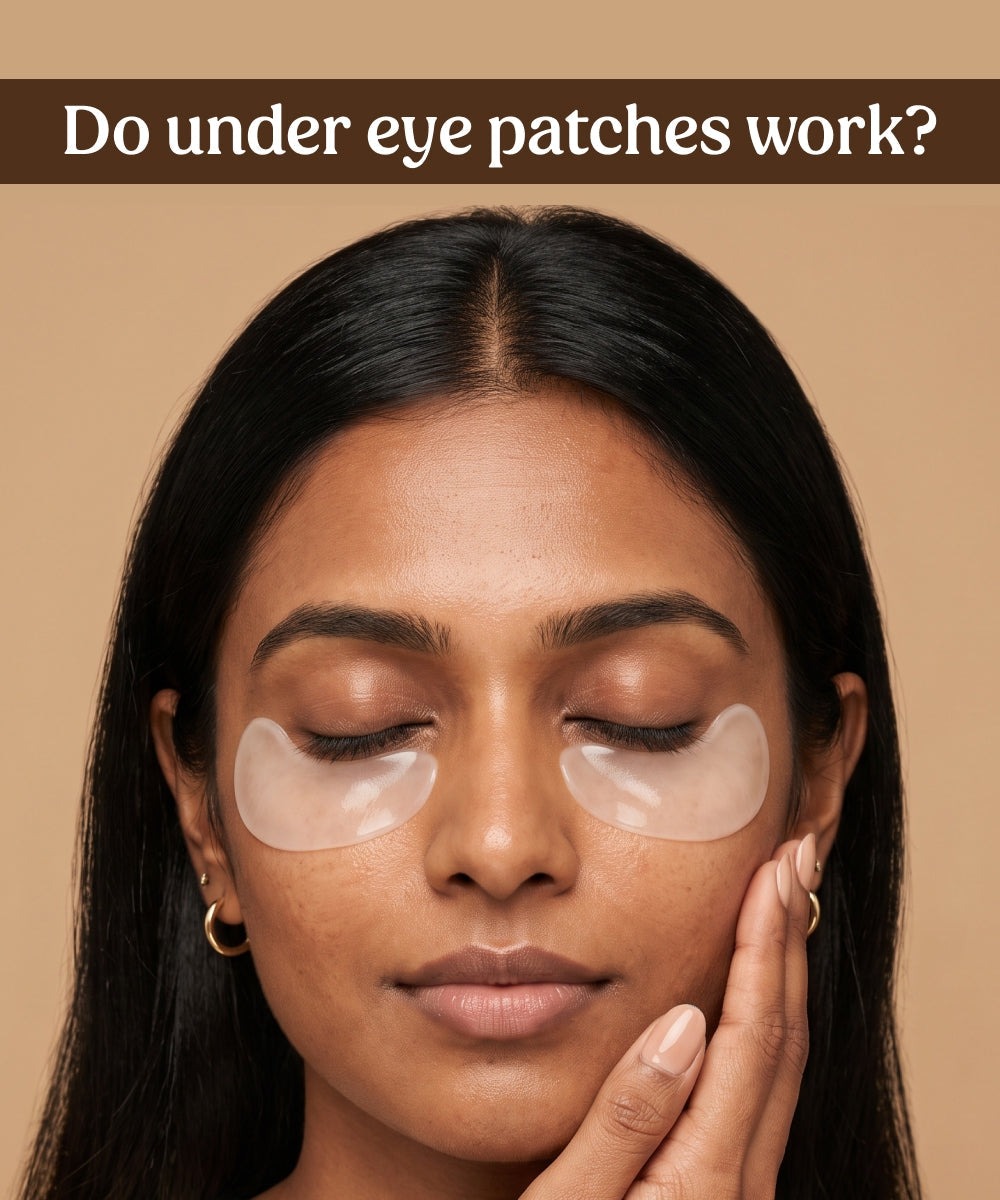
Under-eye patches work as a short-term fix: worn for about 15 minutes, they hydrate and cool the skin so the area looks less puffy and tired for a few hours. A patch cannot replace an eye cream, because a patch is an occasional treatment and an eye cream is daily care. Eye creams are not an instant fix and that any improvement depends on consistent daily use over time. The practical rule is to keep a patch for the mornings that need rescuing and use an eye cream every morning and night.
Under-eye patches are single-use pads, usually hydrogel or a serum-soaked sheet, that sit on the skin below the eye for around 15 minutes and release hydrating and cooling ingredients while they are on. They do work, within a narrow job: the skin looks plumper, smoother and less puffy straight after, and the effect fades over the following hours. An eye cream does the slower job of keeping that same skin moisturised every day, which is why one cannot stand in for the other.
Definition: Under-eye patches: pre-cut pads, most often made of hydrogel, that hold a concentrated serum against the under-eye skin for a short, fixed wear time before being peeled off and thrown away.
Under-eye patches give a visible lift that lasts hours, not weeks
A patch does three things at once. It floods the top layer of skin with water-binding ingredients, holds them there under a sealed layer so they evaporate more slowly, and, if it has been chilled, cools the area the way a cold compress does. The plumper, brighter look afterwards comes from that surface hydration and cooling, and both wear off as the skin settles back.
Puffiness is where patches earn their place. Eye creams tend to reduce the look of puffiness caused by fluid retention, stress or poor sleep, and those same morning-after causes are what a cold patch addresses fastest. The patch does not remove the cause, though. If the swelling comes from a late night, it comes back after the next one.
What a 15-minute patch cannot change
A patch does nothing lasting for established fine lines or long-standing dark circles. At most it softens their look for a few hours while the skin is plumped with water. Anyone buying patches to fix a concern that has built up over years is paying for a good morning, not a change in the skin.
That makes patches a scheduling tool more than a treatment. Before a wedding, a client meeting or a photo, 15 minutes with a chilled patch is a sensible use of time and money. Five patches a week in place of a cream is not.
The skin under your eyes needs daily moisture because it is thin and dry
The eyes is the thinnest on the body and has no subcutaneous fat to protect it. Thin skin with no cushion underneath tends to show tiredness and dehydration sooner than the cheeks or forehead. It also reacts quickly to rough handling, which matters every time something is pressed onto it or peeled off it.
Skincare brands add a second reason: the under-eye area has fewer oil glands than the rest of the face, so it dries out easily. Skin with little oil of its own loses water steadily through the day. A single burst of hydration from a patch on Saturday morning has largely gone by Monday.
That gap between an occasional boost and a constant need is the whole argument for a daily cream. The under-eye area does not need a dramatic intervention once a week. It needs a small, steady supply of moisture, twice a day, that it cannot make enough of on its own.
An eye cream does the slow, daily work a patch skips
An eye cream is a moisturiser formulated specifically for the delicate skin around the eye. The formula is built for an area that is thinner, drier and closer to the eye than the rest of the face. In practice that usually means a lighter texture, fewer potential irritants and a small amount per use.
Many ingredients overlap with patches. Caffeine, for example, is widely used in eye creams to help reduce the look of puffiness, and caffeine appears on plenty of patch labels too. The difference is frequency: a cream delivers its ingredients every day, while a patch delivers a larger dose occasionally.
What the published evidence says about lines
The clearest claim regarding wrinkles is based on secondary reporting. It is noted that several studies have shown eye creams can improve the smoothness and appearance of larger wrinkles around the eyes. The wording matters: the studies describe appearance, not a structural change in the skin, and the brand page does not give their design, size or year.
Read that way, the evidence supports a modest expectation. Regular use of an eye cream can make lines look softer over weeks of use. A patch makes them look softer for an afternoon.
Patch or cream: which product does which job?
The two products are built for different time scales, and most disappointment with either comes from asking it to do the other's job. The table below sets out the practical differences.
|
Attribute |
Under-eye patches |
Eye cream |
|---|---|---|
|
What it is |
A single-use pad holding a concentrated serum |
A moisturiser formulated for the eye area |
|
Time it takes |
About 15 minutes of wear |
Under a minute to apply |
|
How often you use it |
Occasionally, before an event or after a short night |
Every morning and night |
|
What you see |
Plumper, cooler, less puffy skin straight away |
Gradual improvement in dryness and the look of lines |
|
How long the effect lasts |
A few hours |
Builds and holds with continued use |
|
Best suited to |
A quick fix on a specific day |
Ongoing care of thin, dry skin |
|
Cost pattern |
Higher cost per use, used rarely |
Lower cost per use, used daily |
A patch is a treatment you reach for; an eye cream is a habit you keep. The two work well together, and neither does its best work as a substitute for the other.
How to use patches and eye cream in the same routine
Brands publish conflicting advice on the exact order of eye cream, serum and moisturiser, and on which direction to pat the product in. The points they agree on are short: clean skin, gentle hands, and eye cream before sunscreen. The routine below sticks to those.
-
- Start with clean, dry skin. Wash the face and pat the under-eye area dry before anything touches it. Eye cream absorbs more evenly without leftover cleanser or makeup underneath.
- Apply a small amount of eye cream. A pea amount per eye, and says using more will not improve results and may cause irritation.
- Place the patch over the cream and leave it on for about 15 minutes. Follow the wear time on the pack rather than sleeping in a patch designed for short use. For puffiness, keep the patches in the fridge so they go on cold. The patch sits over the cream and helps it absorb.
- Remove the patch and press in what is left. Peel from the outer edge slowly so the thin skin is not pulled. Use the ring finger and light pats to press any remaining serum and cream in, with no rubbing.
- Finish the morning routine with sunscreen. Eye cream goes on before SPF, whichever order you choose for the products in between. In the evening, the eye cream is the last step for the eye area.
On a normal day, steps 3 and 4 drop out entirely. The eye cream routine runs every day; the patch joins it only when the day calls for one.
The evidence for under-eye patches is thin, and most claims come from sellers
Independent clinical evidence on under-eye patches is thin, and most claims about them come from their own packaging and the brands that sell them.
Published evidence on patches for Indian skin specifically is also thin. An honest position for a buyer is that patches have a plausible mechanism, cooling and short-term hydration, and modest, mostly cosmetic, expected results.
Who gains most from under-eye patches
The decision is personal. Someone who wants a visible lift before an event, or whose under-eye area looks puffy after a short night, gets more from a chilled patch than someone whose under-eye skin already feels comfortable and looks rested.
Ingredient choice matters more than the format. Some brands, advise avoiding fragranced or alcohol-based eye products, which may irritate the area and lead to redness or dryness. The same caution applies to patches, which hold their serum against the skin for a full 15 minutes. Patch-test a new product on the jawline before putting it under the eyes.
Frequently asked questions about under-eye patches and eye cream
Do under-eye patches actually work?
Under-eye patches work for a short time. Worn for about 15 minutes, under-eye patches hydrate and cool the skin, so the area looks plumper and less puffy for a few hours afterwards. Under-eye patches do not produce a lasting change in fine lines or long-standing dark circles, so treat them as a quick fix rather than a treatment.
Can under-eye patches replace an eye cream?
Under-eye patches cannot replace an eye cream. A patch gives an occasional, short-lived boost, while an eye cream supplies the daily moisture that thin, dry under-eye skin needs. Any improvement from an eye cream depends on consistent daily use over time, so the best routine uses eye cream every day and patches only when needed.
How often should I use under-eye patches?
Under-eye patches suit occasional use: before an event, after a short night, or on mornings when puffiness is obvious. Follow the wear time and frequency on the pack. Using under-eye patches every day costs far more than an eye cream and still leaves the skin without steady daily moisture once each patch comes off.
Can I use my normal face moisturiser around my eyes?
A face moisturiser can be used around the eyes only if its label says it is suitable for that area. It is advised that checking whether a face moisturiser is labelled as safe for the eye area before applying it there. A face moisturiser without that labelling may contain ingredients that sting thin under-eye skin.
At what age should I start using eye cream?
Eye cream has no fixed starting age. There is no exact age to begin using an eye cream and suggests seeing a dermatologist for personal advice. Most people start eye cream when the under-eye area begins to feel dry or tight, whatever their age.
Should I put eye cream on before or after an under-eye patch?
Eye cream goes on before an under-eye patch. Apply a small amount to clean, dry skin, place the patch over it for about 15 minutes, then remove the patch slowly and press in any leftover serum with light pats. The patch holds the cream against the skin, which helps it absorb.
How do I apply eye cream without damaging the skin?
Eye cream should be applied with the ring finger using light pats, never rubbing.Tugging, rubbing and excess pressure on the eye area add to the problems eye cream is meant to prevent. Peel off under-eye patches slowly for the same reason.
Are under-eye patches good for dark circles?
Under-eye patches can make dark circles look slightly less obvious for a few hours, mainly by hydrating and brightening the surface of the skin. Under-eye patches do not remove the underlying cause of long-standing dark circles. For a persistent concern, a daily eye cream and advice from a dermatologist are a better route than frequent patches.
Make Vilvah's under-eye cream your daily step
Keep patches for the mornings that need a quick lift, and give the thin skin under your eyes steady care every day. Add Vilvah's under-eye cream to your morning and night routine, use a pea-sized amount with gentle pats, and let consistent use do the work a 15-minute patch cannot.
Related Stories
-

Prickly Heat: What Causes Heat Rash and How Aloe Vera Gel Calms It
-

Freckles on Face: Why They Appear and Whether You Can Fade Them
-

Bakuchiol vs Retinol: What It Is and Why It Suits Under-Eye Skin
-

Best Face Wash and Serum for Glowing Skin: Choosing a Pair
-

Is Aloe Vera Really Good for Hair Growth and Scalp Health?
-

Sunken Eyes: Why Under-Eyes Look Hollow and What Eye Cream Can Fix
-

Melasma on Indian Skin: Causes and What Helps It Fade
-

Double Cleansing: What Is It, How to Do It & Its Benefits for Healthy-Looking Skin
-

Hair Growth Tips for Men: Effective Tips Every Man Should Know


Leave a comment
All comments are moderated before being published.
This site is protected by hCaptcha and the hCaptcha Privacy Policy and Terms of Service apply.