

 Track Order

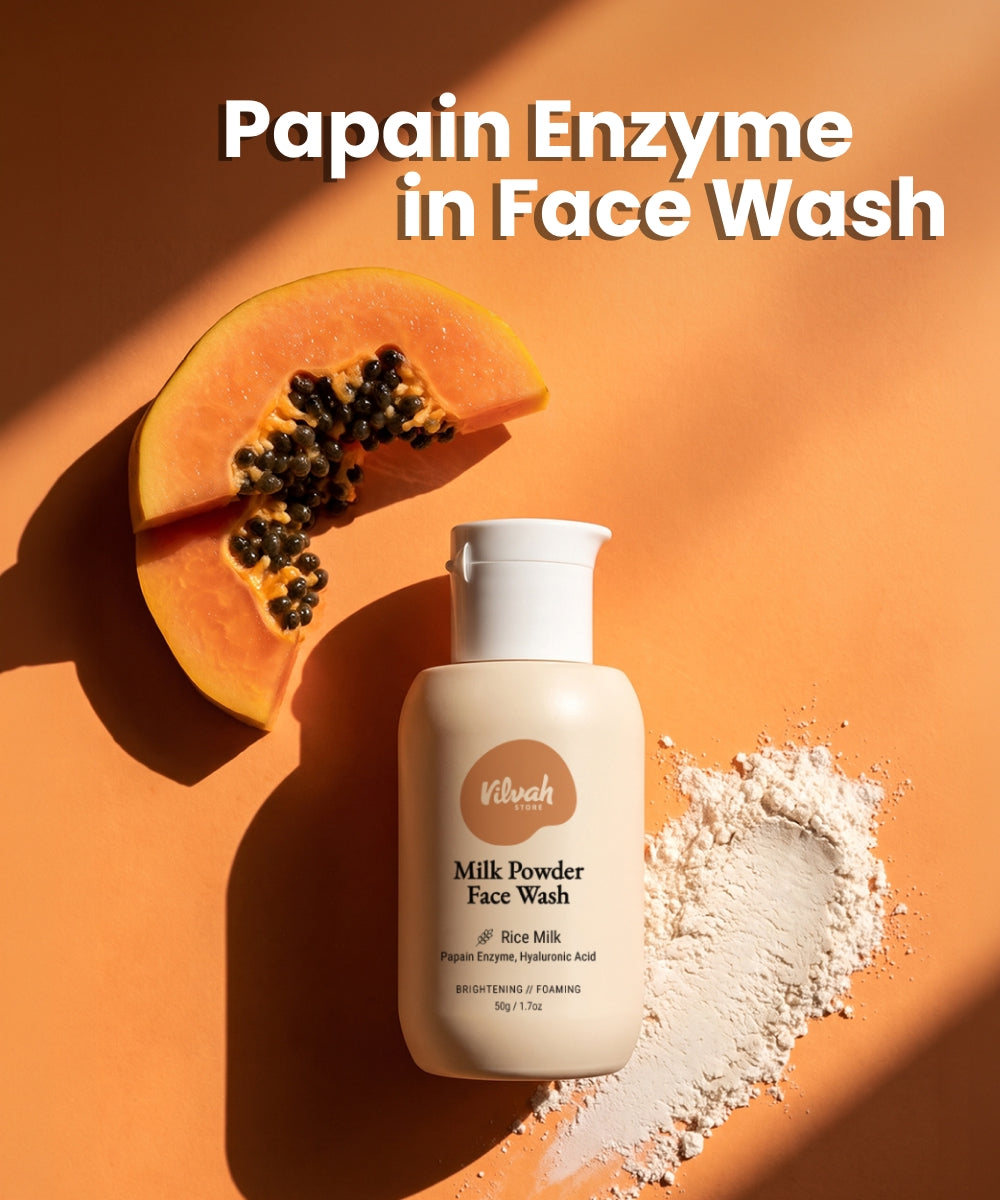
Papain is a protein-digesting enzyme from the papaya fruit, and in a face wash it works as an exfoliant on the dead cells at the skin's surface. Vilvah uses papain as the exfoliating active in its Milk Powder Face Wash, a fit for skin that feels rough or dull and turns tight after harsh, stripping cleansers. A papain face wash does a different job from salicylic acid and benzoyl peroxide, the two actives that guidance on men's acne cleansers centres on. Choose a face wash by skin type and concern, not by the fruit on the label or a "for men" tag.
Inside a face wash, papain exfoliates by breaking down protein
Papain is a protease, an enzyme whose job is to break proteins into smaller pieces. The outer layer of skin is built largely from keratin, a structural protein, and the dead cells waiting to shed from the surface are packed with it. In a face wash, papain works on the protein in those already-dead cells, which is why formulators treat it as an exfoliant rather than as a cleansing agent.
Definition: Papain: a protein-digesting enzyme taken from the papaya fruit and used in face washes as an exfoliant.
Exfoliation is the removal of dead cells from the outermost layer of the skin. Acids and enzymes both do it by different routes: salicylic acid loosens the uppermost layer of dead surface skin cells chemically, while papain reaches the same layer through protein digestion. Vilvah's Milk Powder Face Wash uses papain as its exfoliating active, so exfoliation happens inside the cleansing step rather than in a separate scrub or peel.
The fruit on a label tells you less than the ingredient list does. A papaya name is a branding choice, while papain named on the ingredient list is a statement about what the formula is built to do. Compare papaya-themed washes on that basis rather than on the artwork.
A papain wash works only while the lather is on your skin
A face wash rinses off, so papain gets only the seconds you spend massaging it in. The American Academy of Dermatology advises washing with lukewarm water and fingertips, twice a day and after sweating, and a massage of about 30 seconds gives the formula time to act. For an enzyme in a rinse-off product, those seconds are the whole working window, which makes technique part of the formula. The routine below applies that guidance to a papain face wash:
-
- Wet your face with lukewarm water. Lukewarm water is the standard advice for both wetting and rinsing, since hot water can leave skin drier. A damp face lets the wash spread evenly instead of concentrating where you first apply it.
- Massage the wash in for about 30 seconds. Work your fingertips in small circles over the forehead, nose, chin and jaw. Rinsing after five seconds cuts short the only time the papain has to act.
- Rinse with lukewarm water and pat dry with a soft towel. Patting avoids a second round of friction straight after the exfoliant. Check the hairline, the beard line and the sides of the nose for leftover lather.
- Notice how your skin feels a few minutes later. A cleanser that leaves skin feeling tight is a harsh one, and stripping the skin can leave an oily face feeling oilier later in the day. Comfortable skin means the wash suits you, while tightness means you should use it less often or switch formulas.
- Keep washing to morning, evening and after sweating. That is the frequency the American Academy of Dermatology recommends. If a post-workout wash makes three in a day and your face turns tight, use a plain cleanser for that one and keep the papain wash for morning or evening.
What face wash can help clear up men's acne?
A gentle cleanser built on salicylic acid or benzoyl peroxide is the face wash that dermatologists point men with acne toward. Papain does not feature in that guidance, so a papain face wash and an acne wash answer different needs. Skin type comes first: the American Academy of Dermatology advises men with acne-prone skin to look for cleansers and moisturisers labelled "oil free" or "non-comedogenic", so the formula does not clog pores while it cleans.
Salicylic acid targets oil, breakouts and shaving bumps
Salicylic acid is an exfoliating acid that removes dead cells from the skin's uppermost layer. The American Academy of Dermatology explains that because it unclogs pores and exfoliates the skin, salicylic acid works best on whiteheads and blackheads. That makes it the usual choice for oily, congested skin.
Men who shave get a second use from salicylic acid. A salicylic acid cleanser can help prevent ingrown hairs, because the acid clears the dead surface cells that trap hairs under the skin. That follows from what any exfoliant does rather than from a dedicated study.
Benzoyl peroxide is the acne-specific alternative
Benzoyl peroxide is the other active found in acne-specific cleansers. It works on the bacteria involved in breakouts rather than by exfoliating. The American Academy of Dermatology calls it especially effective at treating mild pimples and suggests starting with a 2.5% strength. Neither salicylic acid nor benzoyl peroxide is ranked above the other with comparative data. Treat the two as options and let your skin's response decide.
How does papain compare with salicylic acid and benzoyl peroxide?
The table sets out what each active is and how the people who sell or recommend it describe its purpose in a cleanser.
|
Active |
What it is |
What a cleanser uses it for |
Who describes it that way |
|
Papain |
Protein-digesting enzyme from papaya |
Exfoliation inside the cleansing step |
Vilvah, for its Milk Powder Face Wash |
|
Salicylic acid |
Exfoliating acid |
Excess oil, breakouts and ingrown hairs from shaving |
American Academy of Dermatology |
|
Glycolic acid |
Alpha hydroxy acid |
Light exfoliation of dead surface cells, often blended with salicylic acid |
General dermatology guidance on exfoliants |
|
Benzoyl peroxide |
Acne-specific cleanser active |
Acne-prone skin and inflamed breakouts |
American Academy of Dermatology |
A papain face wash is an exfoliating cleanser, and its case rests on exfoliation rather than on acne data. The acne-specific claims in men's cleanser advice belong to salicylic acid and benzoyl peroxide, and nothing in the table moves papain into that column. If you use a papain wash alongside an acne cleanser, the tightness check from the routine above tells you whether two active cleansers are one too many.
Any face-wash exfoliant, papain included, should aim for a modest result. The American Academy of Dermatology warns against scrubbing the face, because scrubbing irritates the skin, and an exfoliating wash follows the same rule. Smoother skin that still feels comfortable is the target, and a raw, tight face means the wash is doing too much.
Men don't need a face wash labelled for men
Men do not need a gender-specific face wash. The American Academy of Dermatology's skin care tips for men sort products by skin type, whether oily, dry, sensitive or acne-prone, rather than by gender. Men's-labelled washes for oily or acne-prone skin typically run on the same salicylic acid found in unisex acne washes, and that overlap is the clearest sign that the label is the variable that matters least.
Gentle formulas suit oily skin better than harsh ones
Gel cleansers handle oil well, but many can be too drying. The American Academy of Dermatology advises men to wash with a mild facial cleanser and lukewarm, not hot, water, because regular bar soap often contains harsh ingredients that dry the skin. Harshness has its own cost: many men assume oily skin needs a wash that leaves the face tight, when stripping the skin can leave it feeling oilier later. A papain face wash fits this logic when the formula around the enzyme is mild, because the exfoliation then comes from the enzyme rather than from stripping the skin.
Who should use a papain face wash, and who should choose something else?
The rule that settles the papain question is the one dermatologists apply to every cleanser: choose for your skin type and your specific concern, not for the label. Six common situations follow.
- Rough, dull or flaky-feeling skin with few breakouts. This is the clearest fit for a papain face wash. The enzyme handles exfoliation inside the cleansing step, so there is no separate scrub to overdo.
- Oily skin that turns tight after acid or gel washes. That tightness is the sign of a harsh cleanser. A papain wash in a mild base is a reasonable switch, judged on how your face feels after rinsing rather than on a squeaky-clean finish.
- Active, inflamed breakouts. Start with a salicylic acid or benzoyl peroxide cleanser, because those are the actives that acne-cleanser guidance names. A papain wash can sit alongside one only if your skin stays comfortable.
- Razor bumps and ingrown hairs after shaving. Ingrown-hair advice centres on salicylic acid, which makes it the established choice. A papain wash can still handle general texture while a salicylic acid cleanser does that narrower job.
- Anyone who has reacted to papaya. Skip a papain wash if papaya fruit has ever irritated your skin or mouth. Patch-test any new cleanser on a small area of the jaw for a few days before using it on the whole face.
- Breakouts that keep returning or leave marks. A face wash is one step in acne care, not the whole of it. Persistent or scarring acne is a reason to book a dermatologist rather than try another cleanser.
Frequently asked questions about papain face washes
What does papain do in a face wash?
Papain works as an exfoliant in a face wash. Papain is a protein-digesting enzyme from the papaya fruit, and during cleansing papain acts on the protein in dead cells at the skin's surface. Vilvah uses papain as the exfoliating active in its Milk Powder Face Wash, so exfoliation happens in the same step as cleansing.
Which face wash helps clear up men's acne?
A gentle cleanser with salicylic acid or benzoyl peroxide is the face wash dermatologists point men with acne toward. Salicylic acid suits oily, congested skin, while benzoyl peroxide is the acne-specific option for inflamed breakouts. Men should choose by skin type rather than gendered labelling and avoid washes that leave skin tight.
Can a papain face wash clear up acne?
A papain face wash is an exfoliating cleanser rather than an acne treatment, and its case rests on exfoliation, not acne data. For active breakouts, guidance on acne cleansers centres on salicylic acid or benzoyl peroxide. A papain face wash suits rough or dull skin, and acne that keeps returning is a reason to see a dermatologist.
Is papain better than salicylic acid?
Papain and salicylic acid do different jobs, so neither is simply better. Papain is an enzyme exfoliant suited to rough or dull skin, while salicylic acid is the exfoliating acid that dermatologists tie to oil, breakouts and ingrown hairs from shaving. Pick salicylic acid when breakouts are the problem and papain when texture is.
Do men need a different face wash from women?
Men do not need a gender-specific face wash. Dermatology advice for men, including the American Academy of Dermatology's, sorts cleansers by skin type rather than by gender. The useful choice is a gentle cleanser matched to skin type and the concern at hand, whatever the label says.
How often should I wash an oily face?
An oily face should be washed in the morning, in the evening and after sweating, according to the American Academy of Dermatology. Washing harder or more often with a harsh cleanser can backfire, because stripping the skin can leave it feeling oilier. Use a mild face wash each time.
Who should avoid a papain face wash?
A papain face wash is a poor fit for anyone whose skin or mouth has reacted to papaya, and a papain face wash does not replace an acne cleanser when breakouts are active. Men with ingrown hairs from shaving should look to salicylic acid, which clears the dead cells that trap hairs. Patch-test any new face wash on the jaw first.
Find out whether Vilvah's Milk Powder Face Wash suits your skin
If your skin feels rough or dull and stronger washes leave it tight, try Vilvah's Milk Powder Face Wash, which uses papain as its exfoliating active. Use it with the 30-second lukewarm routine above and the directions on the pack, then judge it by how your skin feels after rinsing. Keep a salicylic acid or benzoyl peroxide cleanser in the plan if breakouts are the main problem.
Related Stories
-

Kalonji Oil Benefits for Hair & Skin: Uses, Benefits and How to Use It
-

Is Gen Z Losing Hair Faster Than Millennials? Here's What Science Says
-

How to Do a Pedicure at Home: Step by Step, from Soak to Foot Cream
-

Under-Eye Patches: Do They Work, and Can They Replace Eye Cream?
-

Prickly Heat: What Causes Heat Rash and How Aloe Vera Gel Calms It
-

Freckles on Face: Why They Appear and Whether You Can Fade Them
-

Bakuchiol vs Retinol: What It Is and Why It Suits Under-Eye Skin
-

Best Face Wash and Serum for Glowing Skin: Choosing a Pair
-

Is Aloe Vera Really Good for Hair Growth and Scalp Health?


Leave a comment
All comments are moderated before being published.
This site is protected by hCaptcha and the hCaptcha Privacy Policy and Terms of Service apply.