

 Track Order

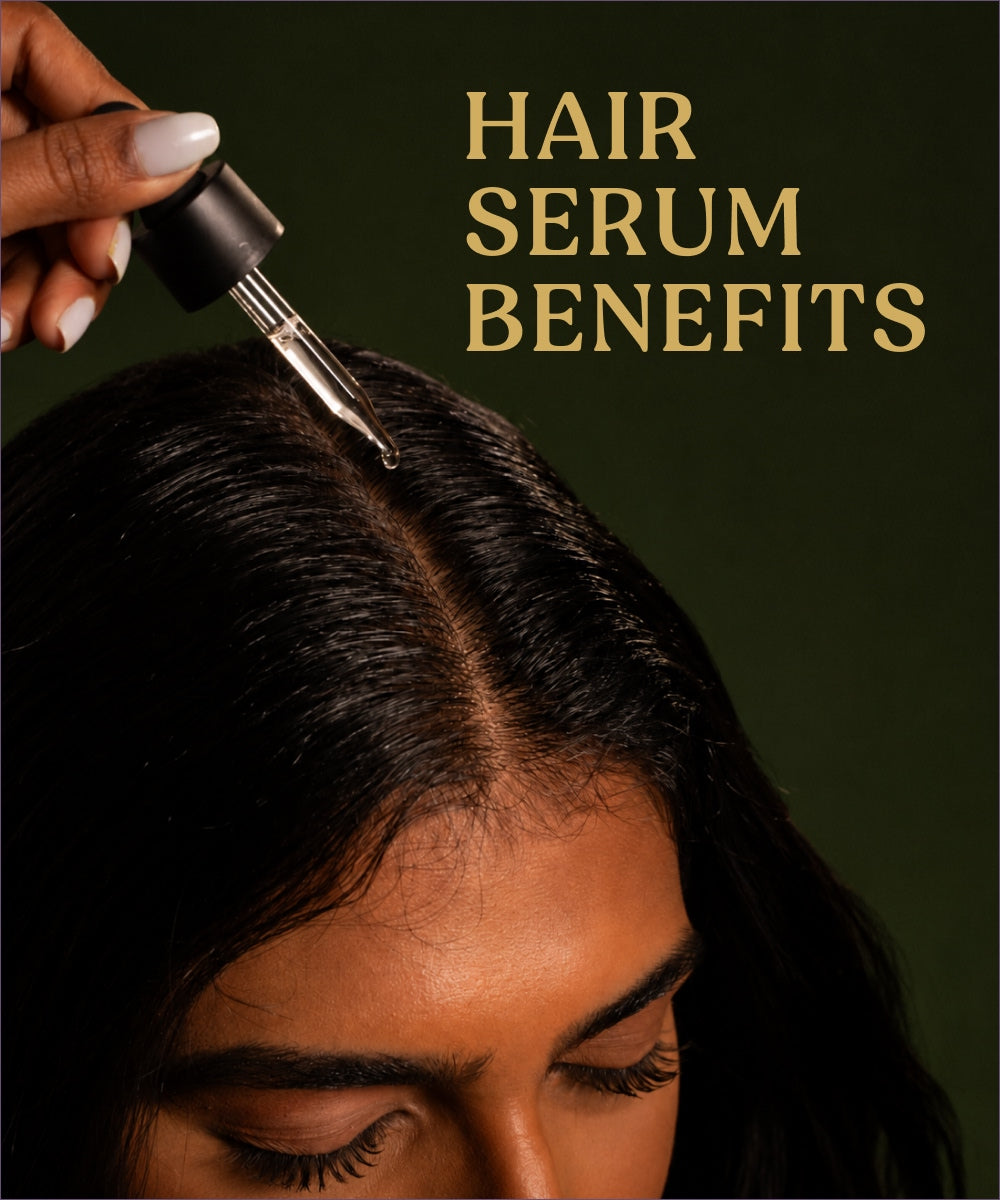
Your hair care routine probably has the usual suspects: shampoo, conditioner, maybe a hair mask or oil. But there is one step that often gets overlooked: A hair serum.
But why exactly do you need to add a serum to your hair routine? Depending on the formulation, a hair serum can help address concerns such as frizz, dryness, roughness, breakage, or even scalp and hair-growth concerns. Unlike rinse-off products, leave-in serums stay on the hair or scalp, allowing their ingredients to work for longer. Hair serums designed for the scalp are also different from styling serums meant for the lengths and ends, so choosing the right type matters.
This guide breaks down the key hair serum benefits, explains the benefits of applying hair serum, and shows you how to make a serum part of your everyday routine. If hair fall or thinning is your primary concern, we'll also look at how a targeted formula such as Vilvah’s Hair Growth Serum can fit into your scalp-care routine.
By the end, you'll know what a hair serum actually does, how to use one correctly, and whether it's the missing step your hair has been waiting for.
What is a Hair Serum?
A hair serum is a lightweight, leave-in solution formulated to target specific hair or scalp concerns. However, not every serum does the same job.
1. Hair Serums for Hair Lengths
Traditional hair serums are usually designed for the hair shaft. They can help smooth the cuticle, control frizz, add shine, improve manageability, and reduce friction-related breakage.
2. Scalp & Hair Growth Serums
Scalp serums are formulated differently. They are designed to be applied directly to the scalp and may contain targeted actives intended to support scalp health and hair growth.
Quick answer:
A hair serum is a leave-in solution that targets specific hair or scalp concerns, from frizz and dryness to hair thinning and scalp care, depending on its formulation.
Hair Serum Benefits You Should Know
Adding the right serum to your routine can give your hair care a more targeted approach. Here are some of the biggest benefits of using hair serum:
1. Helps Manage Frizz and Flyaways
Humidity, dryness and damaged cuticles can leave hair looking rough and unruly. A smoothing hair serum can help coat the hair fibre, making strands look smoother, frizz-free and more polished.
2. Adds Softness and Shine
One of the most immediate hair serum benefits is improved appearance. The right formula can help smooth the surface of the hair, giving it a softer feel and healthier-looking shine.
3. Helps Lock in Moisture
Hair that lacks moisture can feel dry, coarse and difficult to manage. Depending on its ingredients, a serum can help seal in moisture and prevent the hair from feeling excessively dry.
4. Makes Hair Easier to Manage
Tangles and rough strands can make everyday styling frustrating. A leave-in serum can improve slip and manageability, making combing and styling easier.
5. Helps Protect Hair From Everyday Stressors
Hair is exposed to heat, humidity, pollution, friction and styling every day, causing breakage. A suitable serum can act as an additional protective layer, particularly when formulated with ingredients designed for heat or environmental protection.
6. Can Support a Targeted Scalp-Care Routine
If your concern is hair fall or hair thinning rather than frizz, choose a serum specifically formulated for scalp use. Targeted scalp serums can deliver active ingredients directly where they're intended to work.
Benefits of Applying Hair Serum for Hair Growth
If you're specifically looking for a hair growth serum, the goal is different from that of a styling serum:
Supports the Scalp Environment
Healthy-looking hair starts at the scalp. A targeted serum can complement a consistent scalp-care routine by delivering selected active ingredients directly to the scalp.
Targets Hair Fall and Thinning Concerns
Hair-growth serums are formulated around ingredients intended to support the hair growth cycle and increase hair density over time. Results depend on the formulation, underlying cause of hair loss and consistency of use.
Supports Healthier-Looking Hair Over Time
Hair growth isn't an overnight process. Clinical research on certain multi-active topical hair serums has reported improvements in measures such as hair growth, density and thickness over periods of weeks to months, reinforcing the importance of consistent use and realistic expectations.
Why Choose a Targeted Hair Growth Serum?
Not all hair serums are meant to be used in the same way. If your main concern is frizz, you need a styling serum. If you're concerned about thinning or hair fall, a scalp-focused hair growth serum makes more sense.
Look for Targeted Actives
Ingredients such as Redensyl are increasingly used in hair-growth formulations. Research reviews describe Redensyl as a blend designed to interact with biological pathways involved in the hair follicle and growth phase, although evidence varies by formulation and study design.
Look Beyond a Single Ingredient
A thoughtfully formulated hair growth serum can combine complementary actives rather than depending on one ingredient alone. This is the approach taken by Vilvah’s Hair Growth Serum, which combines Redensyl with other hair-growth actives in a leave-on scalp formula.
Consider Clinical Evaluation
Today's consumers are increasingly interested in products supported by testing rather than simply bold marketing claims. When evaluating a hair-growth product, look for transparent information about its formulation, testing and intended use.
How Vilvah’s Hair Growth Serum Fits Into Your Routine
If hair fall or thinning is your primary concern, Vilvah’s Hair Growth Serum is designed to make scalp care a simple, consistent part of your routine.
Its formulation combines Redensyl with complementary hair-growth actives, taking a multi-active approach rather than relying on one ingredient. The serum is designed for direct scalp application, making it easy to incorporate between your regular wash days.
Vilvah has also positioned the product around clinical evaluation, with the serum registered with the Clinical Trials Registry of India (CTRI). This focus on testing and validation aligns with the growing consumer preference for evidence-backed hair care.
The important takeaway?
“A hair growth serum isn't a replacement for understanding why you're experiencing hair fall. Instead, it can be one part of a consistent scalp-care routine.”
How to Use Hair Serum Correctly
Getting the application right can make your routine much more effective.
Step 1: Start With a Clean Scalp
Apply a scalp serum to a clean, dry or appropriately prepared scalp according to the product directions. Avoid confusing a scalp serum with a styling serum, traditional hair serums are generally intended for the lengths and ends.
Step 2: Apply Directly to the Scalp
Part your hair into sections and apply the recommended amount directly to areas of concern.
Step 3: Massage Gently
Use your fingertips to distribute the serum evenly across the scalp. Avoid aggressive rubbing or scratching.
Step 4: Leave It On
A leave-on scalp serum should generally be allowed to absorb rather than rinsed out, unless the product instructions say otherwise.
Step 5: Stay Consistent
This is perhaps the most important step. Hair growth takes time, so don't expect dramatic changes after a few applications. Follow the recommended usage consistently and assess results over an appropriate period.
Hair Serum Use and Benefits: Common Mistakes to Avoid
Even a good serum won't deliver its intended benefits if it's used incorrectly.
1, Using a Styling Serum on the Scalp
A styling serum and a scalp serum aren't interchangeable. Always check where the product is intended to be applied.
2. Using Too Much Product
More serum doesn't automatically mean better results. Follow the recommended quantity to avoid unnecessary buildup or a greasy scalp.
3. Expecting Overnight Hair Growth
Hair follows a natural growth cycle. Give targeted hair-growth products sufficient time and maintain consistent use.
4. Ignoring the Underlying Cause of Hair Fall
Persistent or sudden hair loss can have many causes, including nutritional deficiencies, hormonal changes, stress, genetics and medical conditions. A serum may complement a routine, but it shouldn't replace professional evaluation when hair loss is significant or persistent.
Hair Serum vs Hair Oil: Which One Should You Use?
Hair oil and hair serum aren't necessarily competing products, they serve different purposes.
Hair oils are often used for conditioning, nourishment and scalp or pre-wash routines, depending on the oil and method of application.
Hair serums are usually lightweight leave-in formulas designed for targeted concerns. A styling serum may focus on smoothness and shine, while a scalp serum may focus on specific scalp or hair-growth concerns.
The right choice ultimately depends on your hair type, scalp condition and what you're trying to address.
The Bottom Line: Is Hair Serum the Missing Step?
Your hair care routine doesn't have to contain ten different products. It just needs the right products for your specific concerns.
If you're dealing with frizz, dryness or dull-looking lengths, a styling serum can provide that extra layer of smoothness, shine and manageability. If your concern is hair fall or thinning, a targeted scalp serum can add a more focused step to your routine.
That's where understanding the hair serum use and benefits becomes important. Rather than adding a serum simply because it's trending, choose one based on what your scalp and hair actually need.
For those looking to address hair-growth concerns, Vilvah’s Hair Growth Serum offers a targeted, multi-active approach featuring Redensyl and complementary hair-growth ingredients. Used consistently as part of a thoughtful scalp-care routine, it can be a practical addition to your everyday hair care.
Conclusion
The biggest hair serum benefits come from choosing a formula that matches your hair concern and using it consistently. From smoothing frizz and adding shine to supporting a targeted hair-growth routine, a serum can fill the gap between basic cleansing and more intensive hair care.
Think of it as your routine's ‘cherry on top’: shampoo cleanses, conditioner softens, and the right serum gives your hair or scalp targeted care.
If hair fall and thinning are what you're trying to address, consider making a dedicated scalp serum part of your routine. With Vilvah’s Hair Growth Serum, you can bring targeted actives such as Redensyl into your daily scalp care, because sometimes, the missing step isn't another product. It's the right one.
Frequently Asked Questions About Hair Serum Benefits
1. Is hair serum good for hair?
Yes, the right hair serum can help address concerns such as frizz, dryness, shine, manageability or scalp care, depending on its formulation. The key is choosing a serum designed for your specific concern.
2. What are the main hair serum benefits?
Common benefits include smoother-looking hair, improved shine and manageability, moisture retention, frizz control and protection from certain everyday stressors. Hair-growth serums may additionally target scalp and hair-density concerns.
3. What are the benefits of applying hair serum regularly?
Consistent application helps you maintain the intended benefits of a leave-in formula. For hair-growth serums, regular use is particularly important because changes in hair growth and density take time.
4. Can hair serum help with hair fall?
A hair-growth serum formulated with targeted actives may help support healthier-looking hair and hair density. However, hair fall has many possible causes, so persistent or sudden shedding should be evaluated by a healthcare professional.
5. Can I use a hair serum every day?
It depends on the product. Some serums are designed for daily use, while others may have different recommendations. Always follow the instructions provided with your specific serum.
6. Is hair serum applied to the scalp or hair?
It depends on the type of serum. Styling serums are generally applied to the lengths and ends, while scalp or hair-growth serums are specifically formulated for direct scalp application.
7. How long does a hair growth serum take to work?
Hair growth is gradual, and results vary by person and formulation. Clinical studies of topical hair-growth formulations have assessed outcomes over periods ranging from around two to six months, so consistency and patience are important.
Related Stories
-

Lactic Acid for Skin: What It Does That Glycolic Acid Does Not
-

Telogen Effluvium: How to Tell Sudden Shedding From Ongoing Hair Fall
-

Wheatish Skin Tone: What It Means, and How to Tell If Yours Is One
-

Skincare Ingredients That Underperform on Indian Skin, and What Works Instead
-

Dandruff v/s Dry Scalp: Understand the Real Difference
-

Melanin in Skin: What It Actually Does, and Why Indian Skin Marks So Easily
-

Goat Milk Soap vs Regular Soap: What Actually Changes on Your Skin
-

Fitzpatrick Skin Types: Where Most Indian Skin Actually Sits
-

Skin Tone vs Skin Undertone: Why the Difference Changes What You Buy
-

How to Find Your Skin Undertone at Home: Warm, Cool or Neutral


Leave a comment
All comments are moderated before being published.
This site is protected by hCaptcha and the hCaptcha Privacy Policy and Terms of Service apply.