

 Track Order

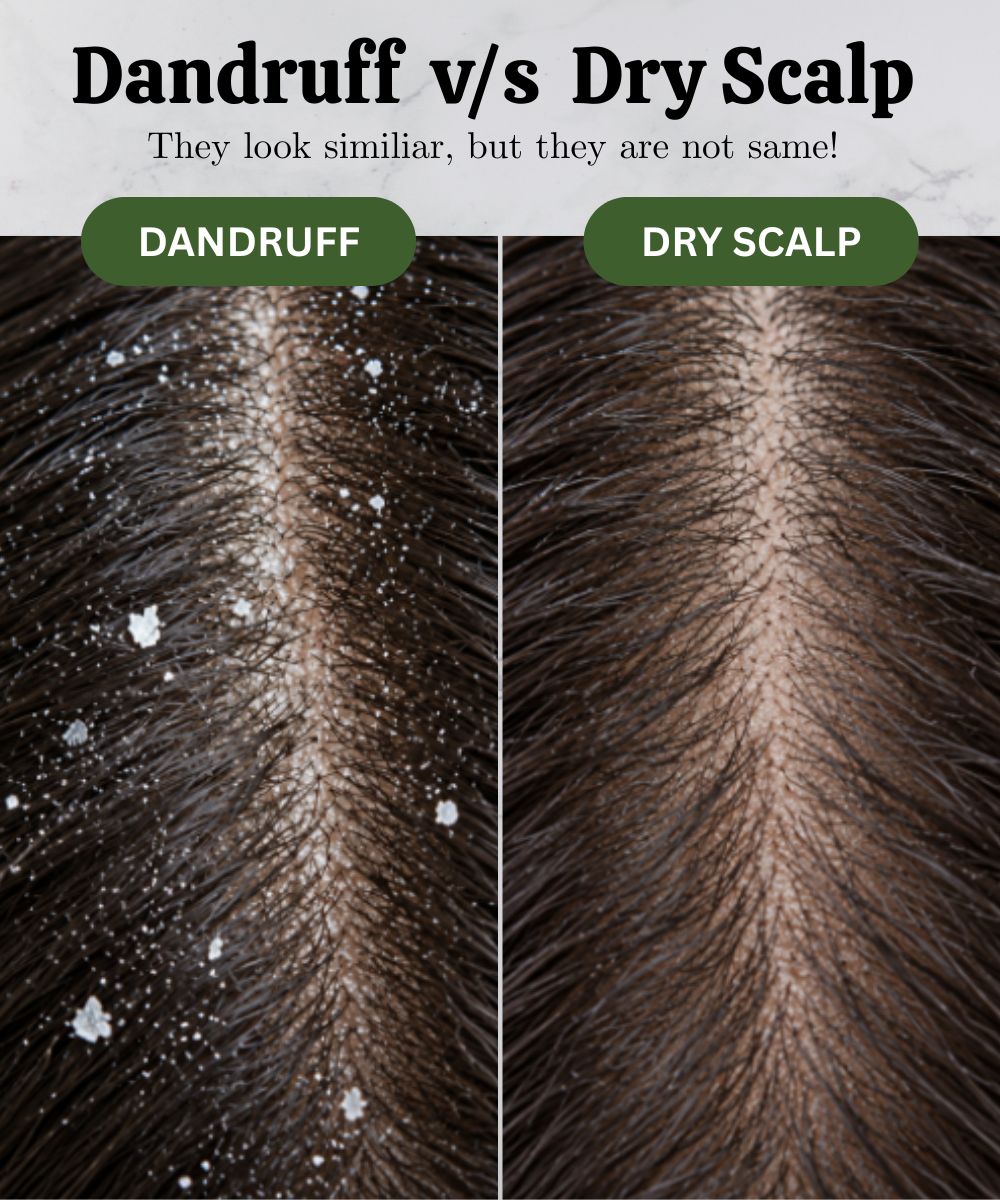
Flakes on your shoulders. An itchy scalp. That uncomfortable urge to scratch. When your scalp starts flaking, it’s easy to assume you have dandruff.
But here's the catch: dry scalp and dandruff are not the same thing. While both can cause itching and visible flakes, they have different underlying causes and may need different approaches. A dry scalp is generally linked to moisture loss, while dandruff is commonly associated with excess oil and conditions such as seborrheic dermatitis.
So, how can you tell the difference? And more importantly, should you reach for a moisturising shampoo, hair oil or an anti-dandruff treatment?
This guide breaks down dry scalp vs dandruff, explains the dandruff vs dry scalp difference, explores their causes and symptoms, and shares practical ways to care for your scalp. We’ll also look at how Vilvah Goat Milk Shampoo or the Anti-Dandruff Shampoo can help with a dry or dandruff-prone scalp condition. Also, we will explore how Vilvah’s hair growth serum helps balance a dry, flaky scalp.
Dry Scalp vs Dandruff: What's the Difference?
The easiest way to understand dandruff vs dry scalp is to look at what is happening on the scalp. Dry scalp happens when the scalp loses too much moisture. Dandruff is commonly linked to excess oil, changes in the scalp environment and seborrheic dermatitis.
Both can cause flakes and itching, which is why they are so often confused.
Dry Scalp
A dry scalp is essentially a moisture problem. The skin loses water, which can leave it feeling tight, dry, itchy and flaky. Weather, low humidity, age and irritating or drying hair products can all contribute.
Dandruff
Dandruff is a common scalp condition that causes visible flakes and itching. It is often associated with seborrheic dermatitis, oily skin and changes involving the yeast that naturally lives on the skin.
Quick Comparison
|
Dry Scalp |
Dandruff |
|
Mainly associated with moisture loss |
Often associated with excess oil and seborrheic dermatitis |
|
Scalp may feel tight or dry |
Scalp may feel oily, itchy or irritated |
|
Flakes are often dry and fine |
Flakes may be more noticeable and can be dry or greasy |
|
Can worsen in cold, dry weather |
Can come and go and may flare with certain triggers |
|
Gentle, non-medicated cleansing may help |
May require an anti-dandruff shampoo |
|
Moisture-focused care can be useful |
Dandruff-focused treatment may be needed |
There can be overlap, though. Your scalp can also be irritated or affected by another condition, so appearance alone doesn't always provide a definite diagnosis.
What Causes a Dry Scalp?
Understanding the dandruff and dry scalp difference starts with understanding why dryness happens.
1. Dry or Cold Weather
Cold temperatures and low humidity can reduce moisture in the skin, including the scalp. This is why some people notice more scalp dryness during colder seasons or when spending time in particularly dry environments.
2. Harsh Haircare Products
Some shampoos and styling products can strip natural oils or irritate the scalp. Even shampoo residue left behind after washing can cause irritation.
3. Overwashing
Washing your hair too frequently, particularly with a drying cleanser, can contribute to scalp dryness for some people.
4. Very Hot Water
Hot water can dry the delicate scalp. If your scalp already feels tight after washing, switching to lukewarm water may be worth trying.
5. Underlying Skin Conditions
Persistent dryness, scaling or itching can sometimes be associated with conditions such as eczema or psoriasis rather than simple dry skin.
What Causes Dandruff?
Dandruff has a different set of triggers. It is commonly associated with seborrheic dermatitis, a condition that affects oil-rich areas of the skin. Seborrheic dermatitis can cause itchy, flaky and scaly skin and is associated with the normal yeast living on the skin.
Other factors can contribute to dandruff or make it more noticeable, including:
- Oily scalp
- Haircare habits
- Stress
- Cold weather
- Certain medical conditions
And here's an important myth to clear up: Dandruff is not simply a sign of poor hygiene. It is a common scalp condition that can affect people regardless of how frequently they wash their hair.
Dandruff vs Dry Scalp Symptoms: How Can You Tell?
Still wondering whether you're dealing with dandruff or dryness? Looking at the combination of symptoms can give you some clues.
Signs of a Dry Scalp
You may notice:
- Fine, dry flakes
- Tightness
- Itching
- A generally dry-feeling scalp
- Dry skin elsewhere on the body
Dry scalp is particularly likely if your symptoms appeared after switching to a harsher haircare product or during cold, dry weather.
Signs of Dandruff
Dandruff may involve:
- Visible flakes
- Scalp itching
- Oily or greasy scalp
- Recurrent flaking
- Scalp scaling
Dandruff can come and go, and its appearance can vary between people.
What If Your Scalp Is Red or Inflamed?
This is where you should stop trying to diagnose the problem from flakes alone. Redness, swelling, pain, thick scales, sores or persistent inflammation can point towards conditions such as seborrheic dermatitis, psoriasis, eczema or infection. A dermatologist can determine the underlying cause.
Is Dry Scalp the Same as Dandruff?
No. Dry scalp and dandruff are different conditions, although their symptoms can overlap.
The simplest distinction is:
- Dry scalp = primarily a moisture-loss issue.
- Dandruff = commonly associated with oiliness and seborrheic dermatitis.
Because the two can look similar, using the wrong approach may not solve the problem.
For example, treating simple dryness with an aggressive anti-dandruff routine could potentially make the scalp feel even drier. Conversely, simply adding more oil to a dandruff-prone scalp may not address the underlying cause.
How to Treat Dry Scalp
If your scalp is genuinely dry, the goal is to reduce irritation and support moisture.
Choose a Gentle Shampoo
A gentle, non-medicated shampoo can be a better option when dryness is the main concern. The American Academy of Dermatology specifically recommends switching to a gentle, SLS-free shampoo for dry scalp.
Avoid Very Hot Water
Keep your shower temperature comfortably warm rather than very hot.
Don't Overwash
There's no universal washing schedule. Your ideal frequency depends on your scalp, hair texture, lifestyle and oil production.
Consider Pre-Wash Nourishment
If your scalp and hair tolerate oiling well, a nourishing pre-wash treatment can be part of your routine.
Vilvah Anti-Dandruff Oil is designed as a pre-wash hair oil and combines multiple plant oils and botanical ingredients. The brand positions it around scalp nourishment for dandruff-prone scalps. It can fit into a routine where nourishment happens before cleansing, rather than using oil as a substitute for treating a scalp condition.
How to Treat Dandruff
Dandruff needs a different approach. Dandruff and itchiness can cause scalp irritation and inflammation, leading to poor scalp health and hairfall.
For mild dandruff, the American Academy of Dermatology recommends using an anti-dandruff shampoo. Common active ingredients include zinc pyrithione, salicylic acid, sulfur, selenium sulfide, ketoconazole and coal tar, depending on the product and region.
Follow the Shampoo Instructions
Some anti-dandruff shampoos need to remain on the scalp for several minutes before rinsing. Always follow the instructions on the specific product.
Adjust Frequency to Your Hair Type
People with oily scalps may need to wash more frequently, while people with coarse, curly or coily hair may need a different schedule. The AAD recommends adapting dandruff-shampoo use to hair texture and scalp needs.
Give It Time
Dandruff often needs consistent management rather than a single wash. If an over-the-counter dandruff shampoo doesn't improve your symptoms, a dermatologist can recommend an appropriate treatment plan.
Which Shampoo For What Condition?
This is an important distinction when discussing dandruff vs dry scalp.
Vilvah Goat Milk Shampoo is positioned by the brand around dryness, frizz, damaged hair and strengthening, with ingredients including goat milk, ceramides and pea protein. That makes it more relevant to a routine focused on dry, rough or damaged hair rather than positioning it as a dedicated dandruff treatment.
If you have actual dandruff, you may need the Vilvah Anti-Dandruff shampoo containing herbal extracts such as neem extract, black pepper oil, and amla for dandruff control.
The AAD recommends dandruff shampoos containing ingredients such as ketoconazole, selenium sulfide, salicylic acid or zinc pyrithione, depending on the formulation. For those suffering with redness and inflammation, we suggest choosing a clinical formula that might be recommended by a dermatologist.
In other words:
- Dry scalp → gentle, moisture-supporting haircare
- Dandruff → dandruff-specific scalp treatment
- Persistent or severe symptoms → professional evaluation
Can Hair Oil Help With Dandruff?
This is one of the most common questions and the answer isn't a simple yes or no. Hair oil can be useful for dryness and hair conditioning, but dandruff is not simply a lack-of-oil problem. Because dandruff is often associated with oily skin and seborrheic dermatitis, adding more oil isn't a substitute for dandruff-specific treatment.
If your issue is a genuinely dry scalp, however, a suitable pre-wash oil may be a useful part of your haircare routine.
Where Vilvah Anti-Dandruff Hair Oil Fits
Vilvah Anti-Dandruff Oil can be used as a nourishing pre-wash step. It is infused with 8+ herbal extracts known for nourishing the scalp, fight dandruff-causing germs, and help reduce itchiness and flakiness.
What About Scalp Serum?
A scalp serum has a different role from both a moisturising hair oil and an anti-dandruff treatment. Scalp serums help balance the scalp, nourish follicles, and repair dryness or flakiness caused due to bacterial growth.
Vilvah Hair Growth Serum is a lightweight, leave-in formula featuring 3% Redensyl, 3% Alfalfa Callus Culture, 3% Swiss Alpine Edelweiss and Rosemary. The brand positions it for concerns including hair thinning, hair fall, premature greying and scalp health. It is designed to be applied directly to the scalp and left overnight as part of a regular routine.
Can You Use A Scalp or Hair Growth Serum If You Have a Dry Scalp?
You can consider a hair growth serum as part of a broader routine, but it shouldn't be treated as a solution for scalp dryness itself. If your scalp is actively irritated, inflamed or affected by persistent dandruff, it is more important to identify and address that condition first.
Vilvah also advises consulting a dermatologist if you have an active scalp condition or persistent dandruff before using its Hair Growth Serum.
Can You Use Hair Oil and Hair Growth Serum Together?
Yes, they can be used as separate steps in the same routine. A simple approach is:
1. Hair Oil - Before Washing: Use Vilvah Anti-Dandruff Oil as a pre-wash nourishment step according to the product directions.
2. Shampoo - Cleanse: Wash your scalp thoroughly using a shampoo suited to your scalp condition.
3. Scalp Serum - After Washing/Night: Once the scalp is clean and suitable for leave-in care, apply your scalp serum according to its instructions.
The important thing is not to layer a leave-in scalp serum directly over a heavy coating of oil.
And remember: if you're dealing with persistent dandruff, treat the dandruff first rather than trying to solve everything with a hair-growth routine.
A Simple Routine Based on Your Scalp Concern
Not sure where to start? Think about your primary concern.
If Your Scalp Feels Dry
Optional pre-wash oil → Gentle shampoo → conditioning → avoid irritants
Vilvah Goat Milk Shampoo can be considered when dryness and damaged hair are also concerns, while Hair Regrowth Oil can serve as a pre-wash nourishment step.
If You Have Dandruff
Dandruff shampoo → follow product directions → consistent scalp care
Choose a shampoo containing an appropriate anti-dandruff active and follow its instructions.
If You Have Dandruff + Hair Thinning
Address the scalp condition → then build targeted hair-growth care
Once your scalp is appropriately managed, a product such as Vilvah Hair Growth Serum can be considered as part of a hair-growth routine.
If You're Not Sure
Don't keep switching products hoping one will magically fix the flakes.
If symptoms are persistent, severe or accompanied by redness, pain, sores or noticeable hair loss, a dermatologist can help identify what's actually happening.
What Not to Do When You Have a Flaky Scalp
Don't Scratch Aggressively: Scratching can further irritate the scalp and potentially cause skin damage.
Don't Assume Every Flake Is Dandruff: Dryness, dandruff, psoriasis, eczema and infections can produce overlapping symptoms.
Don't Over-Oil a Dandruff-Prone Scalp: More oil isn't automatically better. If dandruff is driven by an oily scalp or seborrheic dermatitis, oiling may not address the underlying problem.
Don't Keep Changing Products: Give a suitable routine enough time to work, unless a product is clearly causing irritation.
Don't Ignore Persistent Symptoms: If your scalp remains itchy, inflamed or flaky despite appropriate home care, professional evaluation is the better next step.
When Should You See a Dermatologist?
Most mild dandruff or dry scalp can be managed with appropriate haircare, but some symptoms warrant professional attention.
See a dermatologist if you experience:
- Persistent or severe itching
- Red, inflamed or discoloured patches
- Pain or swelling
- Thick scales
- Scabs or sores
- Noticeable hair loss
- Symptoms that don't improve with appropriate care
Conditions such as psoriasis, seborrheic dermatitis, eczema and fungal infections can sometimes resemble ordinary dandruff or dry scalp but require different treatment.
Final Thoughts: Dandruff vs Dry Scalp Starts With Knowing Your Scalp
The dandruff vs dry scalp confusion is understandable. Both can leave you with flakes, itching and a scalp that simply doesn't feel right.
But once you understand the difference, your routine becomes much easier to build:
- Dry scalp → think moisture and gentle care.
- Dandruff → think scalp-specific treatment.
- Hair thinning → think targeted scalp care.
For a dryness-focused routine, Vilvah Goat Milk Shampoo can help address dry and damaged hair, while Hair Regrowth Oil can be used as a nourishing pre-wash step. For dandruff, you should consider the dandruff specific range from Vilvah, with the Anti-dandruff Hair Oil and Shampoo. For targeted scalp concerns, Vilvah Hair Growth Serum offers a lightweight leave-in scalp treatment featuring Redensyl, Alfalfa Callus Culture, Swiss Alpine Edelweiss and Rosemary.
But the most important takeaway is simple: Don't treat the flake. Treat the reason behind the flake. Once you know whether you're dealing with dryness, dandruff or another scalp condition, you can choose a routine that actually makes sense for your scalp.
Frequently Asked Questions About Dandruff vs Dry Scalp
1. What is the difference between dry scalp and dandruff?
The main dandruff and dry scalp difference is the underlying cause. Dry scalp is primarily related to moisture loss, while dandruff is commonly associated with excess oil and seborrheic dermatitis.
2. Is dandruff caused by a dry scalp?
Not necessarily. Dandruff and dry scalp can both cause flakes, but dandruff is commonly associated with oiliness and seborrheic dermatitis rather than simply a lack of moisture.
3. How can I tell if I have dry scalp or dandruff?
Look at the overall symptoms. A dry scalp often feels tight and dry and may produce fine flakes, while dandruff can involve recurrent flaking, itching and an oily scalp. However, symptoms overlap, so persistent or severe problems may need a dermatologist's diagnosis.
4. Can dry scalp turn into dandruff?
Dry scalp and dandruff are different conditions, so dry skin doesn't simply "turn into" dandruff. However, both can occur around the same time, and scalp irritation can make symptoms harder to distinguish.
5. Is hair oil good for dry scalp?
A suitable hair oil can help nourish and condition a dry-feeling scalp and hair as part of a pre-wash routine. It isn't, however, a universal treatment for dandruff or other scalp conditions.
6. Is hair oil good for dandruff?
Hair oil is not a substitute for dandruff treatment. Since dandruff is often associated with oiliness and seborrheic dermatitis, a dandruff-specific hair oil may be more appropriate.
7. Can I use a scalp serum on a flaky scalp?
That depends on why the scalp is flaky. A scalp serum is designed for targeted hair and scalp care. If you have persistent dandruff or an active scalp condition, address that issue first and consider professional advice.
8. Can I use Vilvah’s Anti-Dandruff Shampoo if I have dandruff?
Vilvah Anti-Dandruff Shampoo is made with herbal extracts that are known to gently cleanse the scalp and reduce dandruff without overdrying the scalp.
Related Stories
-

Skincare Ingredients That Underperform on Indian Skin, and What Works Instead
-

Melanin in Skin: What It Actually Does, and Why Indian Skin Marks So Easily
-

Goat Milk Soap vs Regular Soap: What Actually Changes on Your Skin
-

Fitzpatrick Skin Types: Where Most Indian Skin Actually Sits
-

Skin Tone vs Skin Undertone: Why the Difference Changes What You Buy
-

How to Find Your Skin Undertone at Home: Warm, Cool or Neutral
-

Dry Scalp: Causes, Remedies & How to Treat It Effectively
-

Vilvah: Brand, Ingredients and Product FAQs
-

Hair Serum v/s Hair Oil: Key Differences Explained With Benefits


Leave a comment
All comments are moderated before being published.
This site is protected by hCaptcha and the hCaptcha Privacy Policy and Terms of Service apply.