

 Track Order

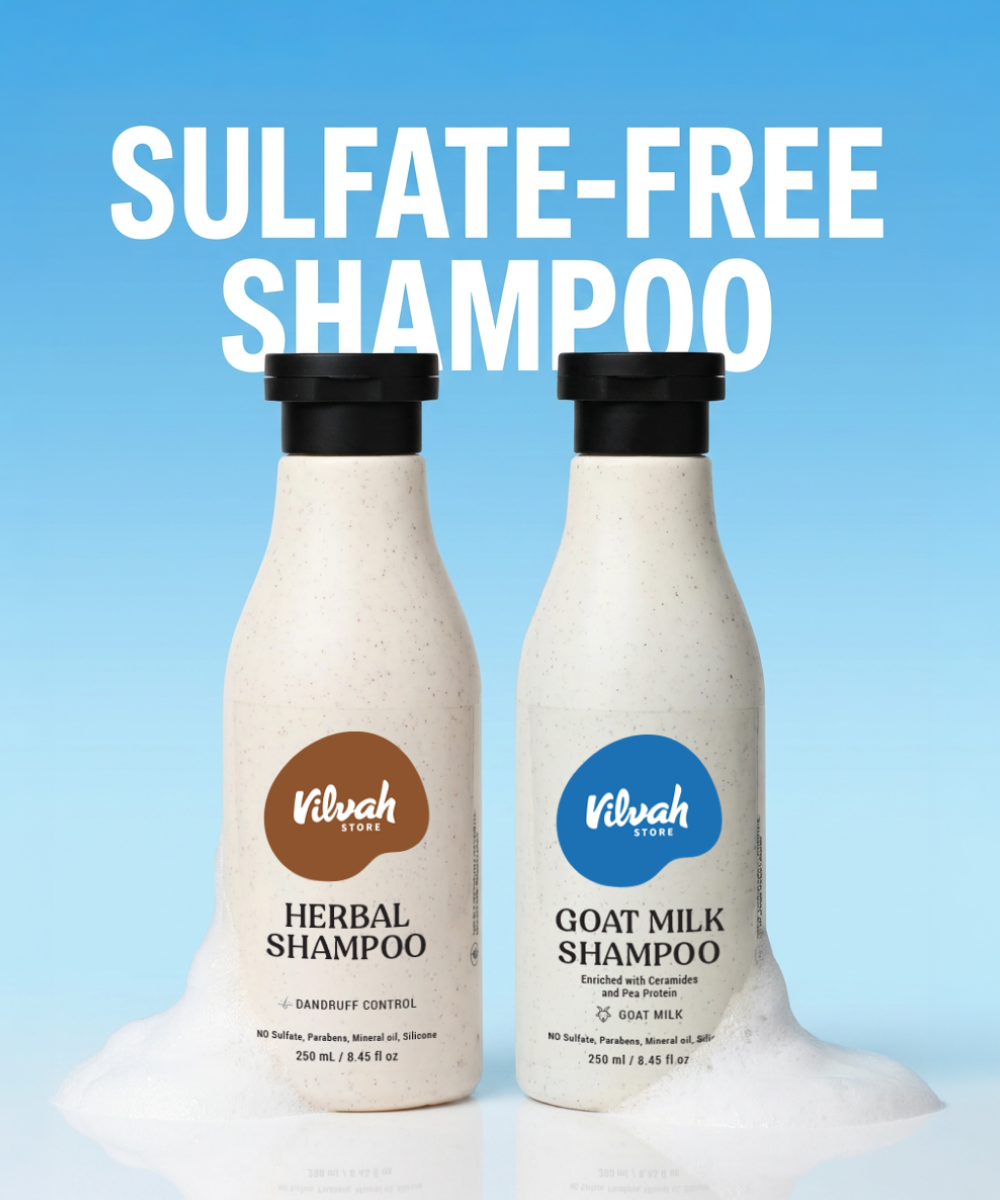
Sulphate-free shampoo's are formulated without alkyl sulfate surfactants such as sodium lauryl sulfate (SLS) and sodium laureth sulfate (SLES). It is gentler on colour-treated, dry and frizz-prone hair because it deposits less negative charge on the fibre, but "sulphate-free" alone is not a guarantee of mildness. The International Journal of Trichology notes there is no published analysis proving sulphate-free formulas are less aggressive to the hair shaft, and found 61.78% of 123 shampoos tested had a pH above 5.5, the level at which scalp irritation becomes more likely. Read the surfactant list and the pH, not the front label.
Sulphate-free shampoo (also spelt sulfate-free) is shampoo built without alkyl sulfate cleansing agents, most commonly sodium lauryl sulfate and sodium laureth sulfate. For Indian hair, which is routinely oiled, sun-exposed, washed in hard water and often colour-treated, dropping sulfates usually means less stripping and less frizz. It is not a magic label. The 2015 review "Hair Cosmetics: An Overview" in the International Journal of Trichology states plainly that while a sulphate-free shampoo theoretically creates a minimum electrical charge on the hair, "there are no published analysis about effectiveness of these products regarding either cleansing power or hair shaft aggression". What decides whether a bottle is actually gentle is the full surfactant blend, the pH, and whether the formula puts anything back into the fibre.
What "sulphate-free shampoo" actually means on an Indian label
A sulfate is a class of anionic surfactant produced by sulfating fatty acids. Sodium lauryl sulfate, sodium laureth sulfate, ammonium lauryl sulfate and ammonium laureth sulfate are the four you will see most often on Indian shampoo packs.
Anionic surfactants clean well. That is the point of them. The International Journal of Trichology review is direct about the trade-off: they are "very good in removing sebum and dirt" but are "strong cleaners and may cause an increase on electrical negative charges on the hair surface and increase frizz and friction". More negative charge means strands repel, tangle and abrade against each other while you comb.
Two label traps are worth knowing. Not every ingredient containing the letters "sulf" is a sulfate: disodium laureth sulfosuccinate is a milder sulfosuccinate ester, not an alkyl sulfate. And sulphate-free does not mean surfactant-free. Every shampoo that lathers uses surfactants. The question is which ones.
Is sulphate-free shampoo better for your hair? What the evidence supports
For four groups, the answer is a clear yes on comfort and cosmetic outcome:
- Colour-treated and chemically straightened hair. Bleached and chemically treated hair is more porous than untreated, normal hair and holds more negative charge, so it grabs and loses more with every wash. A milder base fades colour more slowly.
- Dry, frizzy and curly hair. Friction is the main cause of frizz, and curly hair struggles to distribute sebum along the shaft, so the fibre stays dry even when the scalp is oily.
- Sensitive or reactive scalps. Amphoteric surfactants such as betaines are described in the same review as "very mild" with "excellent dermatological properties", which is why they anchor most sulphate-free bases.
- Anyone washing four or more times a week. High-cleansing shampoos strip surface oils and raise static charge with each wash, and frequency compounds it.
The honest limit: if your scalp is oily, you use heavy styling products, or you oil weekly with coconut or castor oil, a sulphate-free shampoo may need two rounds of lather to clear buildup. That is a real trade-off, not a defect.
Why shampoo pH decides more than the sulphate-free claim
Scalp pH sits around 5.5 and the hair shaft's isoelectric point around 3.67. Anything applied above that raises the fibre's negative charge, and the more alkaline the product, the more the cuticle lifts and the strands tangle.
The 2014 study "The Shampoo pH can Affect the Hair: Myth or Reality?" measured 123 commercially available shampoos from international brands. Values ranged from 3.5 to 9.0, and 61.78% sat above pH 5.5. Only 38.21% were at or below 5.5. Among salon-professional products, 75% were at or below 5.5, which tells you the category knows the difference.
The actionable part is the authors' conclusion: a shampoo above pH 5.5 should be followed by a low-pH conditioner so the charge is neutralised and the cuticle sealed. That habit does more for frizz than switching bottles.
How to choose a sulphate-free shampoo in India: six checks before you buy
- Read the first five INCI ingredients. Surfactants sit near the top. Look for sodium lauroyl sarcosinate, cocamidopropyl betaine, disodium cocoyl glutamate, coco-glucoside or sodium cocoyl isethionate. If SLS or SLES appears in the first five, the "gentle" claim on the front is decoration.
- Check for a stated pH. Indian labels are not required to print it and most do not, so a brand that publishes the number is telling you something. If it is above 5.5, use a conditioner every wash.
- Match the formula to your concern, not just your hair type. Dandruff needs an antifungal such as climbazole or piroctone olamine. Dryness and breakage need lipids and proteins. Buying a repair shampoo for a flaking scalp wastes three months.
- Look for what replaces what washing removes. Ceramides, hydrolysed proteins and humectants such as glycerin matter more than the absence of one surfactant class. Our Goat Milk Shampoo is built this way, with ceramides and hydrolysed pea protein in a sulfate-free base.
- Accept lower lather and adjust technique. Apply to the scalp in sections rather than piling product on top of the head, which is what causes tangling.
- Check the allergen profile if you react easily. Cocamidopropyl betaine, a mainstay of sulphate-free bases, is itself listed among common shampoo contact allergens. Sulphate-free and hypoallergenic are not the same claim.
More on this in Know What Is In Your Shampoo and Why We Consciously Avoid Parabens, Silicone and Sulfates.
What to expect in your first three washes
The first-time wash with a sulphate-free shampoo usually feels underwhelming. Lather is thinner, and hair can feel coated if you are coming off a silicone-heavy 2-in-1. Wash two clears residue. By wash three, most people notice less frizz and easier combing rather than the squeaky-clean feeling sulfates give, which is the sensation of oil removal, not of clean hair.
Keep oiling before you wash. Coconut oil is the one with published support: Rele and Mohile found it was the only oil among coconut, sunflower and mineral oil to reduce protein loss in both damaged and undamaged hair.
Vilvah's sulphate-free shampoos, and who each one is for
| Goat Milk Shampoo | ||
| Best for | Dry, frizzy, damaged, colour-treated hair | Flaky, itchy or oily scalp, dry and oily dandruff |
| Key ingredients | Goat milk, ceramides NG and NP, hydrolysed pea protein, jasmine | Neem, tea tree, rosemary, black pepper |
| Cleansing base | Sodium lauroyl sarcosinate, cocamidopropyl betaine, disodium cocoyl glutamate | Mild plant-derived surfactants |
| Lather | Medium | Medium |
| Price | ₹545 (250 ml), ₹1,025 (500 ml) | ₹545 (250 ml), ₹1,025 (500 ml) |
| Rating | 4.8 from 1,087 ratings | 4.8 from 344 ratings |
Both are free from sulfates, methyl paraben and synthetic dyes, and both suit children aged five and up.
The honest note on pH: our Goat Milk Shampoo sits at pH 6, above the 5.5 the trichology literature recommends. That is a deliberate trade-off for a mild, low-irritation base, and it is exactly why we pair it with a conditioner. The Bestseller Hair Combo exists for that reason, and the Goat Milk Hair Mask does the heavier weekly work on damaged lengths.
Frequently asked questions
1. Is sulphate-free shampoo better for hair fall?
Sulphate-free shampoo does not treat hair fall at the follicle. What it reduces is breakage that gets mistaken for hair fall, because strands that snap mid-length from friction look identical to shed hair in the drain. A white bulb at the root means shedding, which needs a scalp and health investigation rather than a shampoo swap. Ragged, uneven ends mean breakage, and reducing friction helps.
2. Does sulphate-free shampoo lather less?
Yes, usually. Lather is produced mostly by the anionic surfactants that sulphate-free formulas remove, so foam volume drops. Foam is not a measure of cleaning. Vilvah's Goat Milk Shampoo is rated medium lather. Applying to a wet scalp in sections gets most of the foam back.
3. Can I use sulphate-free shampoo every day?
Yes. Mild surfactant systems are designed for frequent use, and both Vilvah shampoos are formulated for daily washing and are suitable for children aged five and up.
4. Is sulphate-free shampoo good for hard water?
It helps, but it does not solve hard water. Calcium and magnesium ions bind to hair regardless of surfactant class and leave the fibre rough. An occasional clarifying wash plus a conditioner every time does more. Vilvah formulates its shampoos to perform in both soft and hard water.
5. Are sulfates unsafe?
In rinse-off products at cosmetic concentrations, sulfates are not a safety hazard. The case against them is cosmetic: they clean aggressively, raise the fibre's negative charge, and can irritate sensitive scalps. That is a different argument from toxicity, and any brand telling you otherwise is overselling.
6. What is the difference between sulphate-free and SLS-free?
SLS-free means the formula excludes sodium lauryl sulfate specifically. It can still contain sodium laureth sulfate or another alkyl sulfate. Sulphate-free is the broader claim and excludes the whole class. Check the ingredient list rather than trusting either phrase.
7. Do I still need a conditioner?
Yes, more than you think. Shampoo raises the fibre's negative charge; conditioner neutralises it, lubricates the cuticle and restores hydrophobicity. It is the highest-return step for frizz, and we cover the mechanism in The Science-Backed Benefits Of Using A Hair Conditioner.
Browse Vilvah's sulphate-free shampoos and conditioners.
Sources
- Gavazzoni Dias MFR et al. "The Shampoo pH can Affect the Hair: Myth or Reality?" Int J Trichology, 2014;6(3):95-99. https://pmc.ncbi.nlm.nih.gov/articles/PMC4158629/
- Gavazzoni Dias MFR. "Hair Cosmetics: An Overview." Int J Trichology, 2015;7(1):2-15. https://pmc.ncbi.nlm.nih.gov/articles/PMC4387693/
- Rele AS, Mohile RB. "Effect of mineral oil, sunflower oil, and coconut oil on prevention of hair damage." J Cosmet Sci, 2003;54:175-192.
Related Stories
-

Melanin in Skin: What It Actually Does, and Why Indian Skin Marks So Easily
-

Goat Milk Soap vs Regular Soap: What Actually Changes on Your Skin
-

Fitzpatrick Skin Types: Where Most Indian Skin Actually Sits
-

Skin Tone vs Skin Undertone: Why the Difference Changes What You Buy
-

How to Find Your Skin Undertone at Home: Warm, Cool or Neutral
-

Dry Scalp: Causes, Remedies & How to Treat It Effectively
-

Vilvah: Brand, Ingredients and Product FAQs
-

Hair Serum v/s Hair Oil: Key Differences Explained With Benefits
-

Alfalfa for Hair Growth: Benefits, Uses & What You Need to Know
-

Face Wash vs Cleanser: What's Actually Different, and Which One Does Your Skin Need


Leave a comment
All comments are moderated before being published.
This site is protected by hCaptcha and the hCaptcha Privacy Policy and Terms of Service apply.