

 Track Order

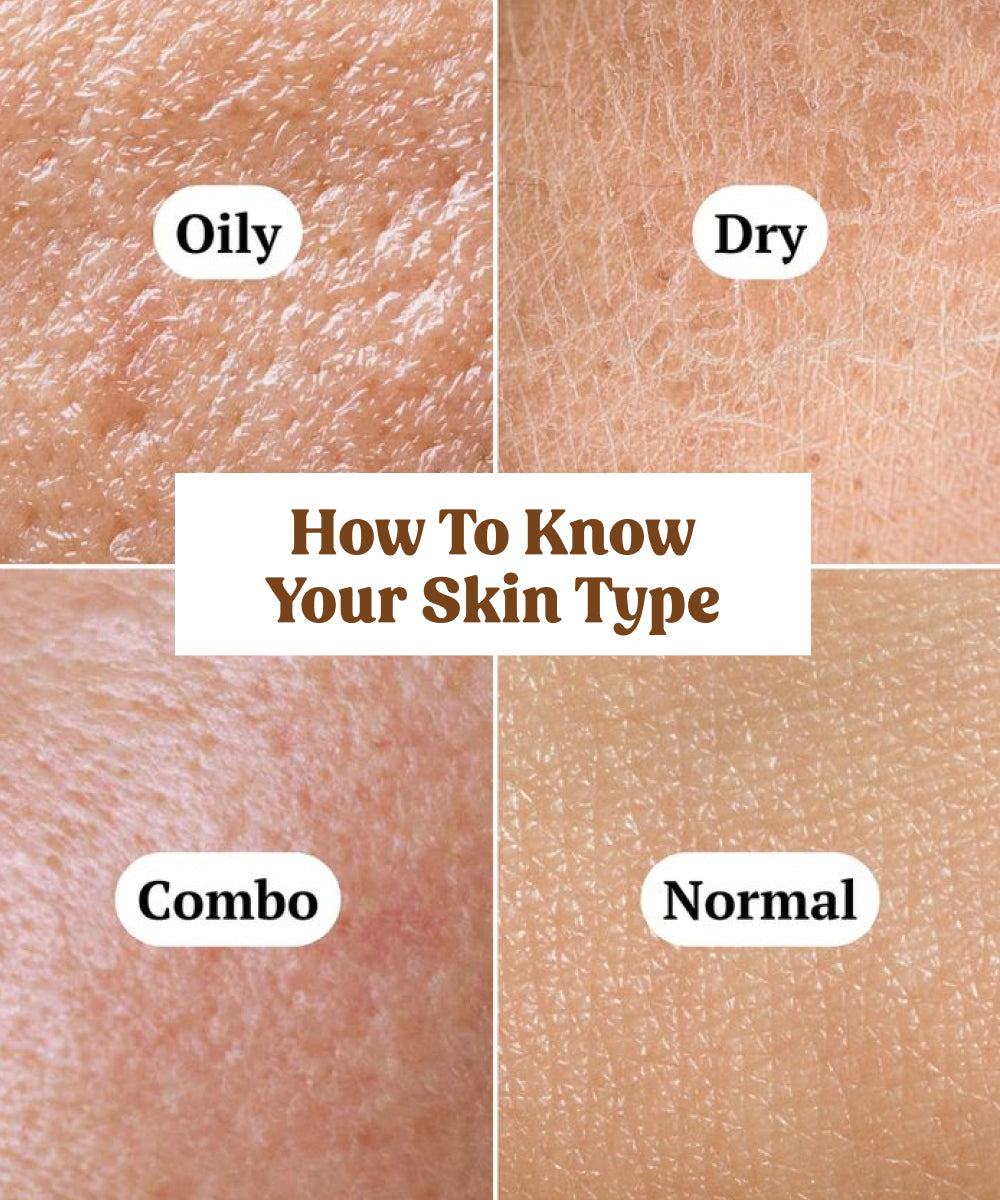
Before you reach for any cleanser, moisturizer, or SPF, there's one thing dermatologists agree on: you need to know your skin type first. Using the wrong products for your skin can trigger breakouts, excess oiliness, dryness, irritation, and even accelerate premature aging.
According to a 2022 survey by the International Dermal Institute, over 67% of people use skincare products that don't match their actual skin type, and that mismatch is one of the leading causes of persistent skin problems. Whether you're building your very first routine or looking to upgrade an existing one, identifying your skin type is the non-negotiable starting point.
This guide breaks down everything you need to know about how to know your skin type, the different types of skin, and the easiest at-home tests you can do right now.
What Are The Different Skin Types?
Dermatologists generally classify skin into five main skin types. Each has distinct characteristics, needs, and challenges:
| Skin Type | Key Characteristics | Common Concerns |
| Normal | Balanced oil and moisture, minimal sensitivity | Few blemishes, rarely feels tight or greasy |
| Oily | Excess sebum production, enlarged pores | Acne, shine, blackheads |
| Dry | Low sebum, rough or flaky texture | Tightness, dullness, fine lines |
| Combination | Oily T-zone, dry or normal cheeks | Uneven texture, localized breakouts |
| Sensitive | Reacts easily to products or environment | Redness, stinging, rashes, irritation |
Understanding which category you fall into, or whether you have a mix is the foundation of smart skincare.
How To Identify Your Skin Type At Home
You don't need a dermatologist's appointment to figure out your skin type. There are several simple, reliable methods you can try at home today.
1. The Bare-Face Test (The Gold Standard Method)
This is the most widely recommended method for how to check your skin type and requires nothing but your own face and 30 minutes.
Step-by-step:
- Wash your face with a gentle, non-medicated cleanser such as the Milk Powder Face Wash
- Gently pat dry, do not apply any product afterward
- Wait 30 minutes
- Observe your skin in natural light (look, touch, and feel)
What to look for after 30 minutes:
- Shiny or greasy all over → Oily skin
- Tight, rough, or flaky → Dry skin
- Shiny on forehead, nose, and chin only → Combination skin
- Comfortable, balanced, and soft → Normal skin
- Red, itchy, or burning sensation → Sensitive skin
2. The Blotting Paper Test
This is one of the quickest ways for how to find your skin type and works best in the afternoon when your skin has had time to behave naturally.
How to do it:
- Take a clean blotting sheet or thin tissue paper
- Press it gently on different areas of your face - forehead, nose, cheeks, chin
- Hold the sheet up to a light source and examine the oil marks
How to read the results:
- Oil on all sections → Oily skin
- Little to no oil on any section → Dry skin
- Oil only on the T-zone section → Combination skin
- Minimal oil with comfortable feeling → Normal skin
Pro Tip: Do this test in the mid-afternoon, around 2-4 PM, when your skin's natural patterns are most evident, not right after washing your face.
3. The Watch-and-Feel Method
Simply go about your normal day without applying any products after cleansing in the morning. By midday, check in with how your skin feels.
- Does it feel tight or itchy? → Dry Skin
- Is it visibly shining in photos or mirrors? → Oily Skin
- Is it comfortable and unchanged? → Normal Skin
- Does it burn or sting when you apply water or light products? → Sensitive Skin
- Is it oily in some places but tight in others? → Combination Skin
Deep Dive: Understanding Each Skin Type
Normal Skin
Normal skin is the least problematic of all skin types. It has a well-balanced sebum production, good circulation, and a healthy moisture barrier. People with normal skin often have:
- Small, barely visible pores
- A smooth, even texture
- Few or no blemishes
- No extreme sensitivity
Even normal skin needs consistent care. Using a gentle face wash for all skin types such as the Honey Fix Face wash helps maintain that balance without disrupting your natural pH. Pair it with a good moisturizer for all skin types to keep your barrier healthy year-round.
Oily Skin
Oily skin is caused by overactive sebaceous glands that produce excess sebum. While sebum is essential for skin health, too much of it leads to clogged pores and breakouts.
Statistics on oily skin:
- Oily skin affects approximately 40-55% of people in humid climates, according to a study published in the Journal of Cosmetic Dermatology
- Teens and young adults are most affected due to hormonal fluctuations during puberty
Signs you have oily skin:
- Persistent shine, especially by midday
- Enlarged or visible pores
- Frequent blackheads and whiteheads
- Makeup tends to "slide off" or not last
Skincare tips for oily skin:
Oily skin can be managed by following simple skincare habits and routines:
- Use a gel-based or foaming face wash to remove excess oil without stripping the skin
- Don't skip moisturizer. dehydrated skin actually produces more oil to compensate
- Choose non-comedogenic, oil-free formulas
- Apply the best non-comedogenic sunscreen in a lightweight, mattifying formula every morning.
Dry Skin
Dry skin lacks sufficient sebum and struggles to retain moisture. This makes the skin barrier weaker, leading to increased sensitivity and visible signs of aging over time.
Signs you have dry skin:
- Tightness or pulling sensation after washing
- Flaking, peeling, or rough patches
- Dull or ashy complexion
- Fine lines appear more prominent
- Skin may crack in harsh weather
Statistics on dry skin:
- Dry skin affects up to 30% of the global population, with prevalence increasing with age
- Post-menopausal women are especially susceptible due to declining estrogen levels
Skincare tips for dry skin:
A good skincare routine for dry skin can help improve skin texture and prevent barrier damage.
- Use cream-based or oil-infused cleansers such as Vilvah’s Cream Cleanser that does not strip moisture
- Apply a rich, emollient best moisturizer for all skin types immediately after cleansing while skin is still slightly damp. Vilvah’s Ultra Moisturizing cream works best for dry skin.
- Look for ingredients like hyaluronic acid, ceramides, shea butter, and glycerin
- Reapply moisturizer throughout the day as needed
- A hydrating sunscreen is a great option to shield the skin from sun damage.
Combination Skin
Combination skin is the most common skin type worldwide. It features an oily T-zone (forehead, nose, and chin) with normal to dry cheeks. It's also one of the trickiest to manage because different zones have different needs.
Signs you have combination skin:
- Shiny nose and forehead, but tight or normal cheeks
- Breakouts concentrated on the T-zone
- Enlarged pores around the nose
- Makeup wears off unevenly
How to care for combination skin:
- Use a balanced, gentle cleanser across the whole face
- Apply lighter, gel-based moisturizer on the T-zone and a richer formula on dry areas
- Use blotting papers midday to manage shine
- Choose a sunscreen that's lightweight enough for oily zones but nourishing enough for dry areas.
Sensitive Skin
Sensitive skin isn't always a standalone skin type, it can overlap with dry, oily, or combination skin. What defines it is reactivity: the skin responds quickly and intensely to triggers like products, weather, food, stress, or environmental pollutants.
Signs you have sensitive skin:
- Redness, rashes, or hives after using new products
- Stinging, burning, or itching with minimal provocation
- Skin flushes easily
- History of eczema, rosacea, or contact dermatitis
Skincare tips for sensitive skin:
- Always patch-test new products on your inner arm before applying to your face
- Choose fragrance-free, hypoallergenic formulas such as the Milk Drops Brightening serum for hydrated, balanced skin
- Avoid harsh exfoliants, alcohol-based toners, and strong actives like retinol or AHAs without dermatologist guidance
- Use a mineral-based sunscreen with zinc oxide or titanium dioxide, these are less likely to cause irritation than chemical UV filters
Factors That Can Change Your Skin Type
Your skin type isn't necessarily fixed for life. Several factors can cause it to shift temporarily or permanently:
Internal Factors
- Hormonal changes: Puberty, menopause, or hormonal imbalances can trigger shifts in oiliness and sensitivity
- Genetics: Your baseline skin type is largely inherited
- Age: Skin tends to become drier and thinner as you age; oiliness often decreases after your 30s
External Factors
- Climate and season: Skin often becomes drier in winter and oilier in summer
- Diet and hydration: Dehydration affects skin moisture levels; dairy and high-glycemic foods can worsen acne in oily skin
- Skincare habits: Over-cleansing, using harsh products, or skipping moisturizer can disrupt your skin's natural state
- Stress: Cortisol spikes can increase oil production and worsen inflammatory conditions
Reassess your skin type every season, especially if you've moved to a new climate, changed your diet significantly, or are going through a hormonal life stage.
Quick Reference: Skin Type Identification Checklist
Use this checklist as a quick guide for how to identify your skin type:
After the bare-face test, ask yourself:
- Does my skin feel tight, rough, or look flaky? → Dry
- Does my entire face look shiny and feel greasy? → Oily
- Is only my T-zone oily while cheeks feel normal/dry? → Combination
- Does my skin feel comfortable, soft, and balanced? → Normal
- Does my skin sting, turn red, or react easily? → Sensitive
Building Your Skincare Routine Based on Skin Type
Once you know your skin type, building a routine becomes much simpler. Here's a quick framework:
| Step | Oily Skin | Dry Skin | Combination | Normal | Sensitive |
| Cleanser | Foaming/gel | Cream/oil | Gentle foam | Micellar/gentle | Fragrance-free milk |
| Moisturizer | Oil-free gel | Rich cream | Lightweight + targeted | Balanced lotion | Barrier-repair cream |
| SPF | Mattifying SPF | Hydrating SPF | Hybrid SPF | Broad spectrum SPF | Mineral SPF |
| Extras | Niacinamide, salicylic acid | Hyaluronic acid, ceramides | Zone-targeted serums | AHAs, antioxidants | Centella asiatica, aloe |
Regardless of skin type, sunscreen is non-negotiable. Consistent use of a sunscreen prevents premature aging, hyperpigmentation, and reduces skin cancer risk, making it the single most impactful skincare step for every skin type.
Final Thoughts
Knowing how to find your skin type isn't about fitting into a box, it's about understanding your skin's unique needs so you can care for it intelligently. Whether your skin is oily, dry, combination, normal, or sensitive, every type has its strengths and its challenges.
Start with the bare-face test or the blotting paper method today. From there, invest in the right cleanser, the best moisturizer for all skin types suited to your needs, and never, ever, skip the best sunscreen. Because healthy, glowing skin isn't a trend. It's a habit.
FAQs
1. How many types of skin are there?
There are five main skin types: normal, dry, oily, combination, and sensitive. Each skin type behaves differently, so understanding yours helps you choose the right skincare and avoid unnecessary problems.
2. How can I know my skin type?
You can know your skin type by observing your skin after washing it. If it feels oily, dry, tight, or balanced within an hour, it gives a clear clue. Your skin’s daily behavior is the easiest way to understand it.
3. How should you care for your skin type?
Caring for your skin type means using products that match your skin’s needs. Dry skin needs moisture, oily skin needs oil control, and sensitive skin needs gentle care. The right routine makes your skin feel calm, healthy, and balanced.
4. Can skin type change over time?
Yes, skin type can change due to age, hormones, weather, lifestyle, or stress. That’s why your skincare routine should also evolve with your skin’s changing needs.
5. Which skin type needs the most skincare?
All skin types need care, but dry and sensitive skin often need extra attention because they can easily become irritated, dehydrated, or uncomfortable without proper care.
Related Stories
-

Fitzpatrick Skin Types: Where Most Indian Skin Actually Sits
-

Skin Tone vs Skin Undertone: Why the Difference Changes What You Buy
-

How to Find Your Skin Undertone at Home: Warm, Cool or Neutral
-

Dry Scalp: Causes, Remedies & How to Treat It Effectively
-

Vilvah: Brand, Ingredients and Product FAQs
-

Hair Serum v/s Hair Oil: Key Differences Explained With Benefits
-

Alfalfa for Hair Growth: Benefits, Uses & What You Need to Know
-

Face Wash vs Cleanser: What's Actually Different, and Which One Does Your Skin Need
-

Hair Serum Benefits: The Missing Step in Your Hair Care Routine
-

Premature Grey Hair: Why It Happens Young and How to Slow It Down


Leave a comment
All comments are moderated before being published.
This site is protected by hCaptcha and the hCaptcha Privacy Policy and Terms of Service apply.