

 Track Order

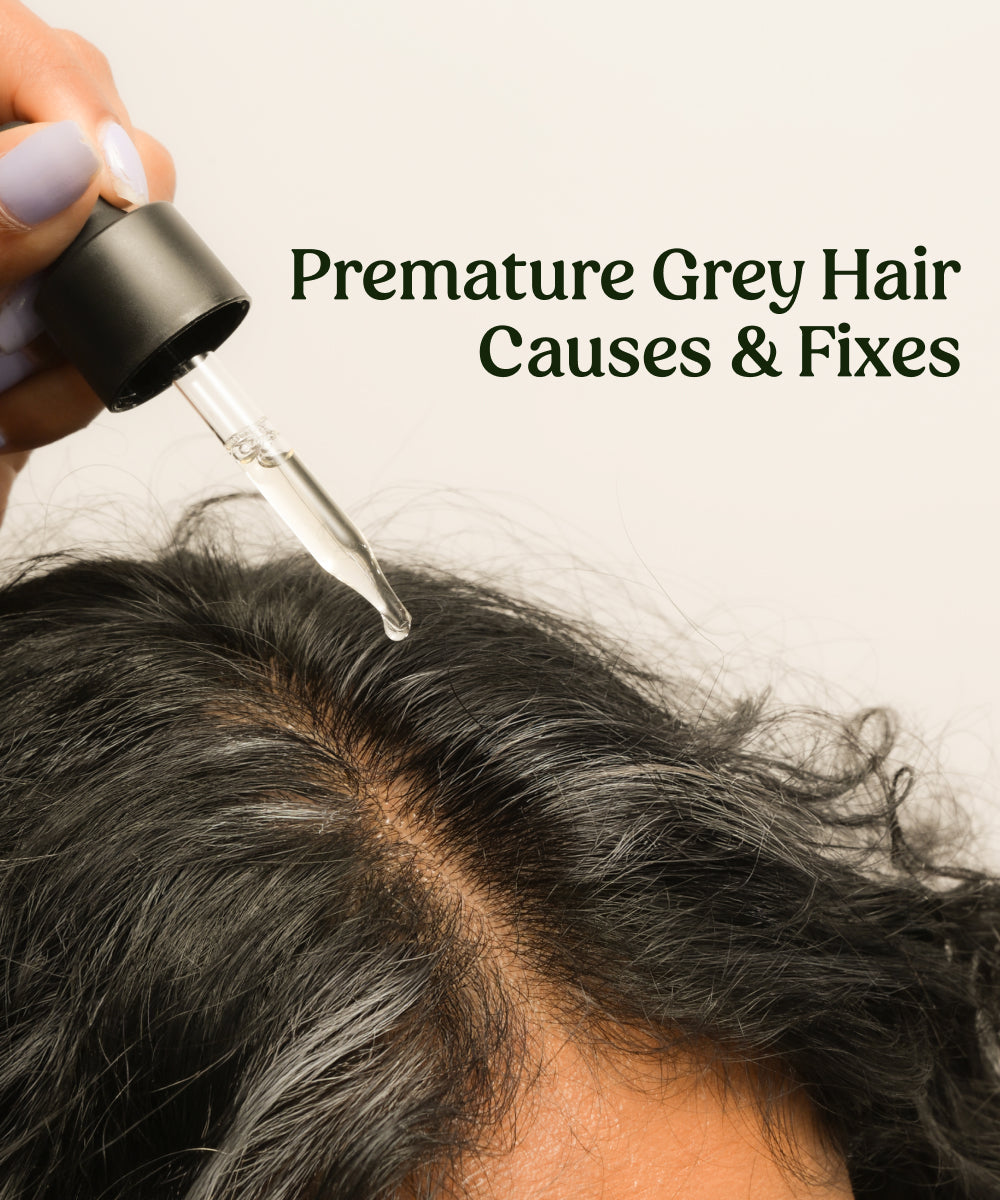
Hair greys when the pigment cells in the follicle stop producing melanin, and the leading explanation is oxidative stress. Producing melanin generates hydrogen peroxide, and when the follicle's antioxidant defences fall behind, that peroxide builds up and disables tyrosinase, the enzyme melanin depends on. Smoking, emotional stress, alcohol and B12 deficiency all raise that oxidative load. Antioxidant support, nutrition and scalp care are where the leverage sits.
What "premature" actually means
Greying is a normal part of aging. It is called premature when it starts unusually early for your population group.
Published dermatology reviews classify greying as premature when it appears before age 20 in Caucasians and before age 30 in Africans. Thresholds vary between populations, which is why a single universal number does not exist.
Most premature greying appears without any underlying disease and is inherited, commonly in an autosomal dominant pattern. If your parents greyed at 25, your odds shift.
The biology: why pigment cells stop working
Hair colour comes from melanin, produced inside organelles called melanosomes by cells called melanocytes sitting in the hair bulb. The rate-limiting enzyme in that process is tyrosinase.
Here is the part that explains everything else. Making melanin is chemically violent work. The hydroxylation of tyrosine and the oxidation of DOPA into melanin generate large quantities of reactive oxygen species, and some follicles keep this up for as long as ten years continuously.
A healthy follicle mops those species up with an antioxidant system, principally the enzyme catalase. When that system falls behind, the follicle starts poisoning itself with its own by-products.
Research by Wood and colleagues demonstrated this directly. Human white scalp hair shafts accumulate hydrogen peroxide at millimolar concentrations, with almost no catalase or methionine sulfoxide reductase protein present in the grey follicle.
The consequence is precise. That peroxide oxidises a methionine residue at position 374, sitting in the active site of tyrosinase itself. Damage the enzyme and melanin production stops. The hair keeps growing. The colour does not come with it.
Separate work by Daulatabad and colleagues confirmed that catalase expression and hydroxyl radical scavenging activity are strongly repressed in unpigmented follicles.
There is a second layer. Research by Nishimura and colleagues suggests greying is driven by failed self-maintenance of melanocyte stem cells rather than by the working pigment cells alone, which is why the process tends to be permanent once a follicle turns.
What raises the oxidative load
If oxidative stress is the mechanism, anything that increases it is a lever you can pull.
Smoking. Studies show a significant correlation between smoking and premature hair greying, explained by the pro-oxidant effect of smoking increasing reactive oxygen species damage to follicle melanocytes.
Emotional stress and alcohol. A study of young adults in Turkey found premature greying closely related to oxidative-stress factors including emotional stress, alcohol consumption and chronic disease in genetically predisposed men and women.
Vitamin B12 deficiency. Around 55% of patients with pernicious anaemia had greying before the age of 50, compared with 30% in controls.
Thyroid and autoimmune conditions. Premature greying has been linked to the cluster of autoimmune disorders seen alongside vitiligo, including autoimmune thyroid disease.
UV and pollution. Both raise oxidative stress at the scalp. Animal work has shown UV radiation causing oxidative damage to hair follicles and producing greying.
If you are greying early and fast, a blood panel covering B12, thyroid function and ferritin is a sensible first step. A doctor is the right person to read those results.
Grey hair also behaves differently
This surprises people. Grey hair is not just uncoloured hair.
Grey and white hairs show increased cysteic acid and decreased cystine, greater sensitivity to weathering, and more reactivity to reducing and oxidising agents. That is why grey hair feels coarser, resists holding a set, and takes colour badly.
White beard hair has been measured growing up to four times faster than the pigmented hair beside it.
The practical takeaway is that greying hair needs gentler handling than the rest of your head, not the same routine plus dye.
What actually helps
Reduce the oxidative load you control. Stopping smoking is the highest-value single change in the whole evidence base. Managing stress and moderating alcohol follow.
Fix the deficiencies. B12 in particular has a documented association. Get tested rather than guessing at supplements.
Protect the scalp from UV. Hats and shade are unglamorous and they work.
Support the scalp's antioxidant environment topically. Since the mechanism is a failure of antioxidant defence at the follicle, antioxidant support at the scalp is the logical place for a topical to act.
Treat the hair you have gently. Sulphate-free, pH-balanced cleansing keeps a barrier that is already changing from getting further stressed.
One honest note on expectations. Once a follicle has turned, the evidence points to melanocyte stem cell loss, which means restoring colour to that specific hair is not something a topical product does. The goal is protecting the follicles still producing pigment.
Antioxidant support in the Vilvah Hair Growth Serum
The Vilvah Hair Growth Serum is built around antioxidant botanicals sitting where the oxidative load is highest.
3% Swiss Alpine Edelweiss extract, an alpine botanical known for antioxidant activity that helps neutralise free radicals at the scalp. 3% Redensyl, whose two molecules include an epigallocatechin gallate derivative from green tea, one of the better-studied plant polyphenols. Rosmarinus officinalis (Rosemary) leaf extract, the first ingredient in the formula, which carries rosmarinic and carnosic acids alongside its support for microcapillary perfusion at the follicle. 3% Alfalfa callus culture for scalp vitality and pH balance.
The serum also carries Bhringaraj extract, hyaluronic acid for overnight scalp hydration, hydrolysed keratin and panthenol for the fibre, and Lactobacillus ferment lysate to support the scalp microbiome and barrier.
It absorbs into an Aloe vera leaf water base with no greasy residue, needs no rinse, and suits colour-treated and chemically treated hair, which matters if you are already colouring greys.
How to use: one full dropper to the scalp, massage two to three minutes, leave overnight. Four to seven nights a week.
Pair it with the Vilvah Goat Milk Shampoo, sulphate-free at pH 6 with Ceramide NG and Ceramide NP, or take both together in the Vilvah Hair Growth Combo at ₹1,499.
Frequently asked questions
What causes white hair at a young age?
Genetics set the baseline, and oxidative stress drives the process. Melanin production itself generates hydrogen peroxide, and when the follicle's antioxidant defences fall behind, that peroxide disables tyrosinase, the enzyme melanin depends on. Smoking, emotional stress, alcohol and vitamin B12 deficiency all raise that load.
Can premature grey hair be reversed?
Research points to loss of melanocyte stem cells in follicles that have already turned, so restoring colour to those specific hairs is not something a topical achieves. Reducing oxidative load and supporting the scalp protects the follicles still producing pigment.
Does stress really cause grey hair?
A study of young adults found premature greying closely associated with emotional stress alongside alcohol consumption and chronic disease in genetically predisposed people. The proposed pathway is increased oxidative load.
Which vitamin deficiency causes white hair?
Vitamin B12 has the clearest documented link. Around 55% of pernicious anaemia patients greyed before 50 compared with 30% of controls. Thyroid function is also worth checking.
Does plucking a grey hair make more grow back?
No. Each follicle produces its own hair independently. Plucking damages the follicle without affecting its neighbours.
Sources
- Kumar AB, et al. Premature Graying of Hair: Review with Updates. International Journal of Trichology. pmc.ncbi.nlm.nih.gov/articles/PMC6290285
- Trüeb RM. Oxidative Stress in Ageing of Hair. International Journal of Trichology. 2009;1:6-14. pmc.ncbi.nlm.nih.gov/articles/PMC2929555
Related Stories
-

Melanin in Skin: What It Actually Does, and Why Indian Skin Marks So Easily
-

Goat Milk Soap vs Regular Soap: What Actually Changes on Your Skin
-

Fitzpatrick Skin Types: Where Most Indian Skin Actually Sits
-

Skin Tone vs Skin Undertone: Why the Difference Changes What You Buy
-

How to Find Your Skin Undertone at Home: Warm, Cool or Neutral
-

Dry Scalp: Causes, Remedies & How to Treat It Effectively
-

Vilvah: Brand, Ingredients and Product FAQs
-

Hair Serum v/s Hair Oil: Key Differences Explained With Benefits
-

Alfalfa for Hair Growth: Benefits, Uses & What You Need to Know
-

Face Wash vs Cleanser: What's Actually Different, and Which One Does Your Skin Need


Leave a comment
All comments are moderated before being published.
This site is protected by hCaptcha and the hCaptcha Privacy Policy and Terms of Service apply.