

 Track Order

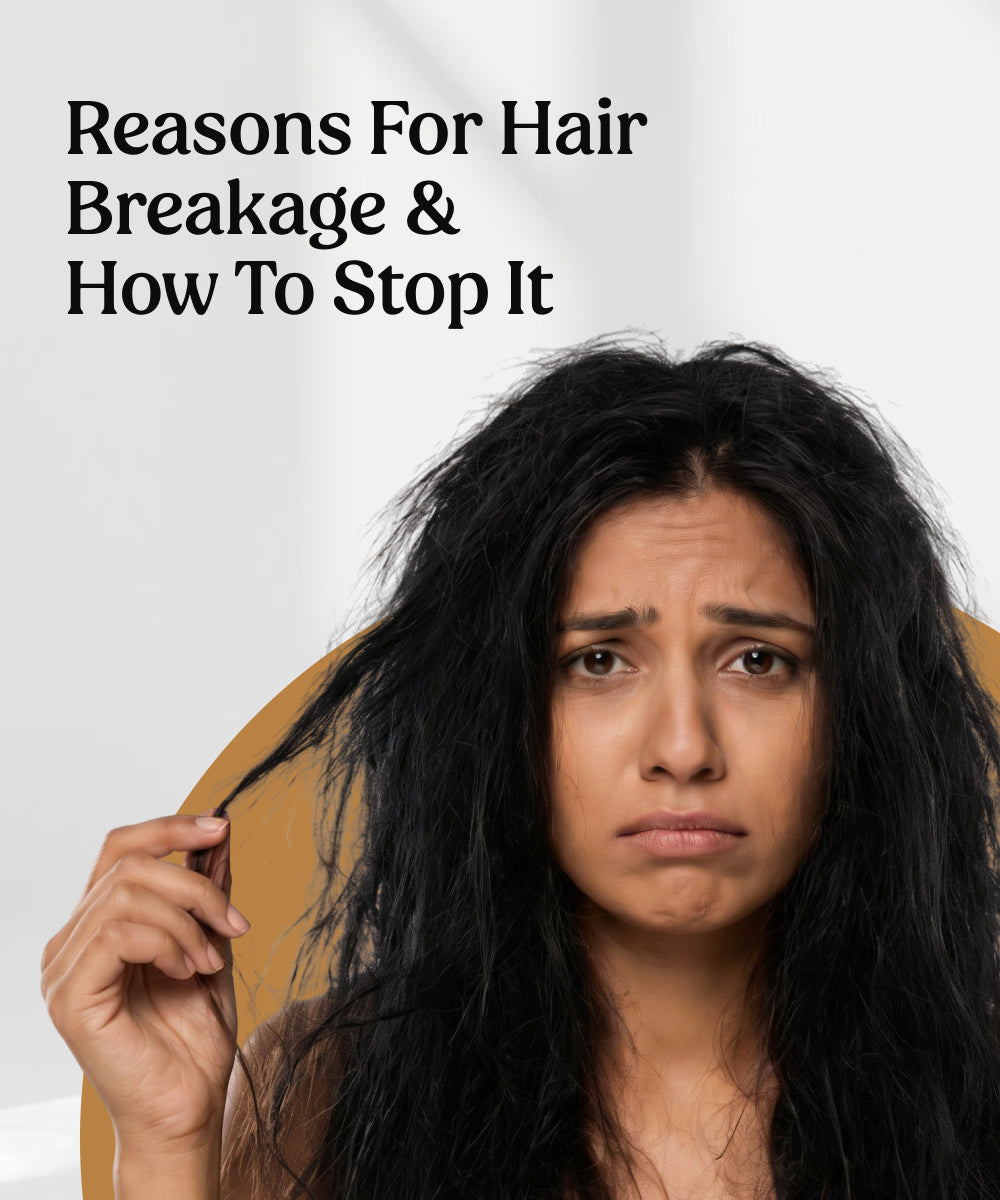
Hair fall gets all the attention. But hair breakage? That’s the real problem many people ignore.
You oil your hair, follow a dedicated hair care routine, and still end up with rough ends, frizz, and shorter-looking hair. Why? Because your hair may not actually be falling out at the roots, it could be breaking in the middle or at the ends. And once breakage starts, your hair becomes weaker, thinner, and harder to manage.
In this blog, you’ll clearly understand what hair breakage is, the common reasons for hair breakage, and how to prevent it.
What Is Hair Breakage?
Hair breakage happens when the hair shaft becomes weak and snaps before it completes its natural growth cycle. Unlike hair fall, where hair falls from the root, breakage happens along the length of the hair.
Signs of hair breakage include:
- Split ends
- Frizzy texture
- Short broken strands
- Hair that feels rough and weak
- Difficulty growing longer hair
Many people confuse breakage with hair fall, but they are completely different problems.
What Causes Hair Breakage?
At its core, hair breakage happens when the protective outer layer of the hair gets damaged.
Healthy hair contains moisture, proteins, and natural oils that keep it strong. But when the hair repeatedly loses moisture or faces physical stress, it becomes weak and snaps easily.
5 Major Reasons For Hair Breakage
Hair doesn’t become weak overnight. Breakage is usually the result of repeated stress and damage over time.
Here are some of the most common reasons:
1. Excessive Heat Styling
Frequent use of:
- Straighteners
- Curling tools
- Blow dryers
removes moisture from the hair and weakens the strands.
2. Over-Washing
Washing your hair too often strips away natural oils, leaving the hair dry and brittle.
3. Tight Hairstyles
Constant tight ponytails, buns, or braids pull on the hair and increase stress on the strands.
4. Chemical Treatments
Hair colouring, bleaching, rebonding, and smoothening weaken the hair structure over time.
5. Lack Of Moisture
Dry hair breaks faster. Hair needs moisture and nourishment to stay flexible and strong.
How To Stop Hair Breakage?
Stopping hair breakage starts with reducing damage, not adding more products.
Here’s what actually helps:
1. Reduce Heat Usage
Try limiting heat styling tools as much as possible. If you use them:
- Apply a hair serum which acts as a good heat protectant
- Use lower temperatures
2. Handle Wet Hair Gently
Wet hair is weaker and more prone to breakage.
- Avoid aggressive towel drying
- Use a wide-tooth comb
3. Trim Split Ends Regularly
Split ends can travel upward and cause more damage over time. Regular trims help keep the hair healthier and stronger.
4. Avoid Tight Hairstyles
Tight ponytails and buns put constant stress on the hair strands and roots. Looser hairstyles help reduce tension and breakage.
5. Keep Your Hair Hydrated
Dry hair breaks more easily. Regular oiling, conditioning, proper hydration, and a balanced diet help keep the hair soft and healthy.
Hair Products That Help With Breakage
Not every product helps damaged hair. Some simply coat the hair temporarily without solving the actual issue.
Useful hair products for hair breakage usually focus on:
- Hydration
- Strengthening
- Frizz control
- Moisture retention
A simple routine with the right products works better than layering too many treatments.
Focus on:
- Hair oil
- Mild shampoo
- Nourishing hair mask
- Lightweight anti-frizz hair serum
Choosing The Best Hair Oil For Breakage
A nourishing option like Vilvah’s Hair Regrowth Oil helps support weak and breakage-prone hair by:
- Deeply nourishing the scalp and hair
- Helping reduce dryness and frizz
- Supporting stronger and healthier-looking strands
- Improving overall hair texture with regular use
Regular oiling also helps protect the hair from environmental stress and dryness.
Choosing The Right Shampoo For Hair Breakage
Your shampoo plays a major role in hair health. Harsh shampoos remove natural oils and leave hair dry, rough, and weak. That’s why choosing a gentle shampoo for hair breakage matters.
Look for shampoos that:
- Clean without over-drying
- Support moisture balance
- Contain nourishing ingredients
Protein-rich formulas can help strengthen weak strands and improve overall hair texture over time.
Aloe Vera For Hair Breakage
Aloe vera is popular for a reason: it helps soothe, hydrate, and soften the hair.
Benefits of aloe vera for damaged hair include:
- Helps reduce dryness
- Adds moisture to rough strands
- Calms the scalp
- Improves manageability
Dry hair breaks more easily, so keeping it hydrated is important. Aloe vera supports that without making the hair feel heavy.
Healthy Hair Starts With Simple Care
Hair breakage doesn’t happen instantly. It builds slowly through stress, dryness, heat, and poor hair care habits. The good news is that with the right products and consistent care, you can strengthen your hair and reduce breakage over time.
At Vilvah Store, every hair care product is created to support stronger, healthier, and more manageable hair with ingredients that focus on nourishment and long-term care. Because healthy hair doesn’t come from shortcuts, it comes from consistency.
Visit Vilvah Store online or step into your nearest store to experience the products firsthand and find what works best for your hair.
FAQs
1. Is hair breakage normal?
Yes, hair breakage is normal to some extent, especially due to styling, brushing, or environmental stress. Occasional breakage is natural, but excessive breakage signals that your hair needs care and nourishment.
2. How can you control hair breakage?
You can control hair breakage by using a gentle shampoo, deep conditioning, and avoiding harsh heat or chemical treatments. Trimming split ends regularly and using a wide-tooth comb can also protect your hair.
3. What are the symptoms of hair breakage?
Hair breakage shows as short, uneven strands, split ends, and hair that snaps easily when brushed. The hair may feel dry, rough, or brittle to touch.
4. Can hair breakage grow back?
Yes, hair breakage can grow back with proper care. Healthy hair routines, good nutrition, and gentle handling help new, strong hair grow in place of the broken strands.
5. Is hair breakage permanent?
No, hair breakage is not permanent. While broken strands cannot repair themselves, new hair can grow healthy if you adopt proper hair care and avoid damaging practices.
Related Stories
-

What Are Blemishes on Face? Causes, Remedies & Prevention
-

How to Get Rid of Split Ends: Tips & Causes
-

Your Cracked Lip Corners Are A Warning Sign!
-

Alpha Arbutin: Benefits, Uses & Skin Brightening Tips
-

Which Soap Is Best for Skin
-

Dry Lips: What's Really Causing Them and How to Treat Them Naturally
-

UV Rays Explained: Types, Effects & How to Protect Your Skin
-

Benefits Of Using A Toner For Clear & Balanced Skin
-

Whiteheads: Causes & How to Remove Whiteheads Easily


Leave a comment
All comments are moderated before being published.
This site is protected by hCaptcha and the hCaptcha Privacy Policy and Terms of Service apply.